Golden Circle Self-Drive: Our October Day in Iceland, Stop by Stop
How long Iceland’s Golden Circle takes to self-drive, from our day in October 2024: Þingvellir, Geysir and Strokkur, Gullfoss, and why we skipped Kerið.
The short version
- Our score: 4 out of 5.
- Worth it? Yes. A beautiful, scenic drive on very safe, open roads. Þingvellir is a good introduction to Iceland, Strokkur goes off every few minutes at Geysir, and Gullfoss is a sight to behold. But the south coast waterfalls the next day were much better.
- Our trip: Friday 18 October 2024, a couple in a hire car on our Iceland trip, from Reykjavík to Þingvellir, Geysir and Gullfoss, then on to Hotel Rangá near Hella for the night. We skipped Kerið.
- Still the same? Yes, but parking is now paid at all three big stops, ISK 1,000 to 1,080 a car (about £6 to £7), and a nature pass for Geysir, Gullfoss and Þingvellir is planned from May 2027 (checked 15 November 2026).
Beautiful scenic drive, very safe open roads, barely see anyone until you stop at each place.
Our notes on the Golden Circle

The Golden Circle is the classic day out from Reykjavík: Þingvellir National Park, the hot springs at Geysir and the Gullfoss waterfall. We drove it ourselves on the first full day of our Iceland trip in October 2024, and instead of looping back to Reykjavík we carried on to Hotel Rangá for the night.
This is our day stop by stop: how long it took, what we thought of each place, and what it costs to park there now.
How long the Golden Circle takes
The classic loop from Reykjavík and back is about 250 km. The big guides agree on three to four hours of driving, so it is a full day once you stop.
Ours ran one way, from Reykjavík to Hotel Rangá, and took about seven hours from the shop to the hotel:
- Reykjavík, about 9.30am: supplies, then out of town and over the heath on Route 36 to Þingvellir, 49 km.
- Þingvellir, from 10.50am: our longest stop.
- Geysir, from about 1.30pm: 61 km, about an hour on.
- Gullfoss, about 2.30pm: 10 km past Geysir.
- Hella about 4pm, Hotel Rangá about 4.20pm: 92 km from Gullfoss, just under an hour and a half, past the horses on Route 30.
That is 212 km and about three hours 20 minutes of driving with no stops, by OpenStreetMap’s routing (checked 15 November 2026). In mid-October you get under nine and a half hours of daylight: on our day the sun rose at 8.28am and set at 5.55pm.
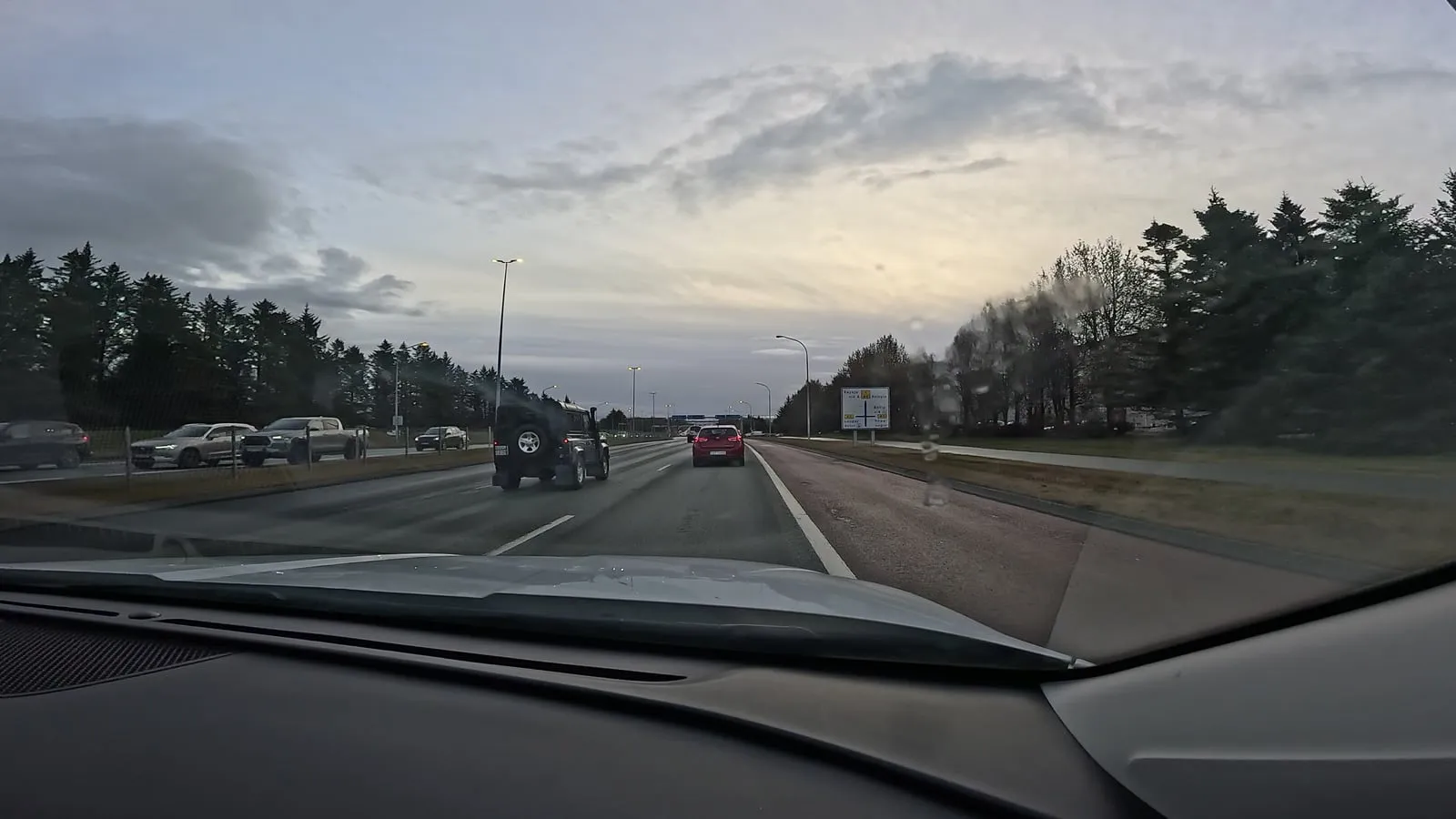
Supplies and the camera on the windscreen
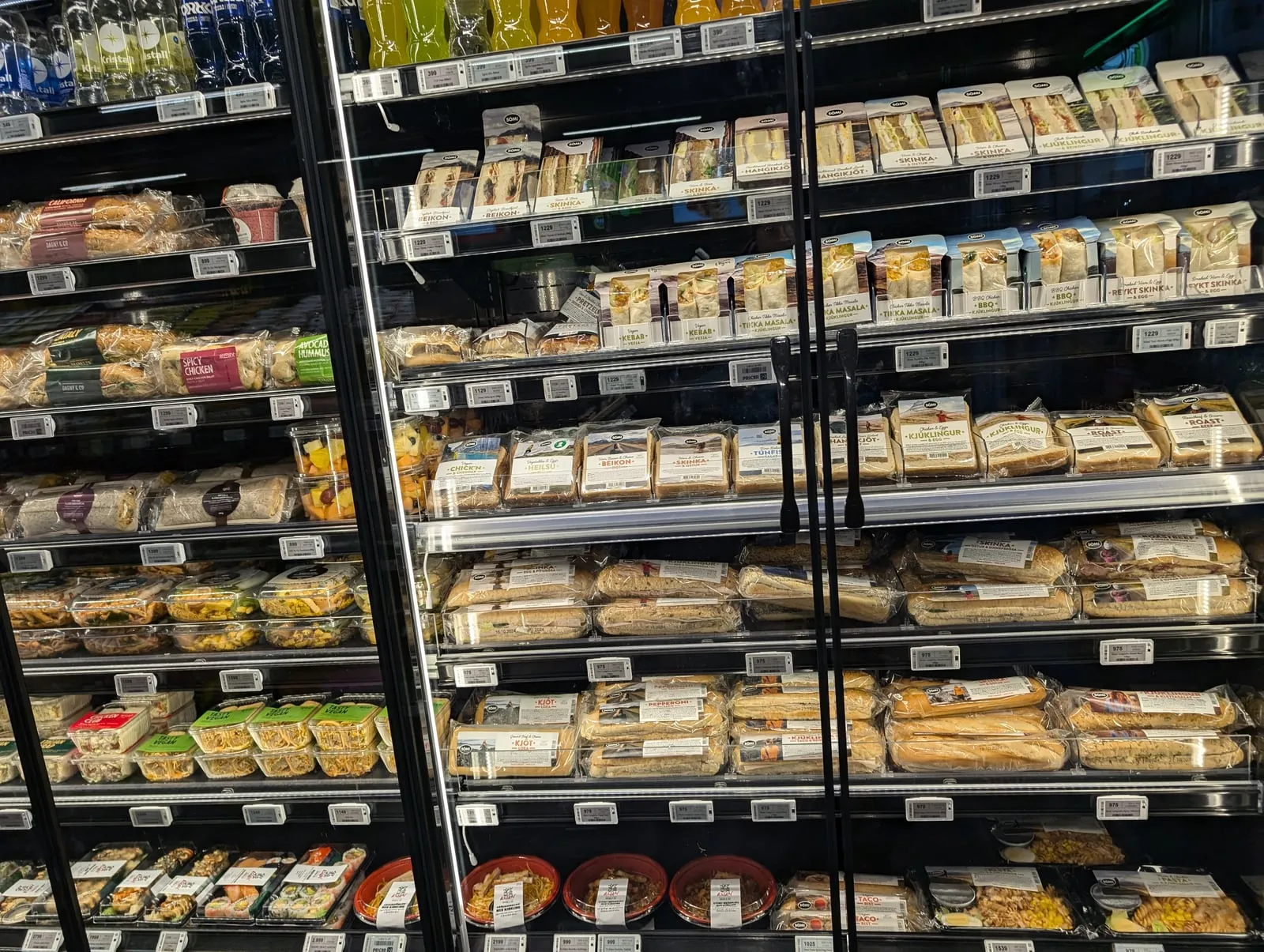
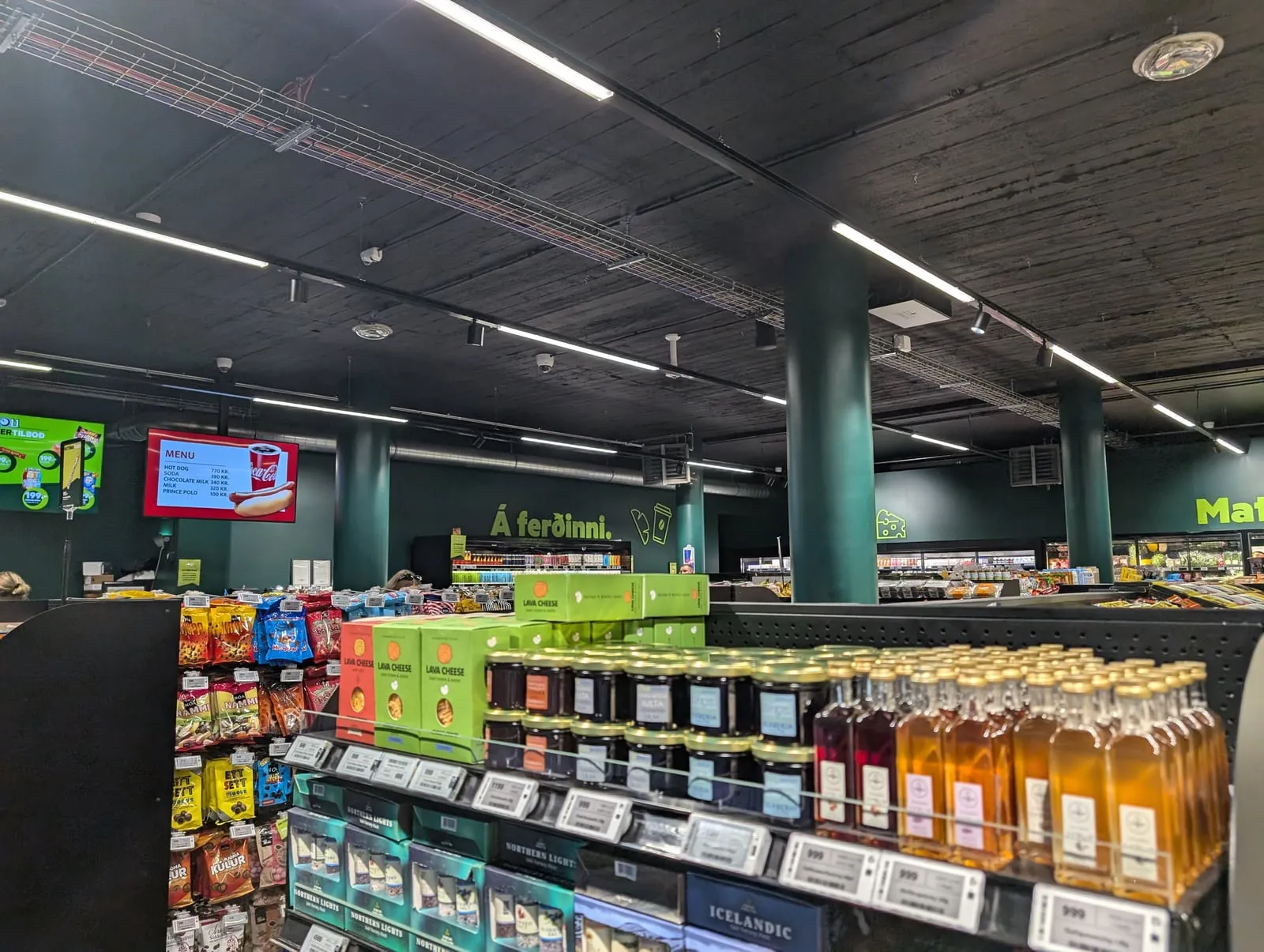
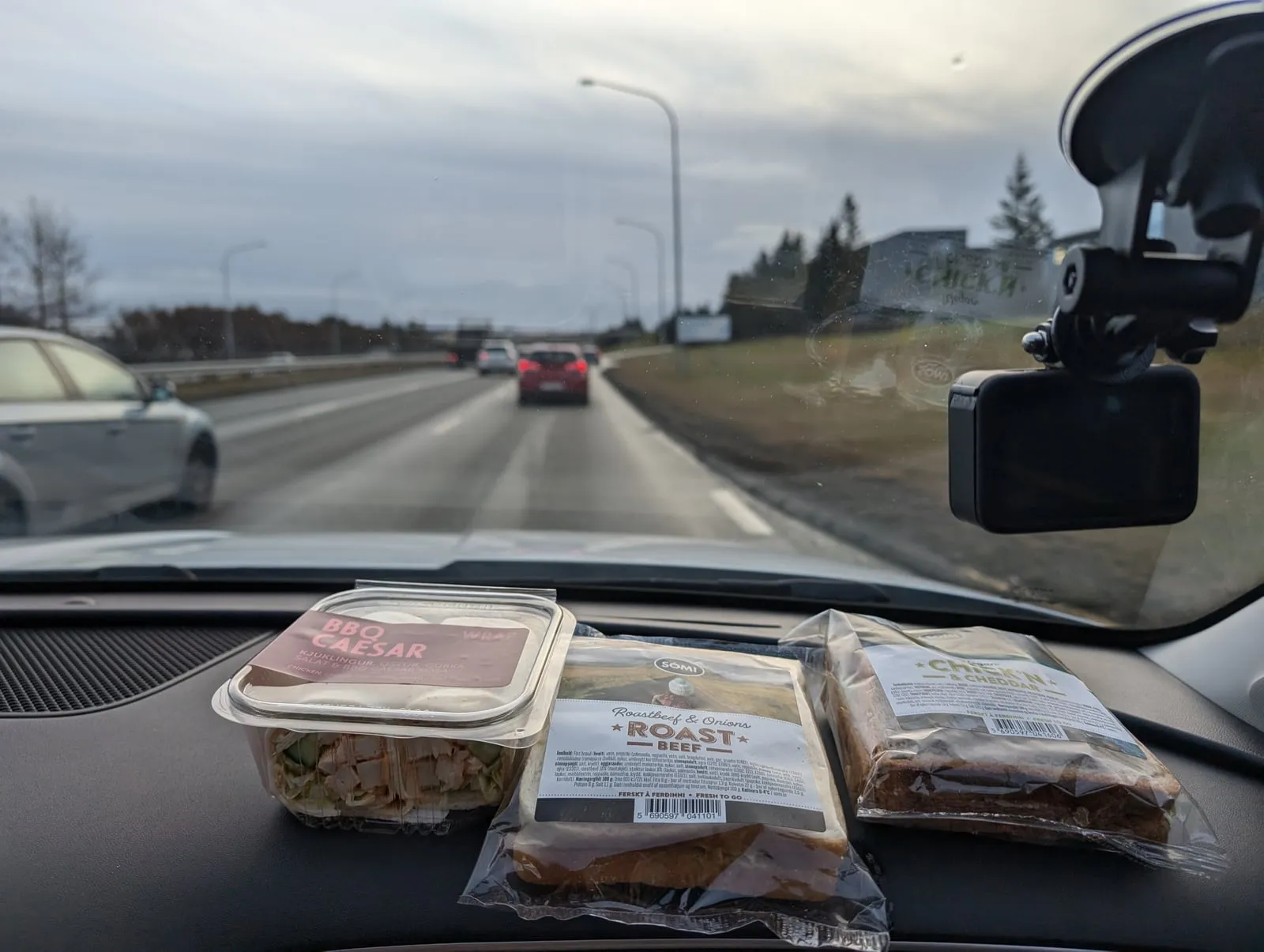
We picked up supplies on the way out of Reykjavík, at the 10-11 on Austurstræti. Plenty of options, a clean, lovely shop, nothing like the UK, and the prices weren’t as insane as people say. Most of the sandwiches were 1,229 kr (about £6.85 at the time), and the hot dog screen said 770 kr.
To be fair to the rest, 10-11 is the dearest chain in Iceland by locals’ account. The budget supermarkets, Bónus and Krónan, are cheaper.
We stuck an action camera to the windscreen to film the drive. It can charge while you drive. Highly recommended.
Þingvellir: our longest stop
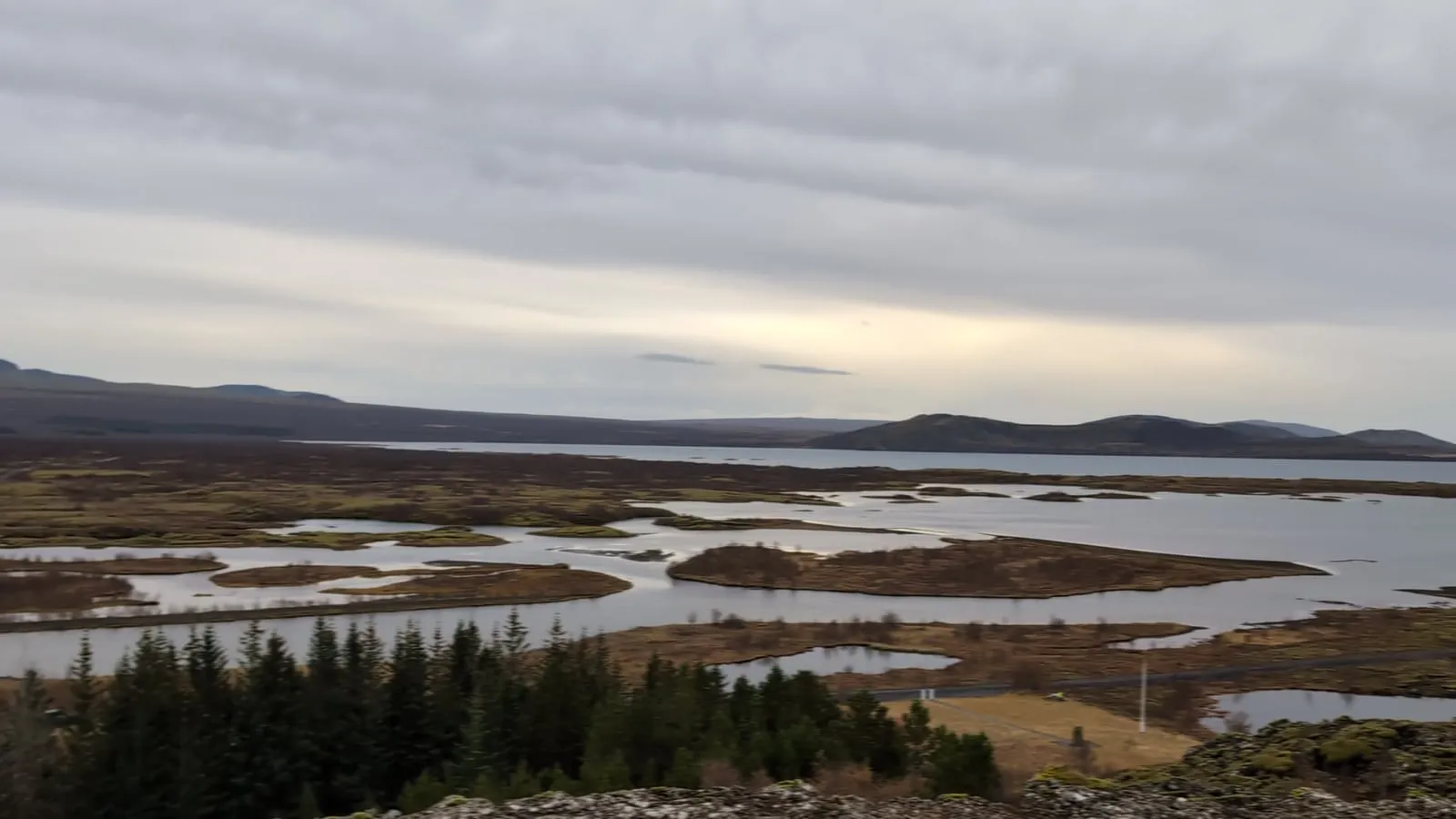
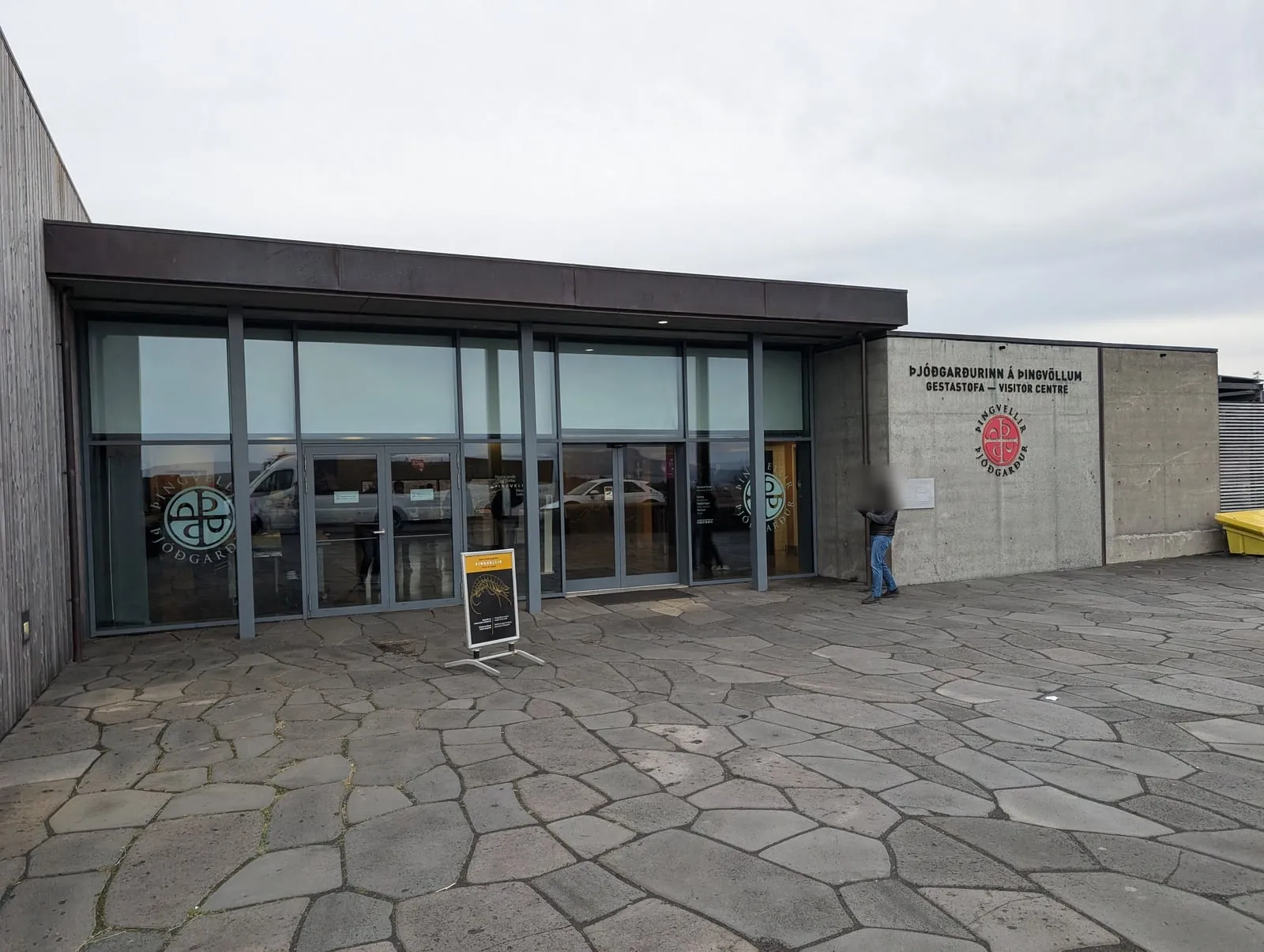
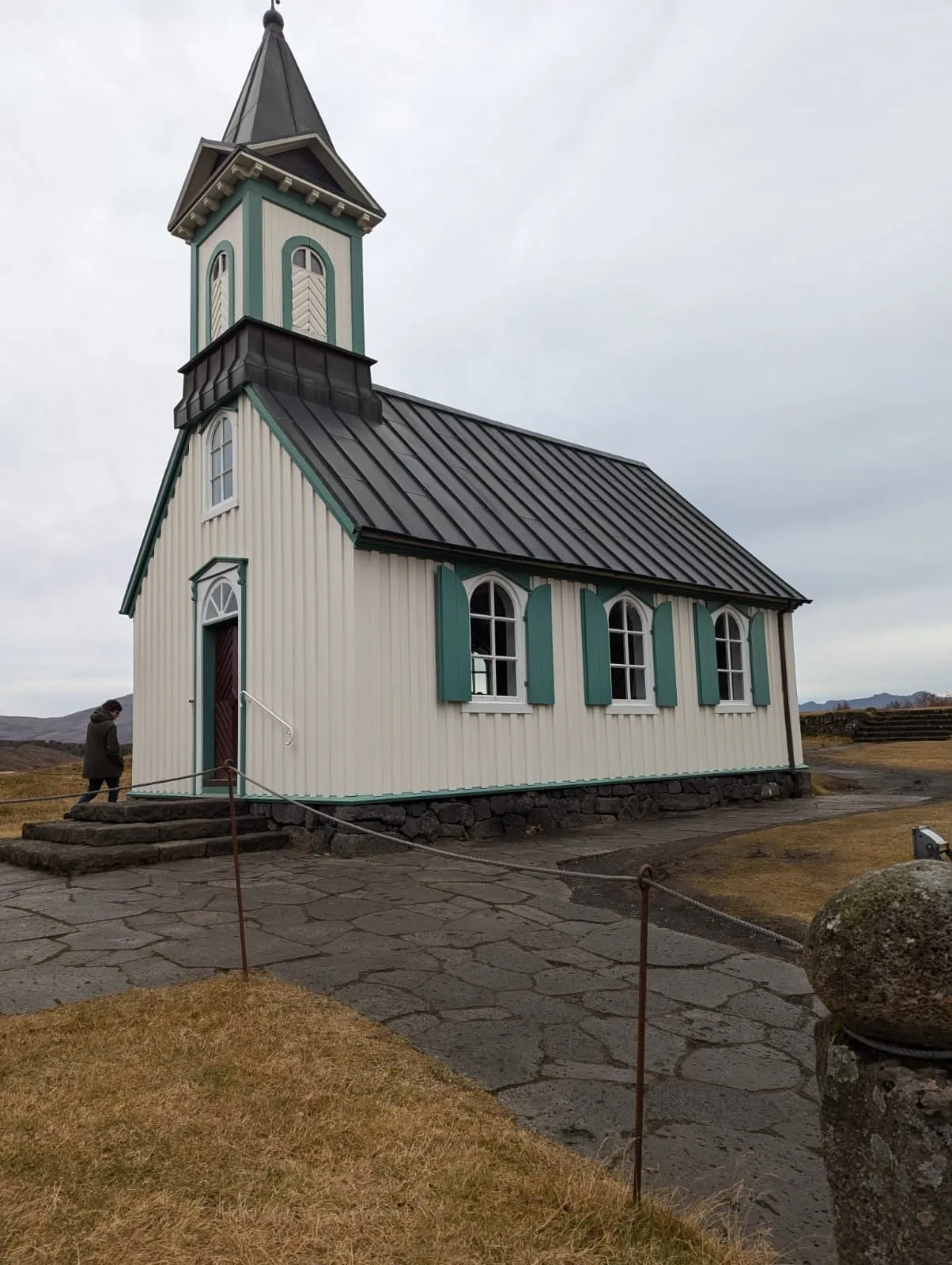
Our first stop was Þingvellir National Park. We started at the visitor centre at Hakið, at the top of the rift. It was an interesting stop: beautiful and open, with a nice church, and a good introduction to Iceland. It was the longest of our stops.
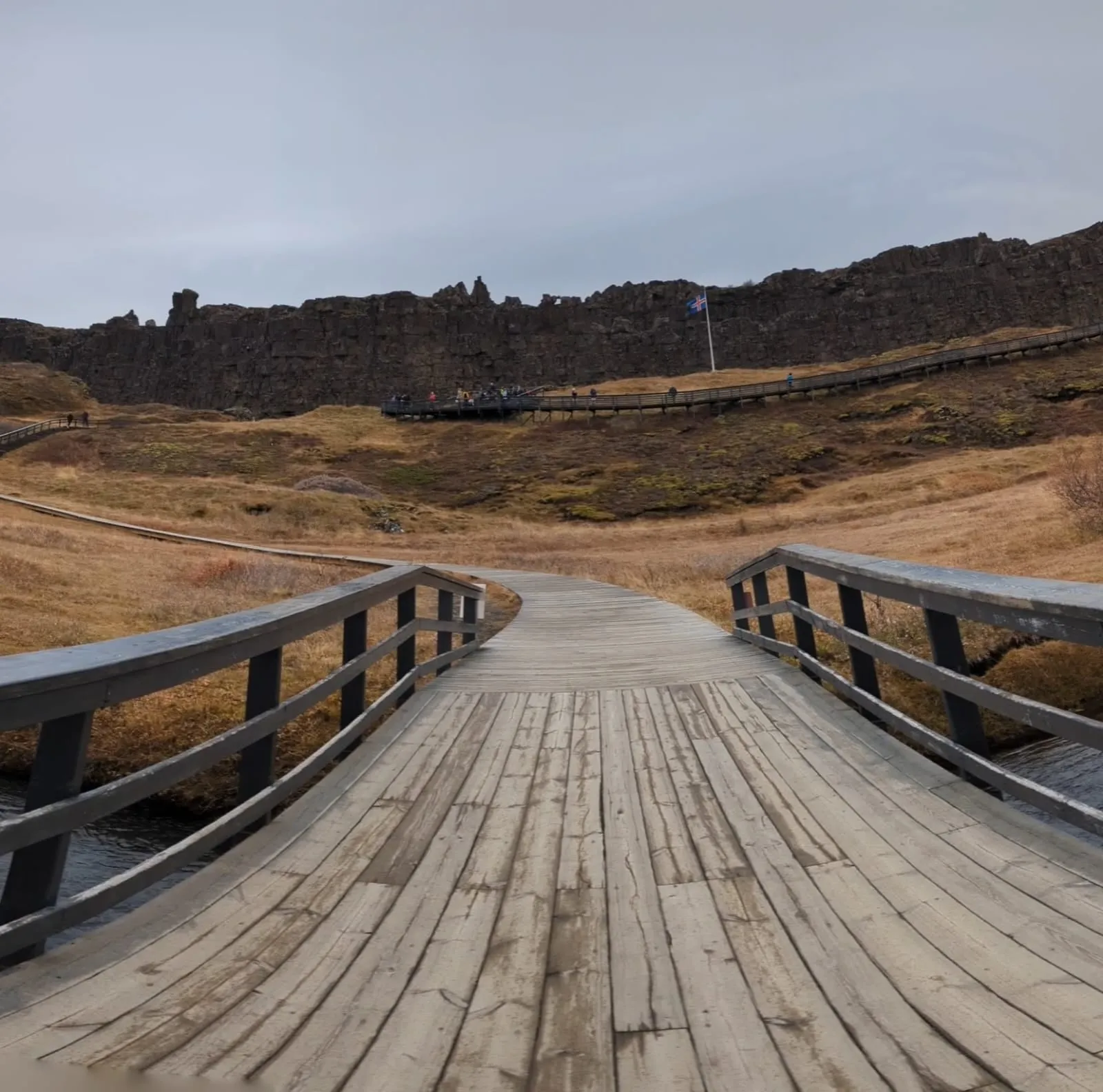
Iceland’s parliament, the Alþingi, met here every summer from 930 to 1798, and the park has been a UNESCO World Heritage Site since 2004. The cliff wall of Almannagjá marks roughly the eastern edge of the North American plate, with the sunken rift valley below it. The little white church was built in 1859, and it is usually only open inside in summer.
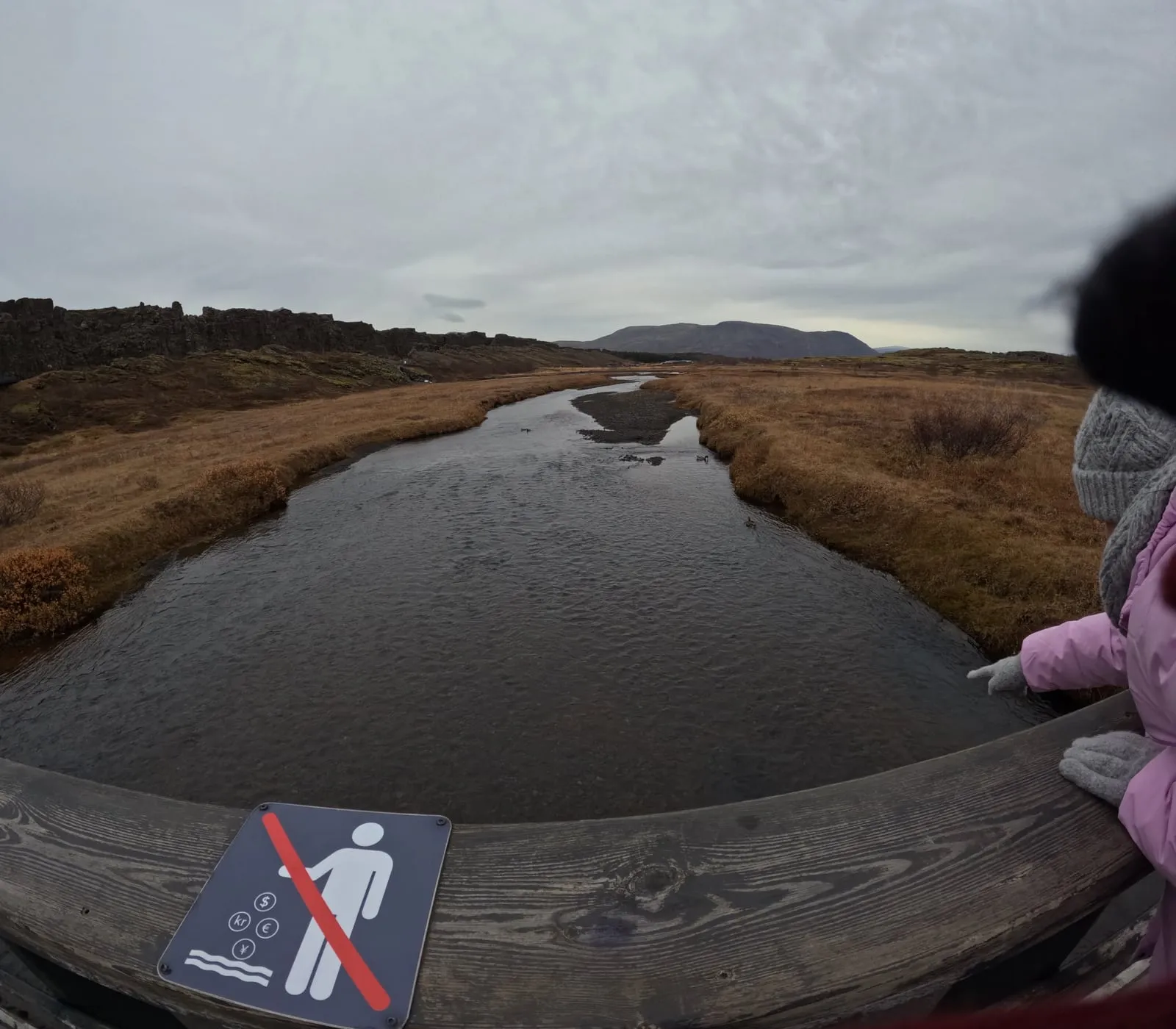
From the footbridge over the Öxará river you can see fish in the water in front of you. We guessed Arctic char. In October they are most likely brown trout: the big trout from the lake swim up the Öxará to spawn every autumn, and the park runs a trout-watching walk on the river each year.
The visitor centre is open from 9am to 6pm from April to October and from 9am to 5pm in winter, and its exhibition costs ISK 1,200 for adults (about £7.30), with under-18s free. Parking is ISK 1,000 a car for the day (about £6.10, $8.10), the same as when we went, and one payment covers all three paid car parks. Cameras read your number plate, and you pay at the machines or online with Checkit. It is free for stays under 10 minutes and between 6pm and 8am (checked 15 November 2026).
Geysir and Strokkur
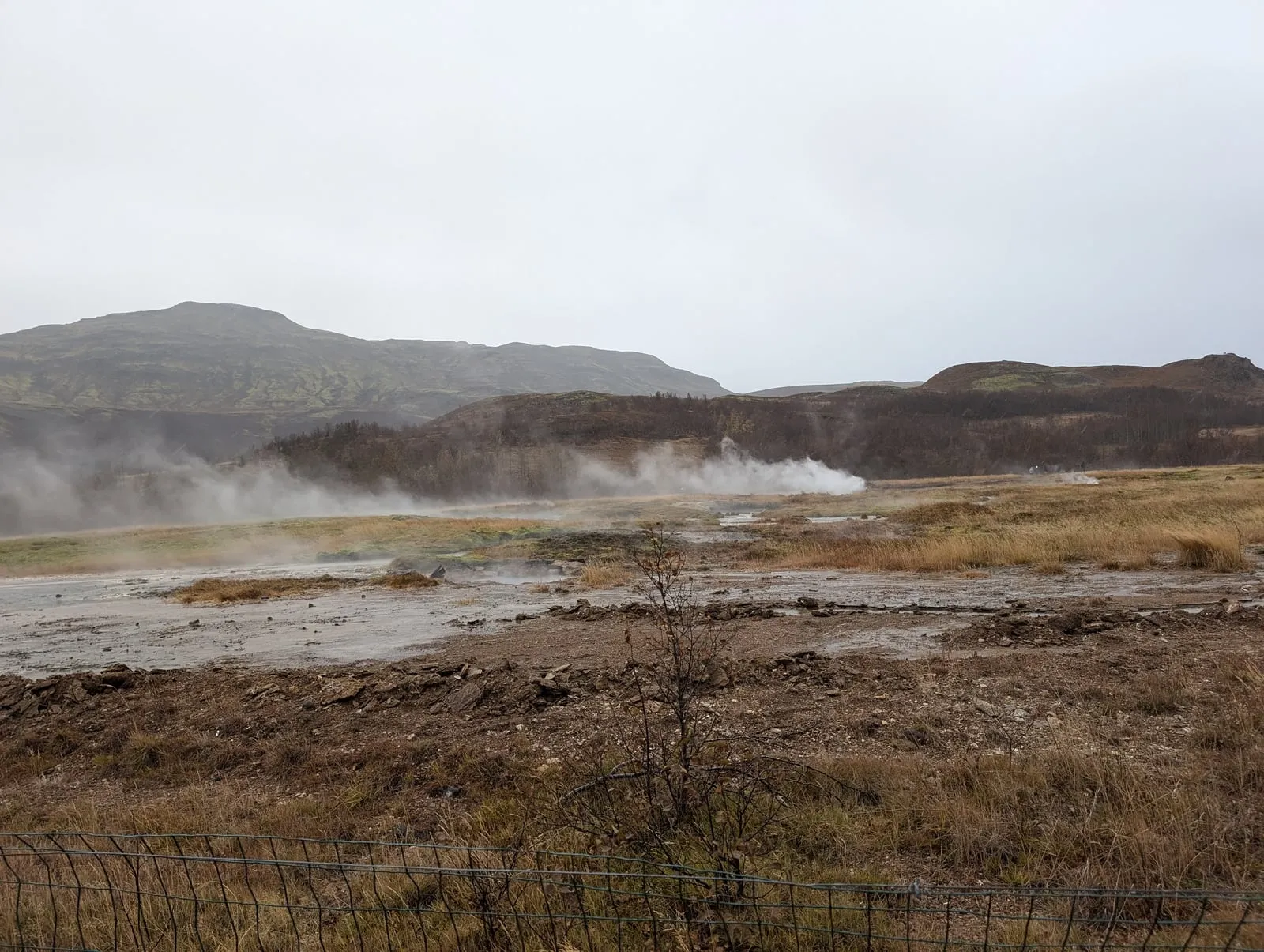
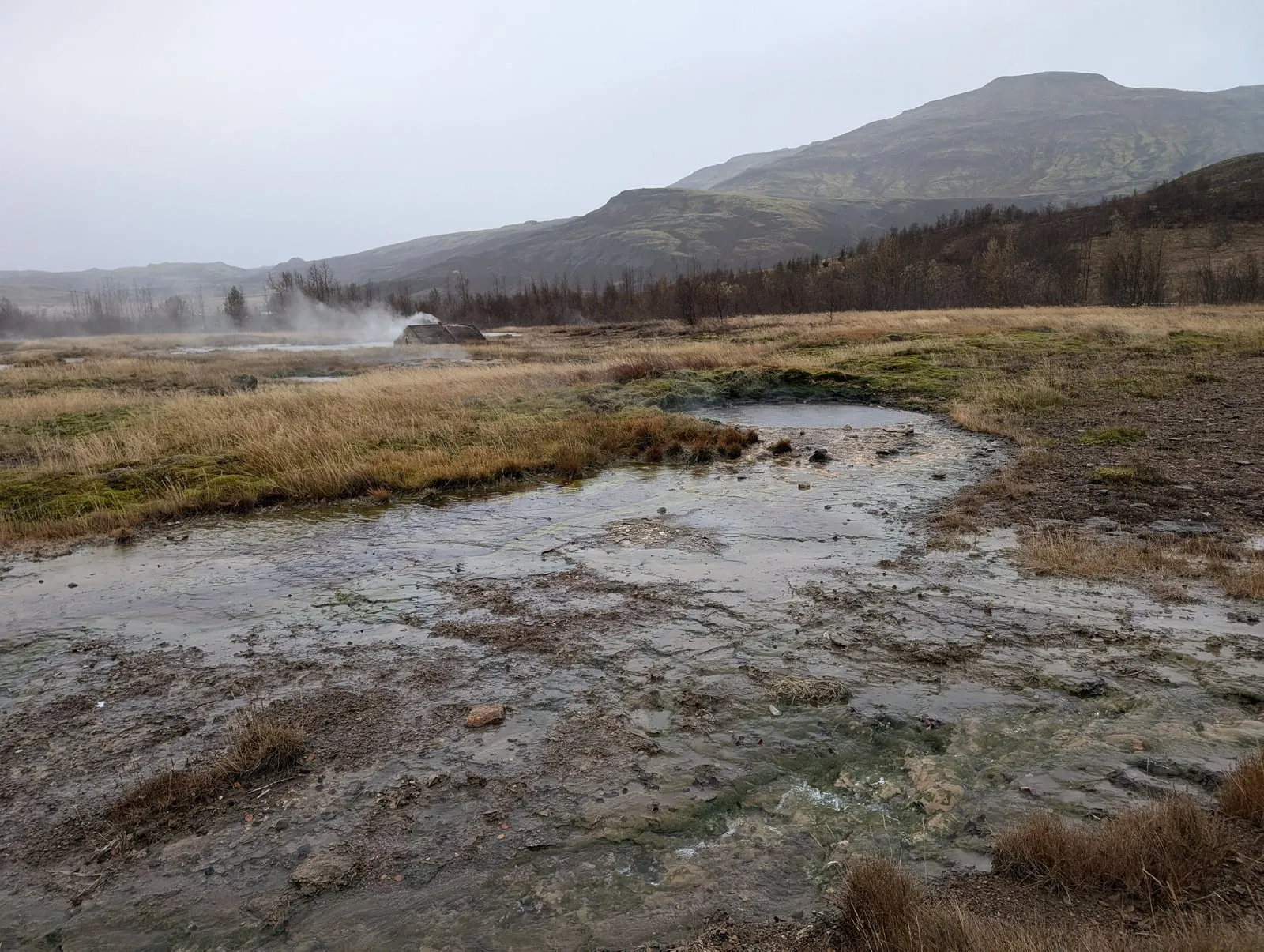
Next stop, Geysir, about an hour on. There is plenty of parking, and the hot springs are a very short walk across the road.
This is where the cold really hit us. A scarf and hat is a must for sure: we never felt cold like it in Britain. It wasn’t just us. Iceland’s Met Office says October 2024 was a cold month, and the 18th and 19th, our Golden Circle and waterfall days, brought one of its windiest spells.
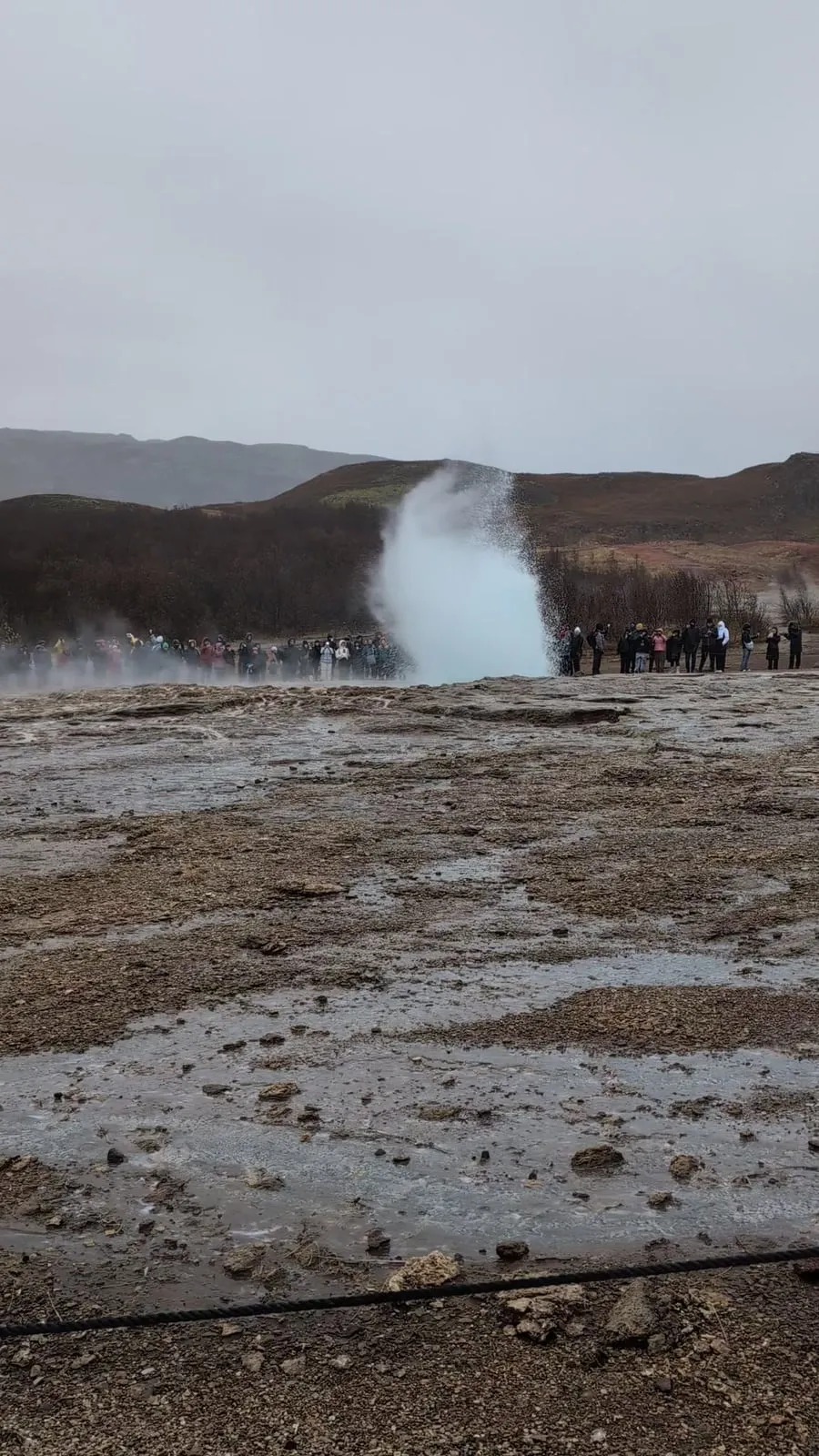
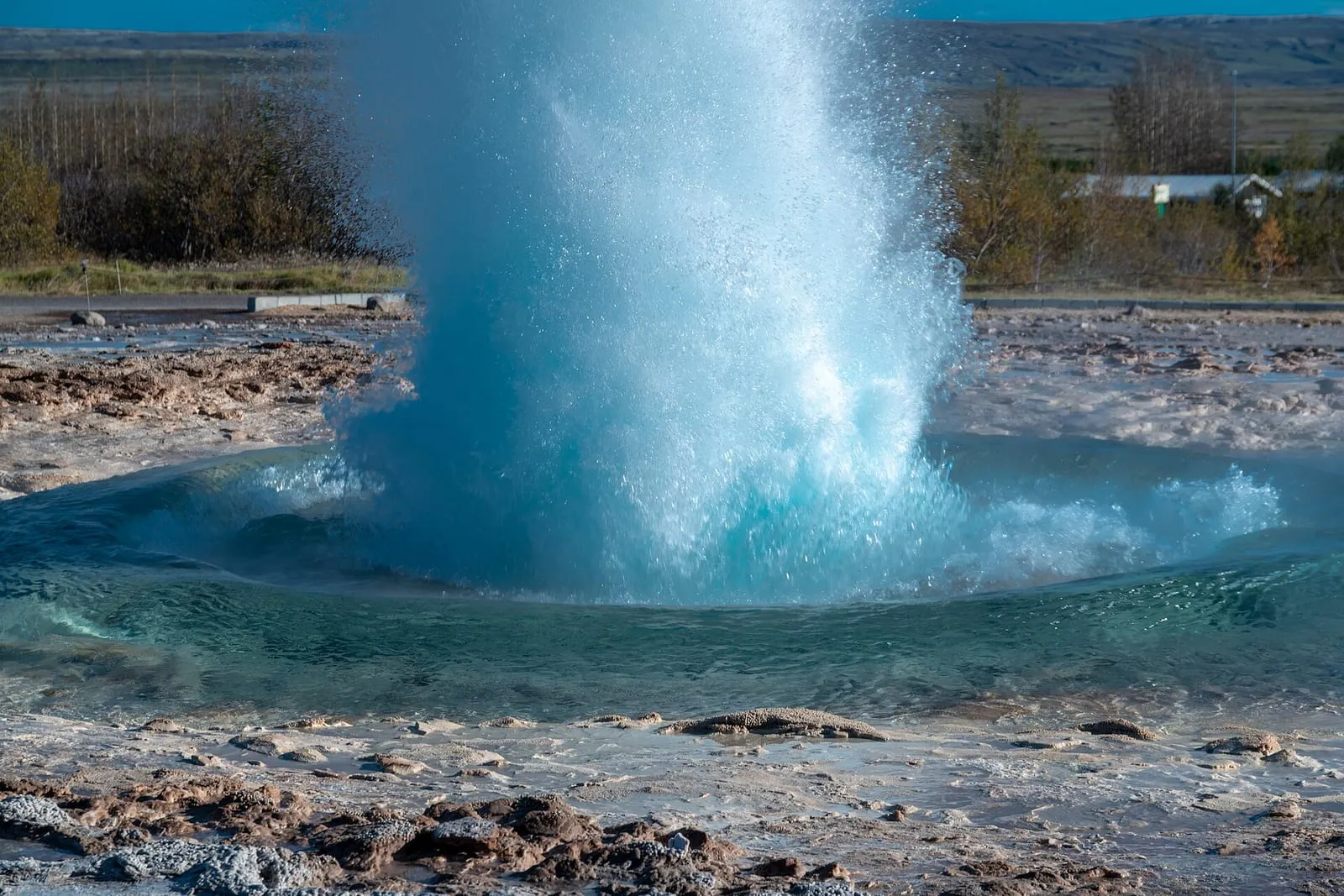
The one you watch is Strokkur. It erupts every six to ten minutes, usually 15 to 20 metres high, sometimes higher. The Great Geysir next to it, which gave every geyser its name, was last known to erupt in 2016. Strokkur is a little anticlimactic, but still a cool watch and a must do. It was very busy.
The smell isn’t as bad as people say. It is hydrogen sulphide, the rotten-egg gas from the hot springs, and it dulls your sense of smell quickly.
There is no ticket for the hot springs. Parking is ISK 1,080 for up to eight hours (about £6.60, $8.70), plus ISK 89 if you pay online with Parka (checked 15 November 2026).
The Geysir Center: the best shop of the trip
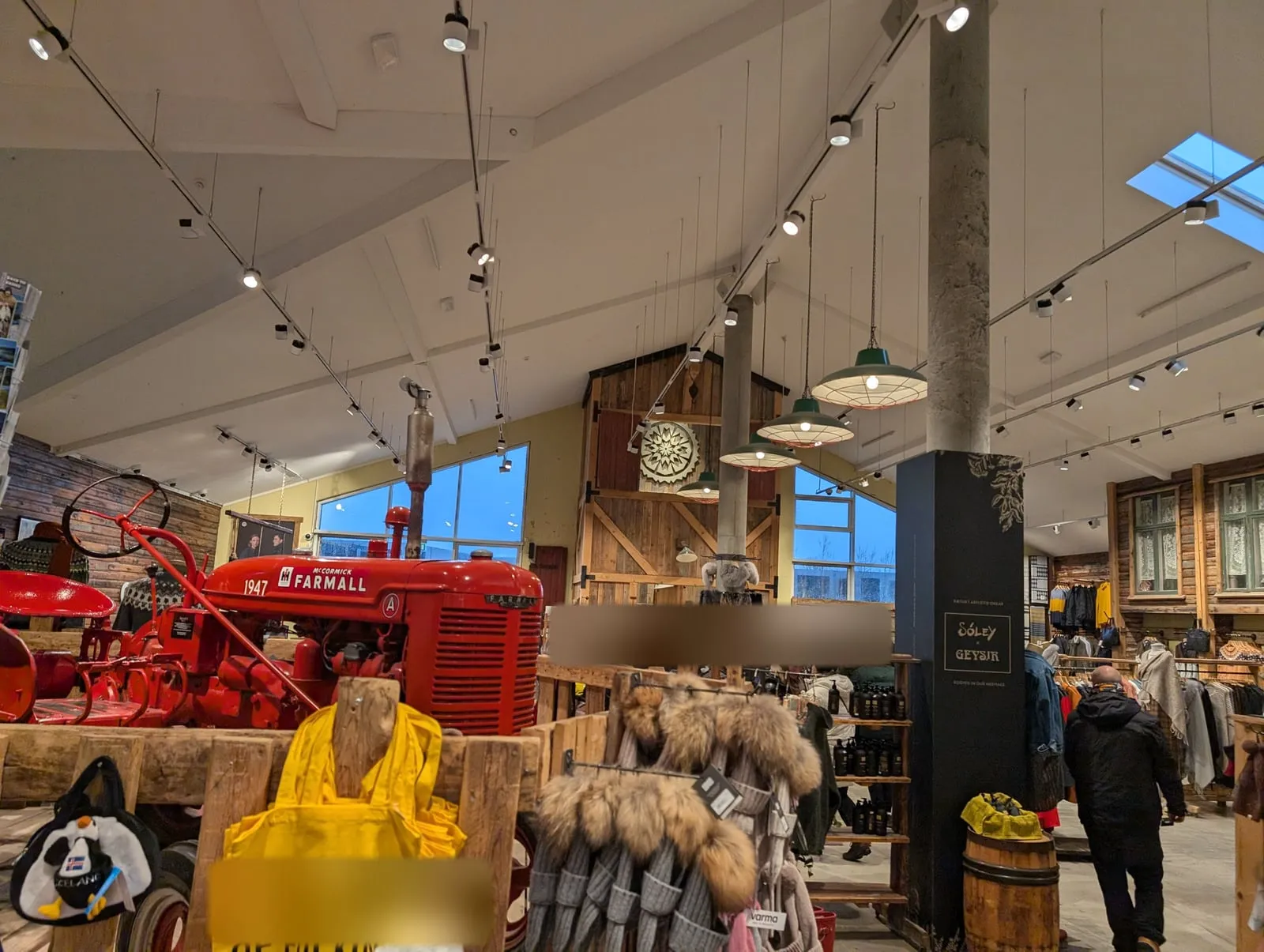
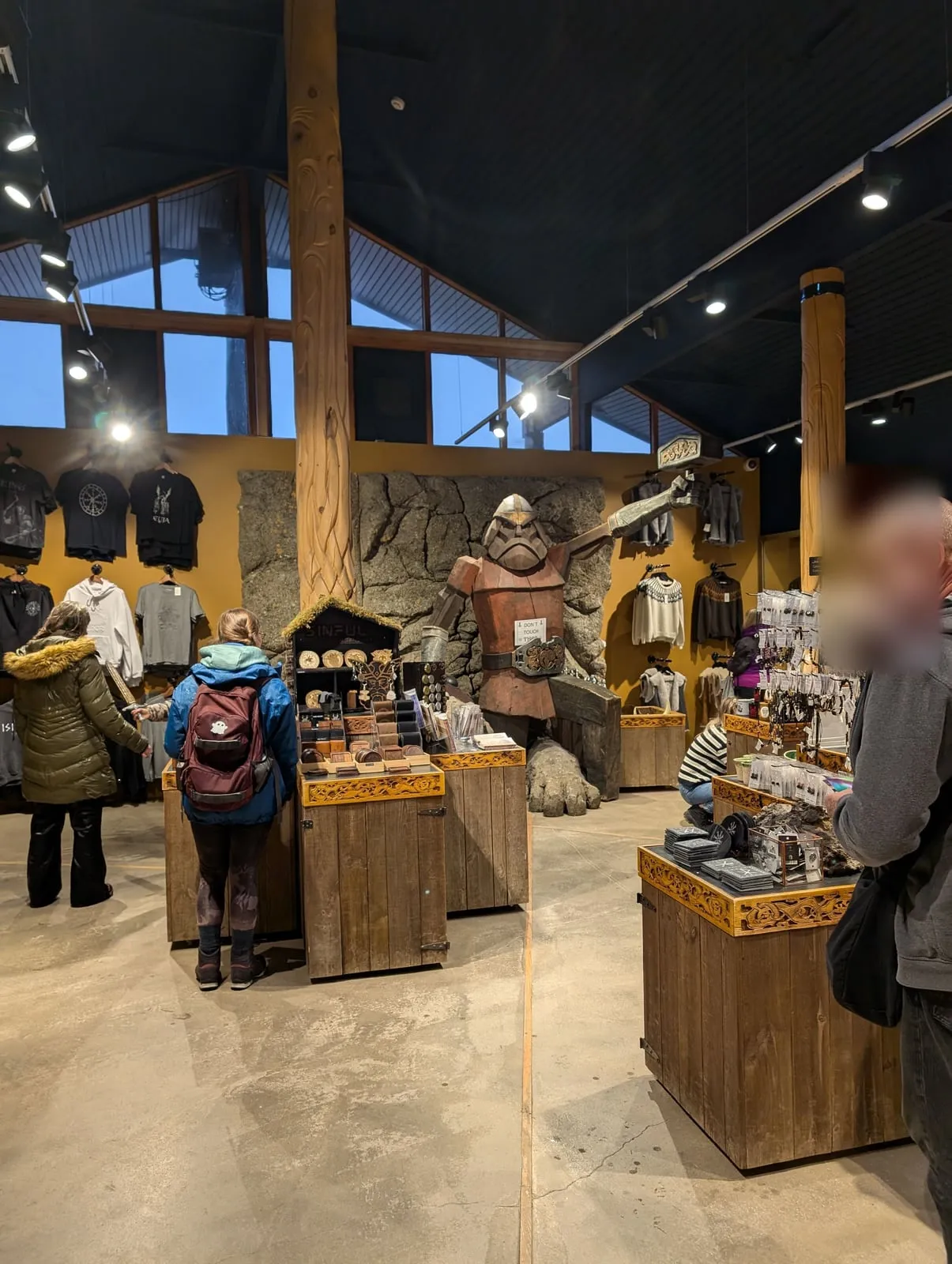
The visitor shop across the road is a very nice shop to visit, with plenty of things to buy. It was the best tourist shop we saw the entire trip, and a very nice place to look around or grab a coffee. You feel like you’re truly in Iceland at this point.
The Geysir Center is a family business. Besides the shop it has the Kantína restaurant, a café with an ice-cream counter, a soup bar and toilets. The Geysir shop sells Icelandic labels such as 66°North and Kormákur & Skjöldur, in a fit-out made from wood saved from abandoned farmhouses. We couldn’t find its opening hours published anywhere.

Gullfoss: a sight to behold
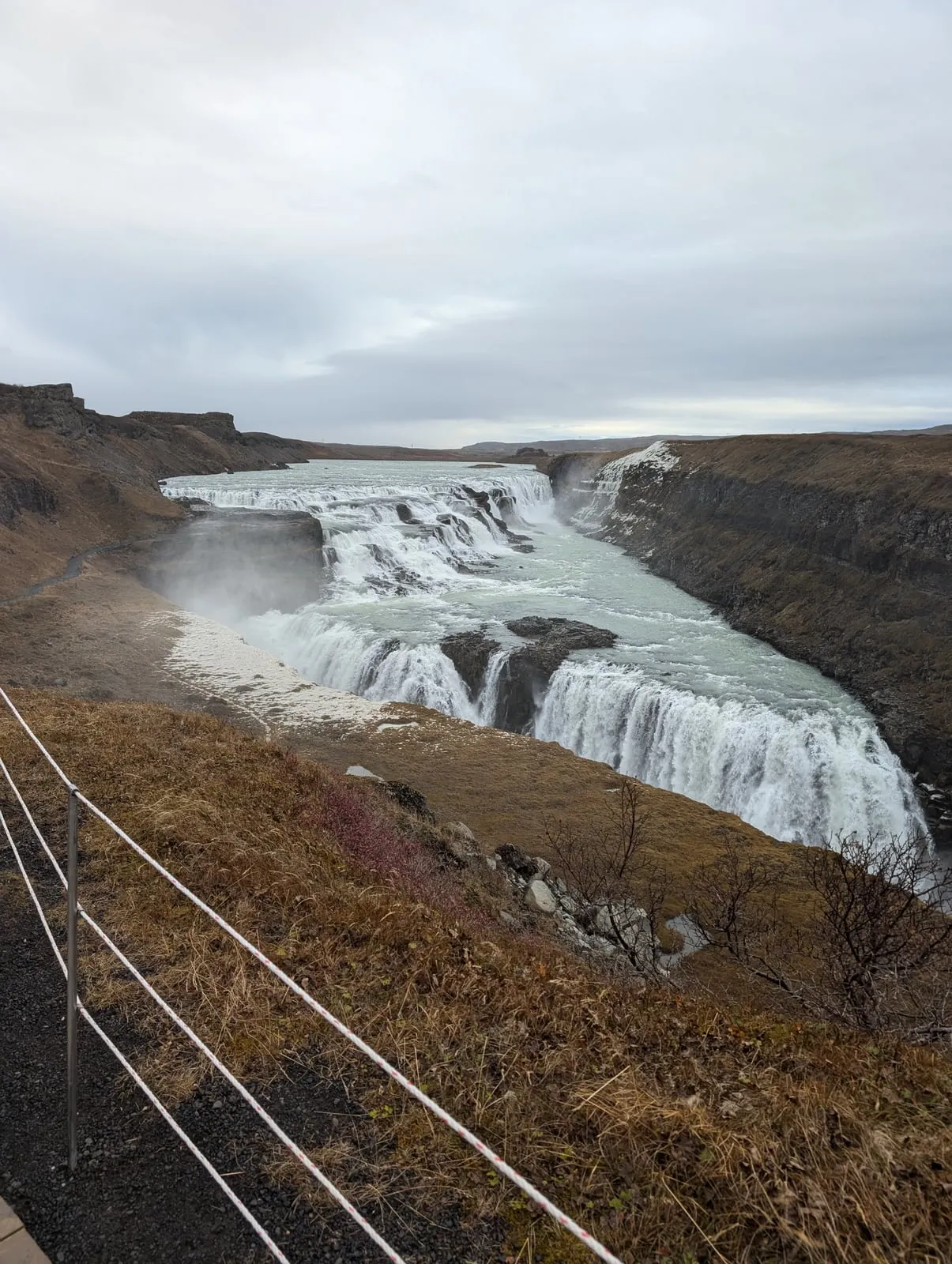
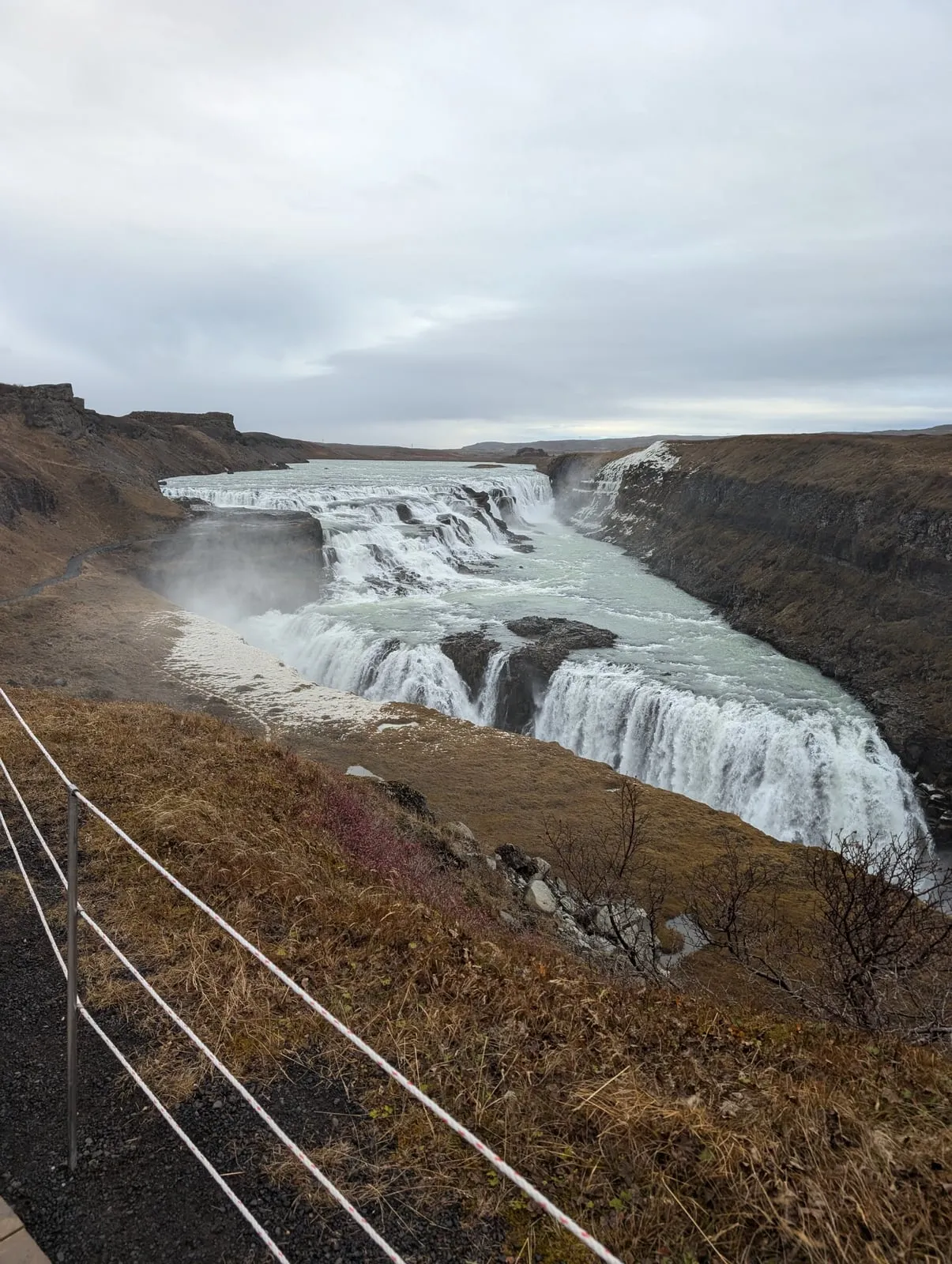
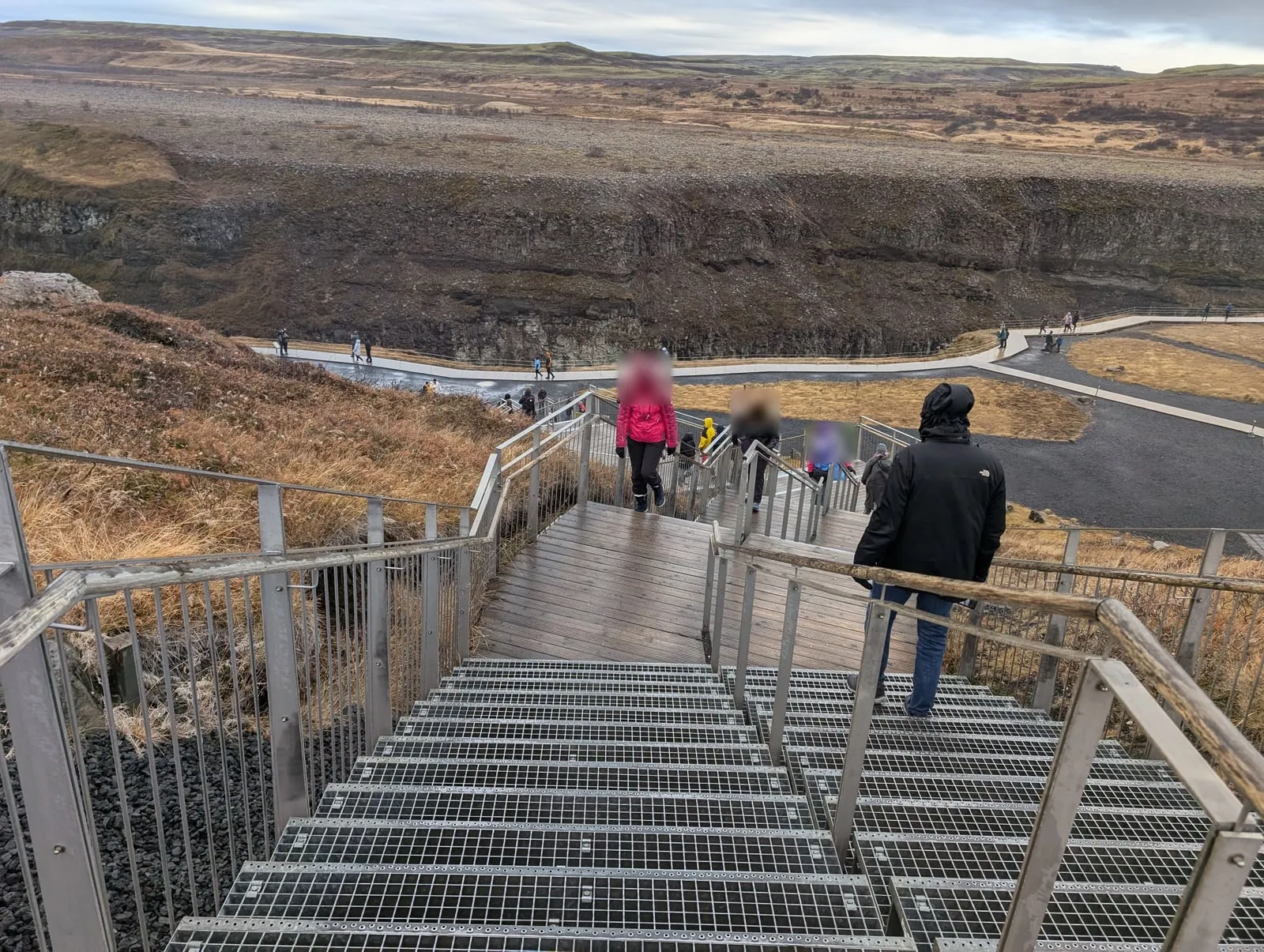
Ten minutes on is Gullfoss, the large waterfall, and it’s a sight to behold. It’s a bit of a walk down, but very, very overwhelming to see. It’s massive and beautiful, and definitely worth the trip.
The Hvítá river, fed by the Langjökull glacier, drops about 32 metres in two steps into a canyon, about 109 cubic metres of water a second on average. The story goes that Sigríður Tómasdóttir, the farmer’s daughter at Brattholt, saved it from foreign investors who wanted it for electricity, and she did fight their lease for years. What ended it was that they lost interest and stopped paying, and the lease ran out in 1928. The state bought the falls in 1945, and there is a memorial to her by the falls.
The falls are free and open all the time, and Gullfosskaffi, the café, is by the top car park. Parking is ISK 1,080 for up to four hours (about £6.60, $8.70), plus ISK 89 online (checked 15 November 2026). The lower path, the walk down we did, is shut in winter when it ices up, so check safetravel.is on the day.
Icelandic horses on Route 30
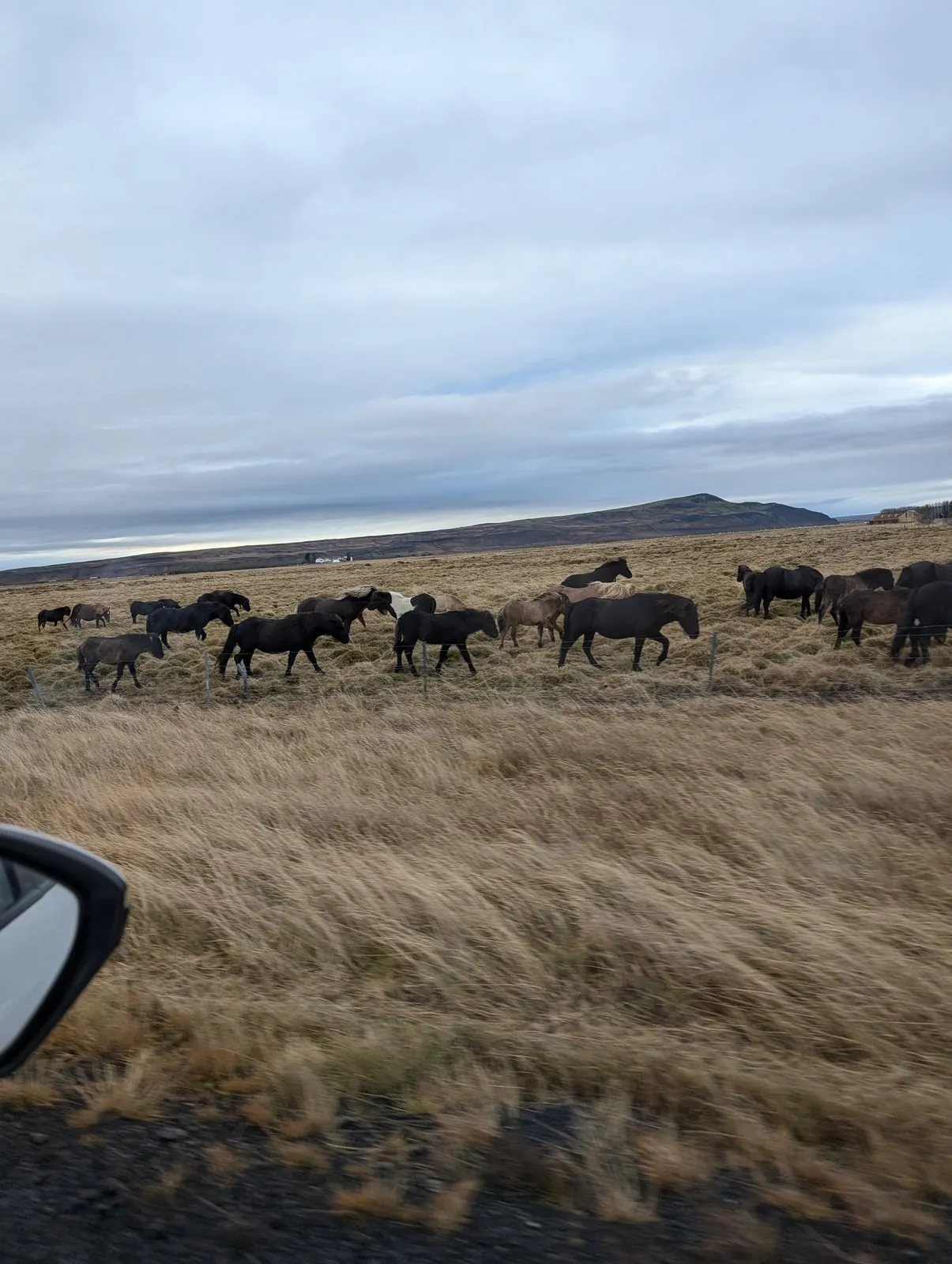
After Gullfoss we headed south on Route 35 and Route 30, and saw Icelandic horses by the road at Brautarholt, about 25 of them in the long grass. Very cool.
They are a breed of their own, brought by the first settlers more than a thousand years ago and kept pure ever since. No horse may be brought into Iceland, and one that leaves can never come back: Iceland has almost none of the horse diseases found elsewhere, so its horses have no immunity to them. They are pony height, but every breed register calls them horses. They come in over 40 colours, and as well as walk, trot and canter they have the tölt, a smooth four-beat gait, and some have the flying pace, a racing gait. There are about 90,000 on the breed register in Iceland.
If you want a photo, don’t stop on the road or its edge. Find a safe place to pull in. The horses belong to farmers, and some have asked visitors not to feed them.
Why we skipped Kerið
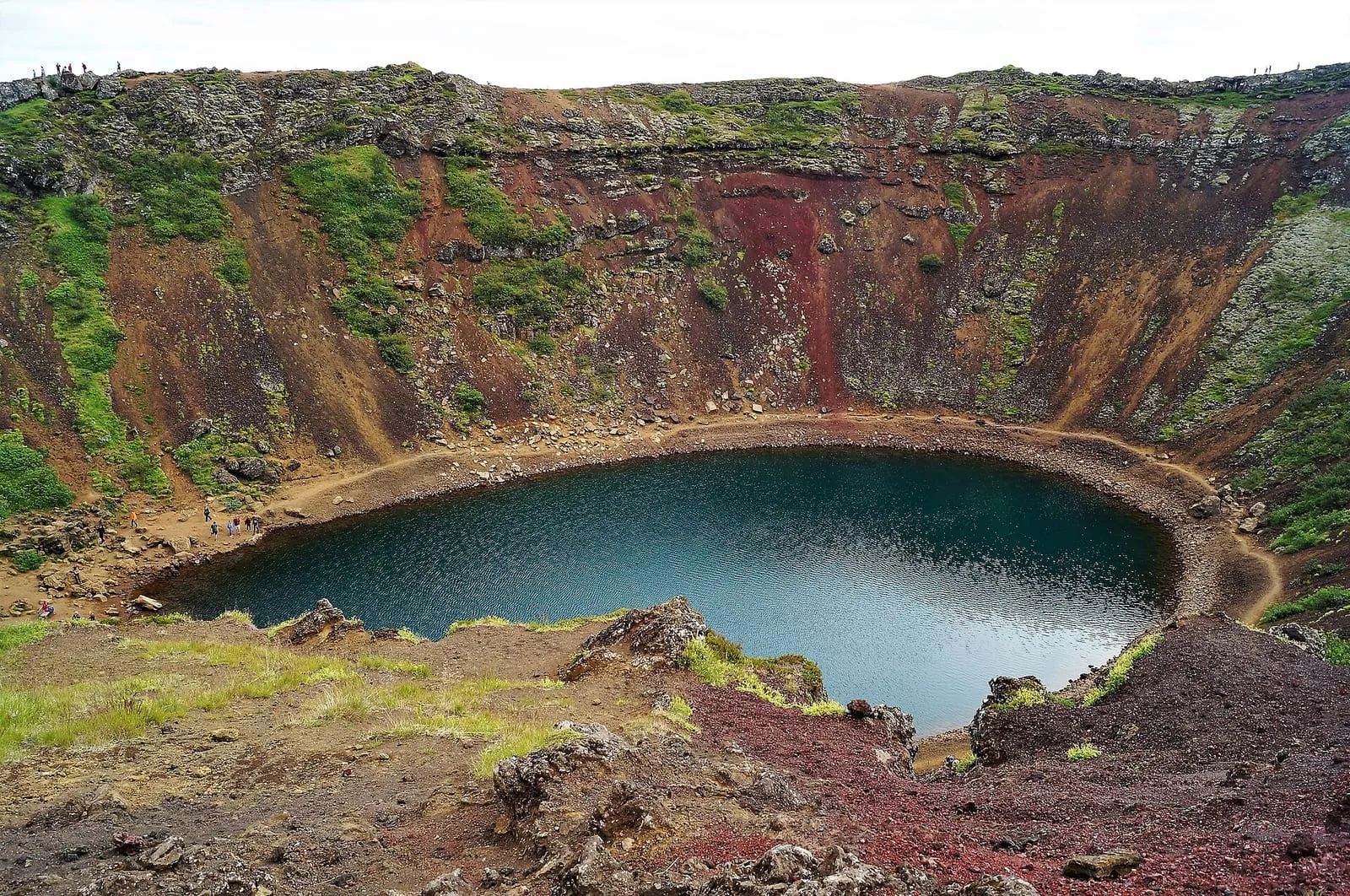
We skipped Kerið, the crater lake, because of the time. We didn’t want to drive in the dark, and it was a long journey to the hotel.
Looking at our times now, we would probably have made it. The sun set at 5.55pm that day and we reached Hotel Rangá at about 4.20pm, and from Gullfoss, going by Kerið adds about 22 km and 23 minutes of driving, plus the stop. So with an early start it fits, even in October.
Kerið is a volcanic crater about 6,500 years old and 55 metres deep, with a lake at the bottom that looks aquamarine from the minerals. It is on Route 35 about 15 km north of Selfoss. Entry is ISK 700 (about £4.30, $5.70), parking is free, there are toilets, and it is open whenever it’s light (checked 15 November 2026).
On to Hella
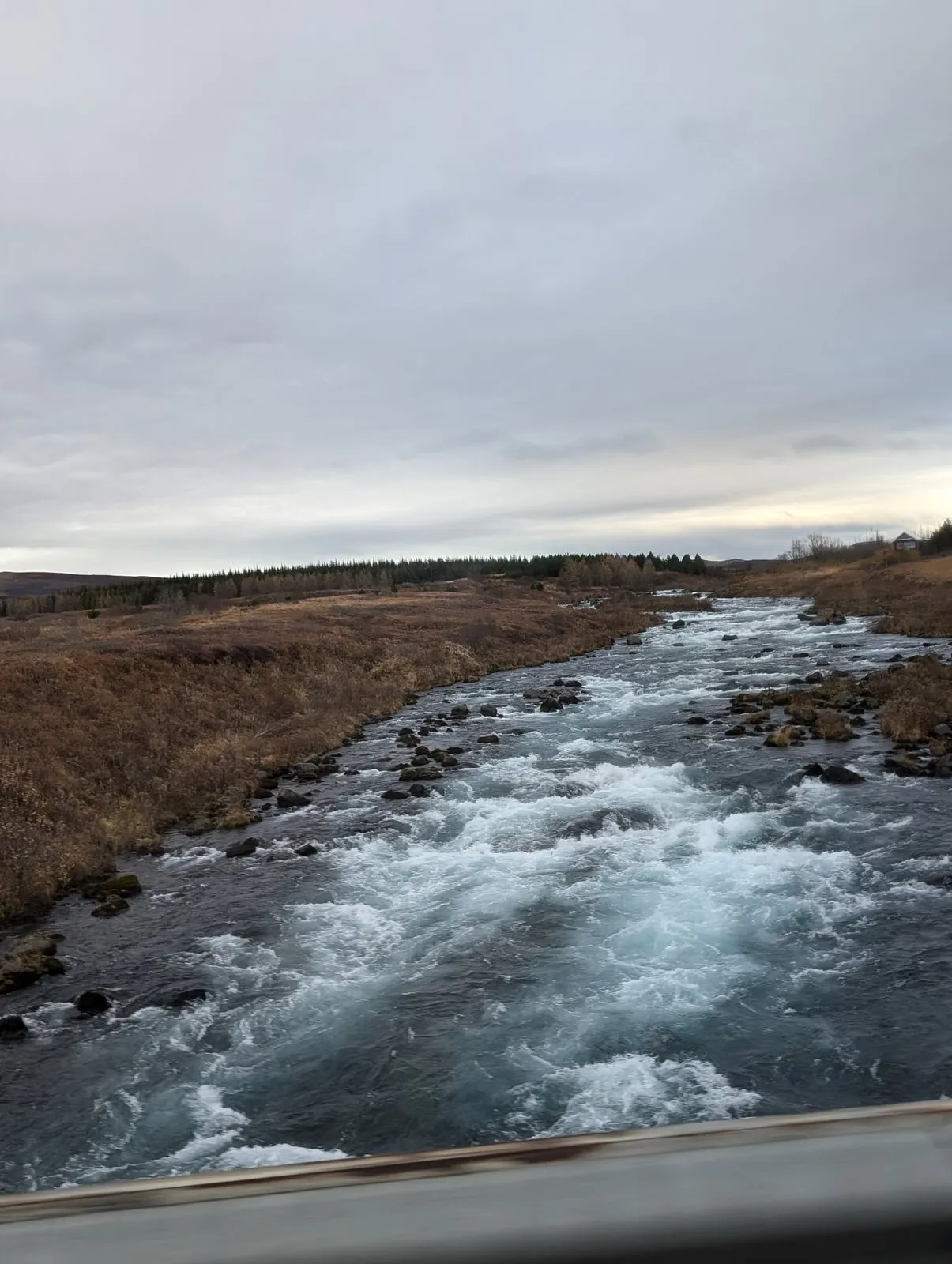
From Route 30 we joined Route 1 and crossed the Þjórsá, Iceland’s longest river, to Hella, where we stopped at the shops before Hotel Rangá, 9 km further on. The next morning we drove to the south coast waterfalls, and they were much better than the Golden Circle.
Parking and fees in 2026
What the Golden Circle costs a car now (checked 15 November 2026):
- Þingvellir: ISK 1,000 a day for a car (about £6.10, $8.10), covering all three paid car parks.
- Þingvellir exhibition: ISK 1,200 an adult (about £7.30, $9.70), under-18s free.
- Geysir: ISK 1,080 for up to eight hours (about £6.60, $8.70), plus ISK 89 online. The hot springs are free.
- Gullfoss: ISK 1,080 for up to four hours (about £6.60, $8.70), plus ISK 89 online. The falls are free.
- Kerið: ISK 700 to go in (about £4.30, $5.70). Parking is free.
Pay on the day. At Geysir and Gullfoss a fee still unpaid after 24 hours gets a late charge of ISK 1,490 to 1,960, and the claim goes to the car’s owner. With a hire car that is the rental firm, which may add charges of its own.
Coming next: the government plans a nature pass for Geysir, Gullfoss and Þingvellir from 1 May 2027, ISK 4,500 a year bought from June to October or ISK 3,000 from November to May (about £27.50 or £18.40), for visitors aged 18 and over. It would end paid parking inside Þingvellir. For now it is a draft, not law.
Self-drive or tour?
Drive it yourself. If you come to Iceland, don’t just do the Golden Circle tour: renting a car really makes it so much better, and you can carry on to the south coast.
Our hire car was from Blue Car Rental at Keflavík airport: ISK 61,896 (about £345 at the time) for three days in October 2024, with their top insurance but not roadside assistance. When we sent them our route, they told us any car from their mid-size SUV class would be perfect for it, and not to take the little Aygo-class cars at that time of year.
The roads felt very safe. The rules worth knowing: headlights on all the time, 90 km/h on paved country roads, and no studded tyres before November unless the weather needs them. Check umferdin.is for the roads and safetravel.is for alerts before you set off (checked 15 November 2026).
Our tips
- Start early. We had under nine and a half hours of daylight.
- Take a scarf and a hat. The cold at Geysir was like nothing we’ve felt in Britain.
- Stick an action camera on the windscreen. It can charge while you drive.
- Give Þingvellir the most time, and look for trout from the Öxará footbridge in autumn.
- Wait for Strokkur. It goes every six to ten minutes.
- Look round the Geysir Center shop, the best of our trip.
- Pay for parking on the day, especially in a hire car.
- Don’t stop on the road for the horses. Pull in somewhere safe.
- Don’t only do the Golden Circle. The south coast waterfalls are better.
Golden Circle FAQ
How long does it take to drive the Golden Circle? About three to four hours of driving for the classic 250 km loop from Reykjavík and back, so a full day with stops. Our one-way version, Reykjavík to Hotel Rangá, was 212 km and took about seven hours with the stops.
Can you drive the Golden Circle yourself? Yes. We did, in a hire car, in October 2024. The roads were very safe and open, and you barely see anyone until you stop.
Is the Golden Circle worth it? Yes, for Þingvellir and Gullfoss above all. But don’t make it your only day out: the south coast waterfalls were better.
Can you drive the Golden Circle in October? Yes. We did on 18 October 2024, on dry roads. Expect cold wind and under ten hours of daylight, and check umferdin.is before you set off.
How often does Strokkur erupt? Every six to ten minutes, usually 15 to 20 metres high. The Great Geysir itself was last known to erupt in 2016.
How much is parking at Þingvellir? ISK 1,000 a day for a car, about £6.10, and it covers all three paid car parks (checked 15 November 2026).
Is Geysir free? Yes, there is no ticket for the hot springs. Parking is ISK 1,080 for up to eight hours (checked 15 November 2026).
Where can you eat on the Golden Circle? At the Geysir Center, which has a restaurant, a café and a soup bar, at Gullfosskaffi by the falls, and at the café in the service centre at Þingvellir. We took supplies from Reykjavík.
More from this trip
The Golden Circle was the first full day of our Iceland trip in October 2024. The rest:
- Our Iceland trip review: the whole trip, and the verdict.
- 4 days in Iceland: our itinerary: day by day, with the drives.
- Hotel Rangá review: where we stayed that night.
- The south coast waterfalls: Skógafoss, Seljalandsfoss, Gljúfrabúi and Urriðafoss, the next morning.
- The Reykjavik EDITION review: refused at check-in on debit cards.
- Our self-guided Reykjavík food walk: five stops, and the fermented shark.
- Where we ate and drank in Reykjavík: our nights out.
- Icelandic hot dogs: the famous stand, a petrol station and the airport.
- The Reykjanes peninsula: Gunnuhver and Brimketill.
- The Silica Hotel review: our last night, next to the Blue Lagoon.
- The Blue Lagoon review: the lagoon, and Lava restaurant.
Photo credits
Our photos and video stills are our own, from October 2024. Stock photos, resized, each under its own licence:
- Strokkur erupting close up: Eric Kilby, CC BY-SA 2.0, Wikimedia Commons.
- Kerið crater lake: Alexander Grebenkov, CC BY 3.0, Wikimedia Commons.