Seljalandsfoss and Gljúfrabúi: South Coast Waterfalls in Iceland
Walking behind Seljalandsfoss, wading into Gljúfrabúi, Skógafoss and a quiet Urriðafoss: Iceland’s south coast waterfalls from our October 2024 drive.
The short version
- Our score: 5 out of 5.
- Worth it? Yes, and much better than the Golden Circle. Walking behind Seljalandsfoss was one of the best stops of our Iceland trip, Gljúfrabúi next door is a hidden-ish secret you wade into, and at Urriðafoss there were only one or two other people.
- Our trip: Saturday 19 October 2024, a couple in a hire car, from Hotel Rangá east to Skógafoss, back west to Seljalandsfoss and Gljúfrabúi, then Urriðafoss on the drive to Reykjavík.
- Still the same? Yes, but parking is now paid at Skógafoss, Seljalandsfoss and Urriðafoss, ISK 750 to 1,000 a car (about £4.60 to £6.10), and the path behind Seljalandsfoss can close when it ices up in winter (checked 15 November 2026).
If you come to Iceland, don’t just do the Golden Circle tour. Renting a car really makes it so much better.
Our notes on the south coast

The morning after Hotel Rangá we drove the south coast of Iceland: east on Route 1 to Skógafoss, back west to Seljalandsfoss and the hidden waterfall next to it, Gljúfrabúi, then Urriðafoss on the way back to Reykjavík. This part of the journey was much better than the Golden Circle the day before.
We went on a dry day in October 2024. This is each waterfall as we found it, how to get there, and what parking costs now.
Where the waterfalls are
- Skógafoss: just off Route 1 under the Eyjafjöll mountains, 54 km (about 50 minutes) east of Hotel Rangá and 35 km west of Vík.
- Seljalandsfoss: right by Route 1 at the turning for road 249, 29 km back west of Skógafoss, 27 km from Hotel Rangá and 129 km (about two hours) from Reykjavík.
- Gljúfrabúi: about 600 metres north of Seljalandsfoss, a ten-minute walk along the cliff, or 1 km by car.
- Urriðafoss: a couple of minutes off Route 1 near Selfoss, 54 km (about 50 minutes) west of Seljalandsfoss and 78 km (about an hour and a quarter) from Reykjavík.
Driving times are OpenStreetMap’s routing with no stops (checked 15 November 2026). Our day ran from Skógafoss at about 9.40am to Urriðafoss at about 12.45pm.
The Bra Fence on Route 1
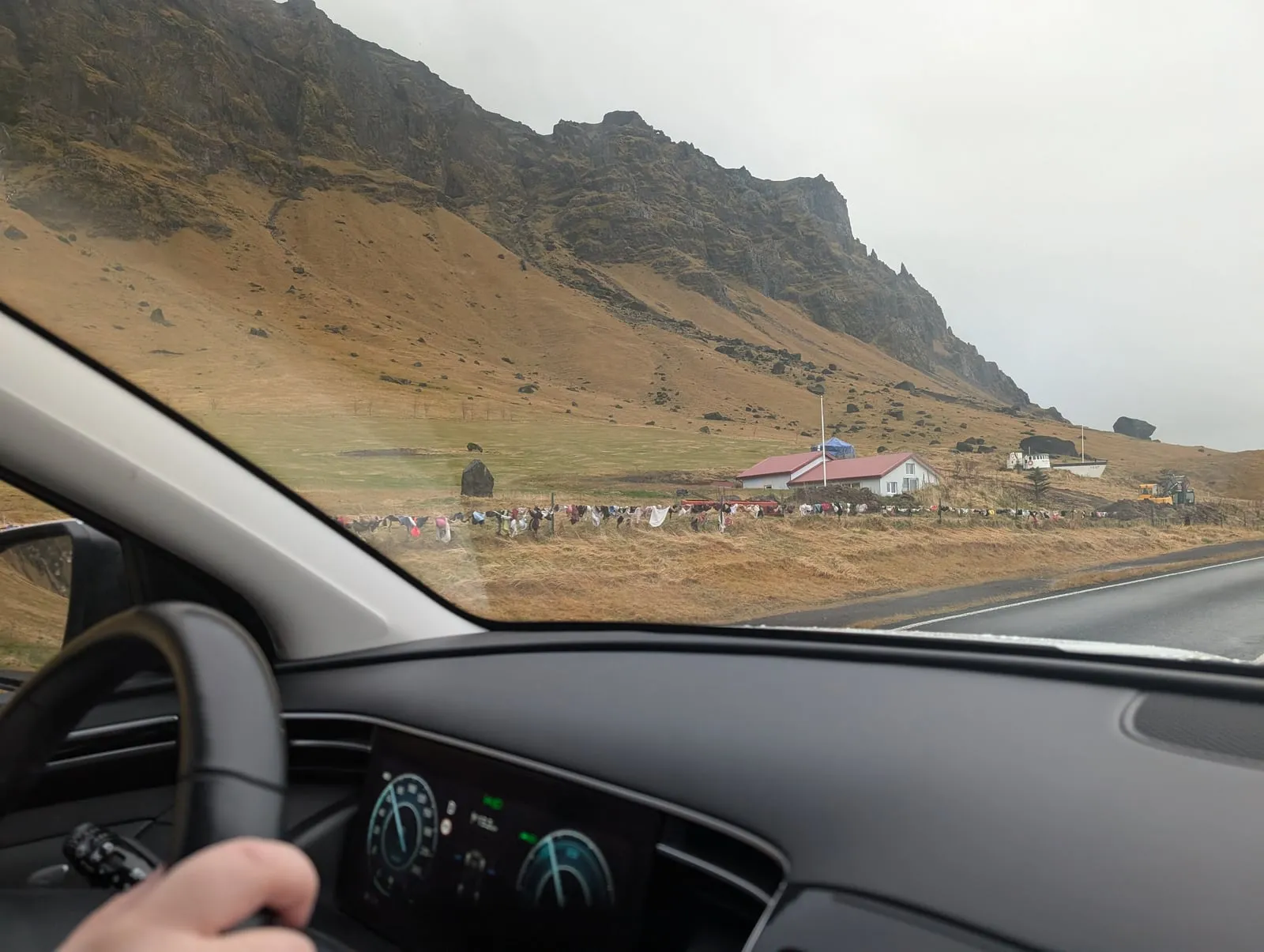
Heading east on Route 1 under the Eyjafjöll cliffs, between Seljalandsfoss and Skógafoss, we passed the Bra Fence: hundreds of bras hung along a roadside fence by a farm.
Skógafoss
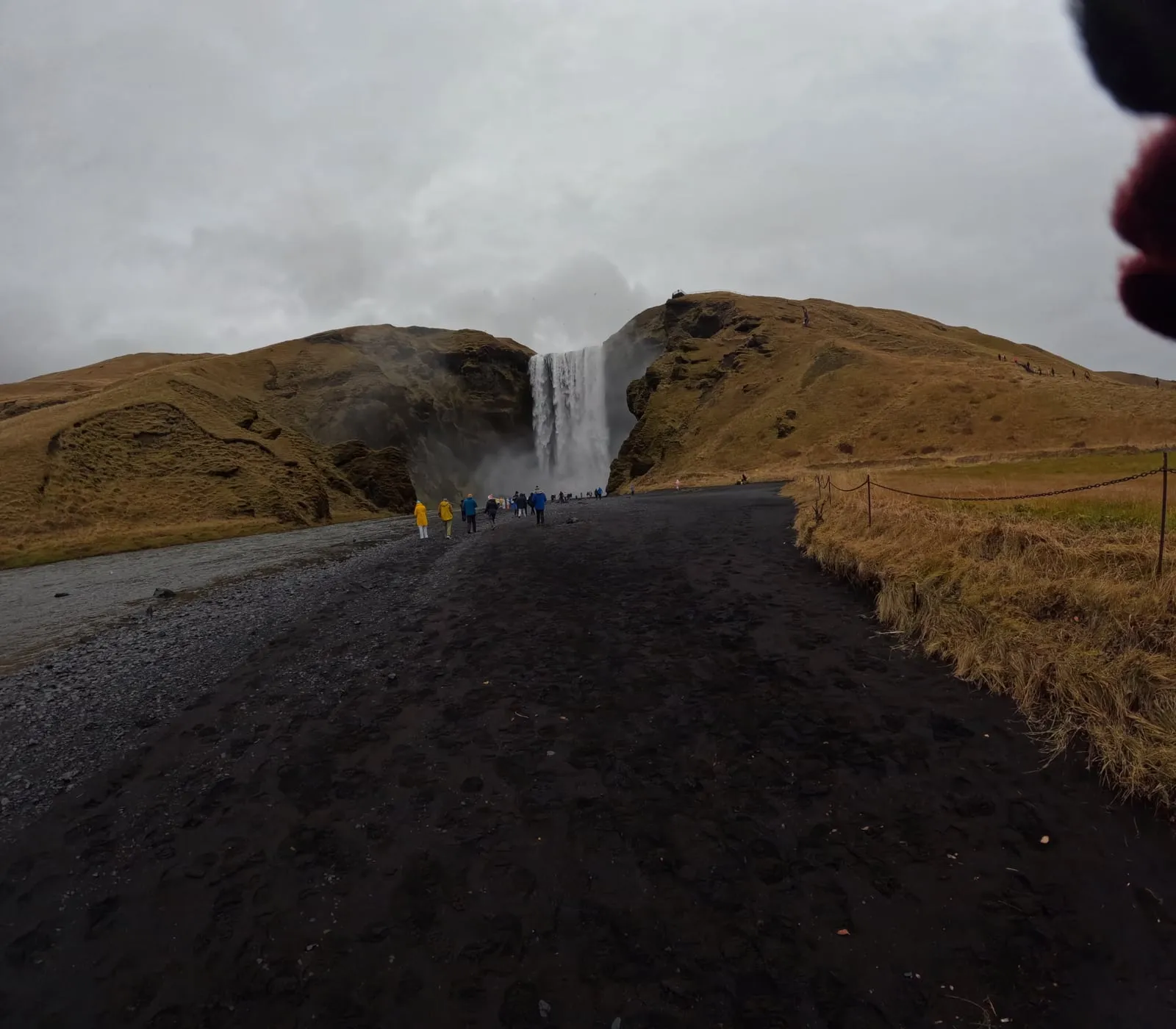
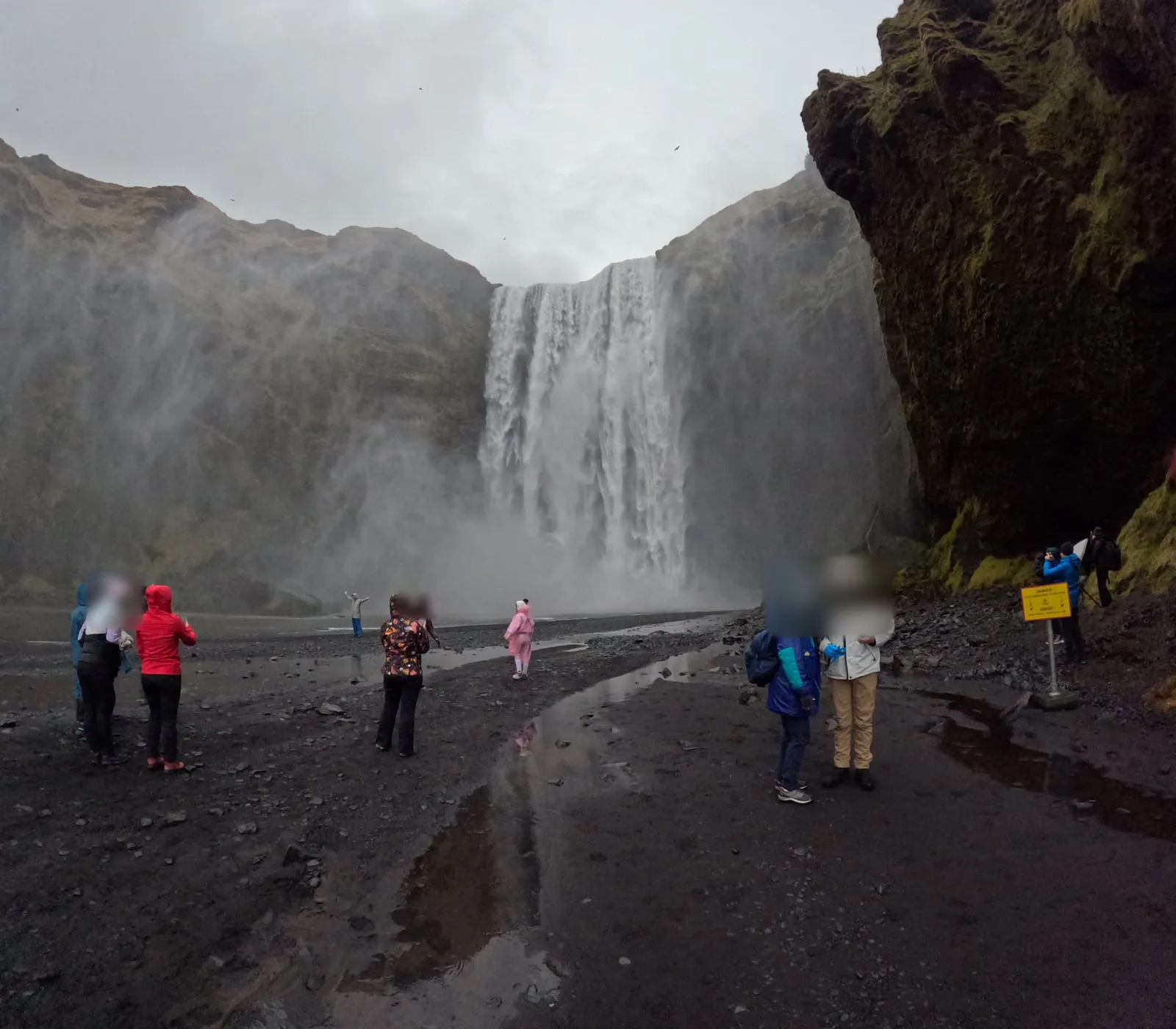
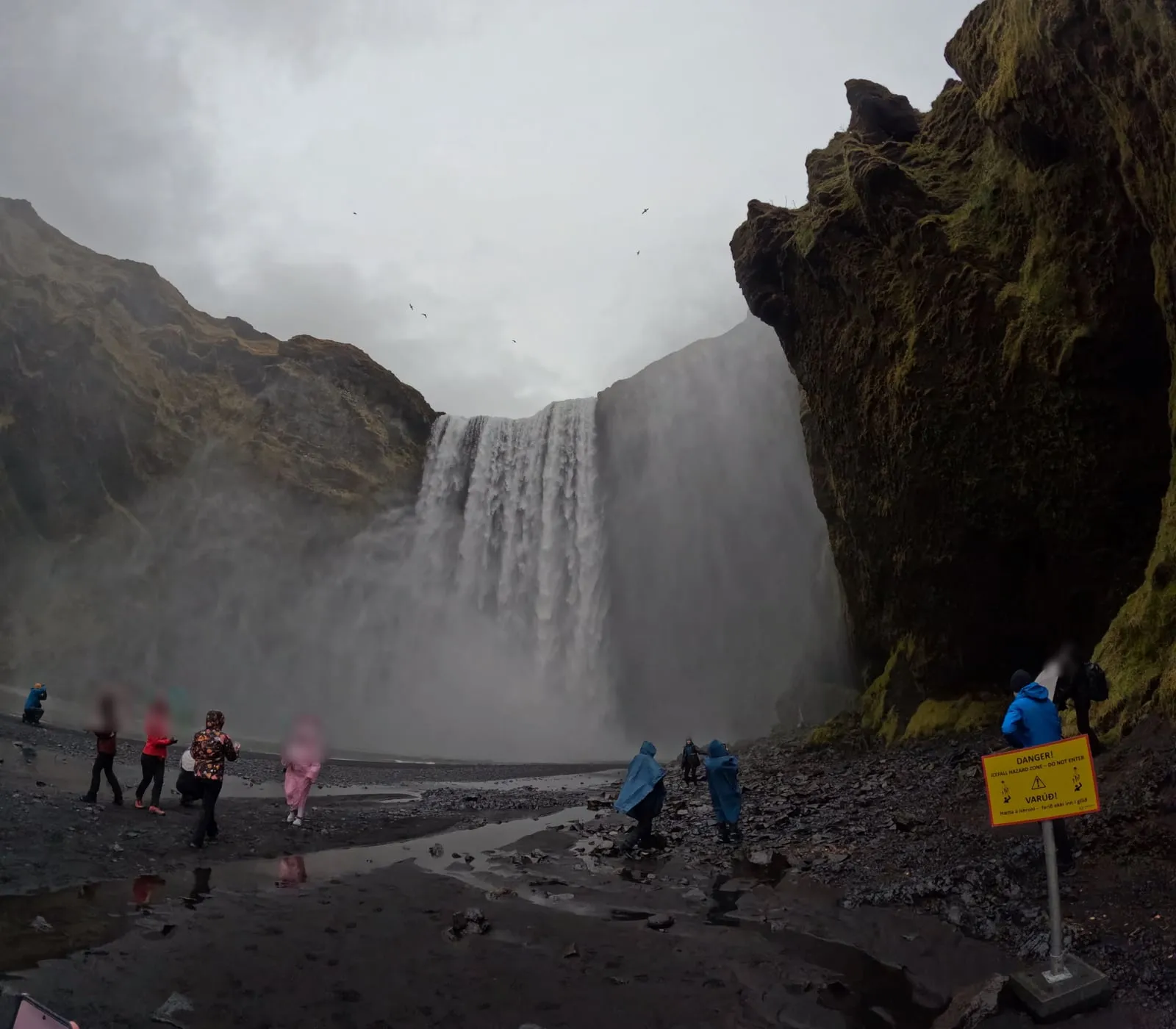
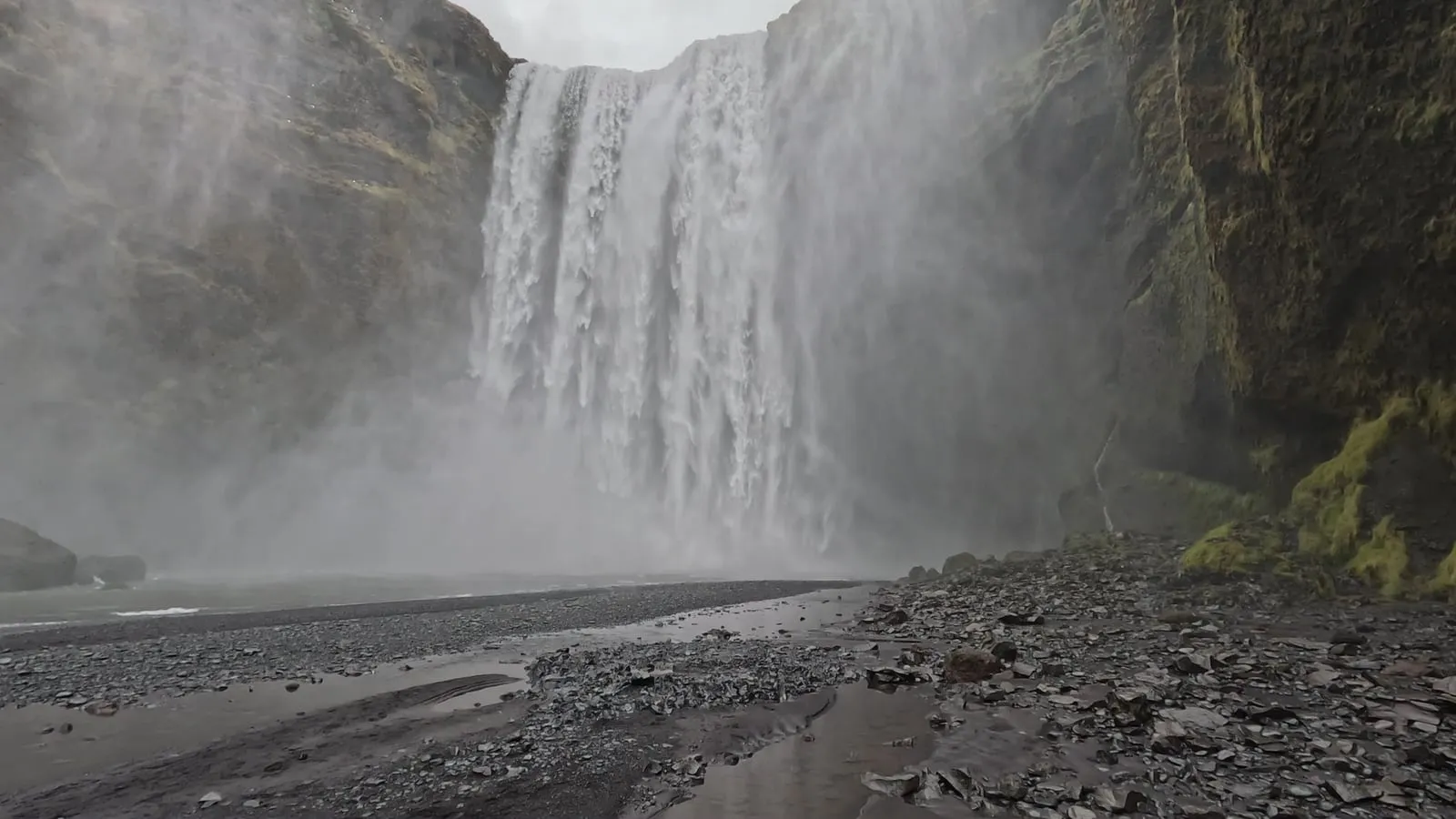
Our first waterfall of the day was Skógafoss. It is about 60 metres high and falls over what used to be the sea cliffs; the coast is now about 5 km away. There is a yellow sign at the front warning of falling ice, and on our grey morning there was a lot of spray.
A staircase climbs beside the falls to a viewing deck at the top, and a path carries on up the river past many smaller waterfalls. Legend says the settler Þrasi hid a chest of gold under the falls. Three men later got hold of its ring handle, it broke off and the chest sank back, and the ring is now on the door of the Skógar Folk Museum. On sunny days the spray throws up a rainbow.
Parking has been paid since spring 2025: ISK 1,000 a day for a car (about £6.10, $8.10), plus ISK 89 online through Parka, with the toilets included (checked 15 November 2026).
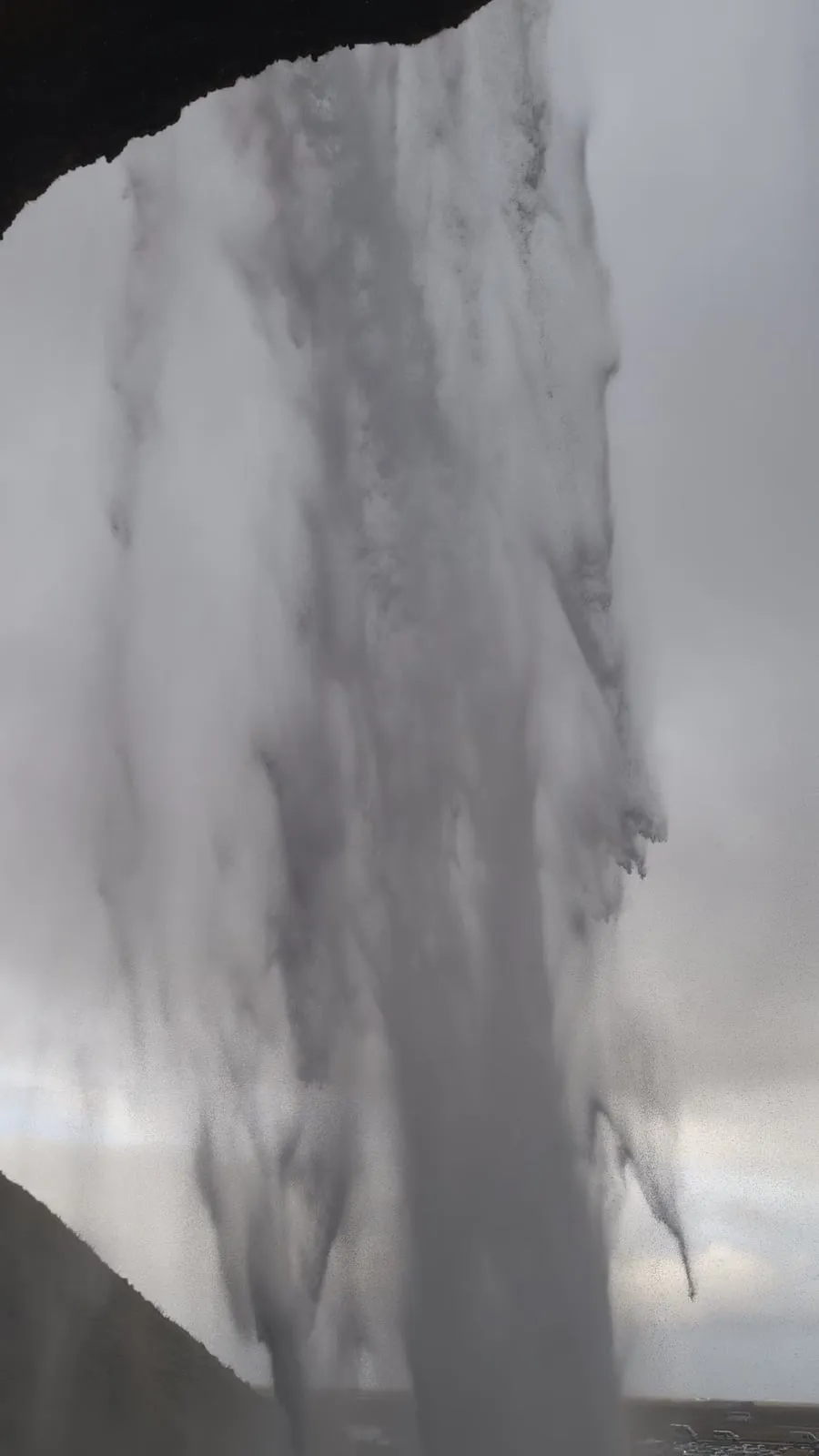
Seljalandsfoss: walking behind it
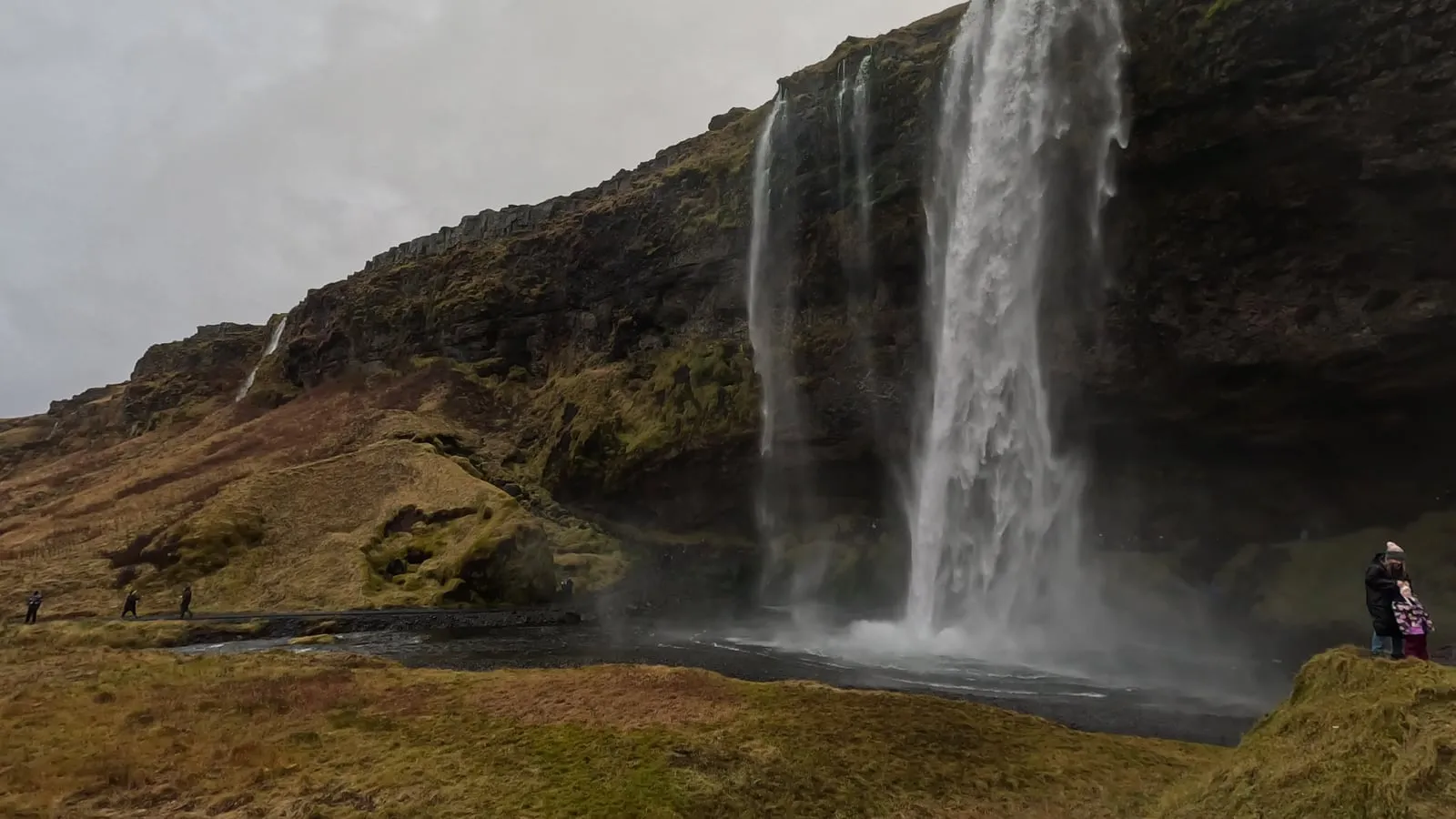
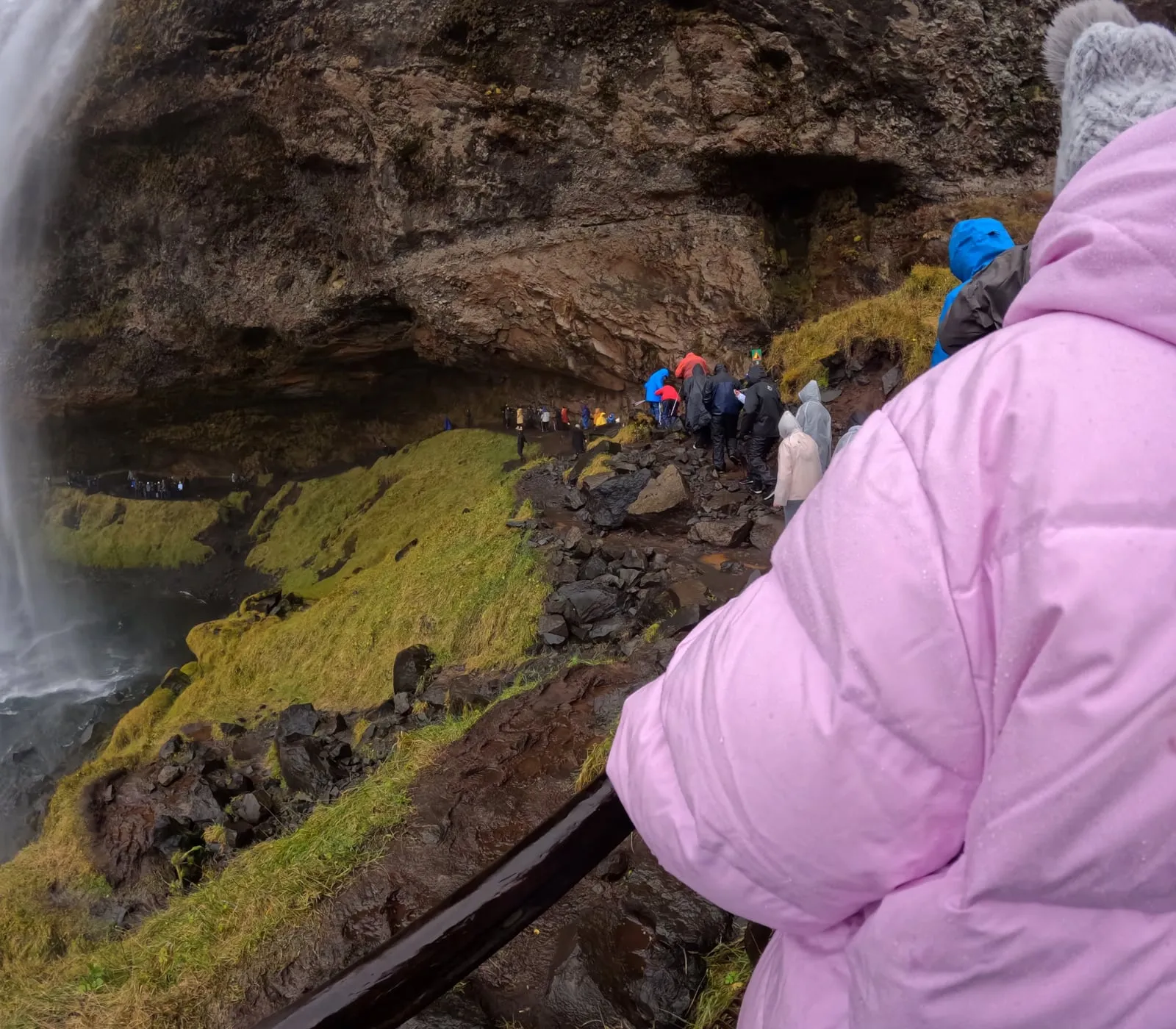
Back west, the second waterfall of the day, Seljalandsfoss, is beautiful. The walk up is quite steep and you have to step on a lot of stones, so it is not for anyone with mobility issues. One of us got scared and walked back down the stairs, which was super awkward.
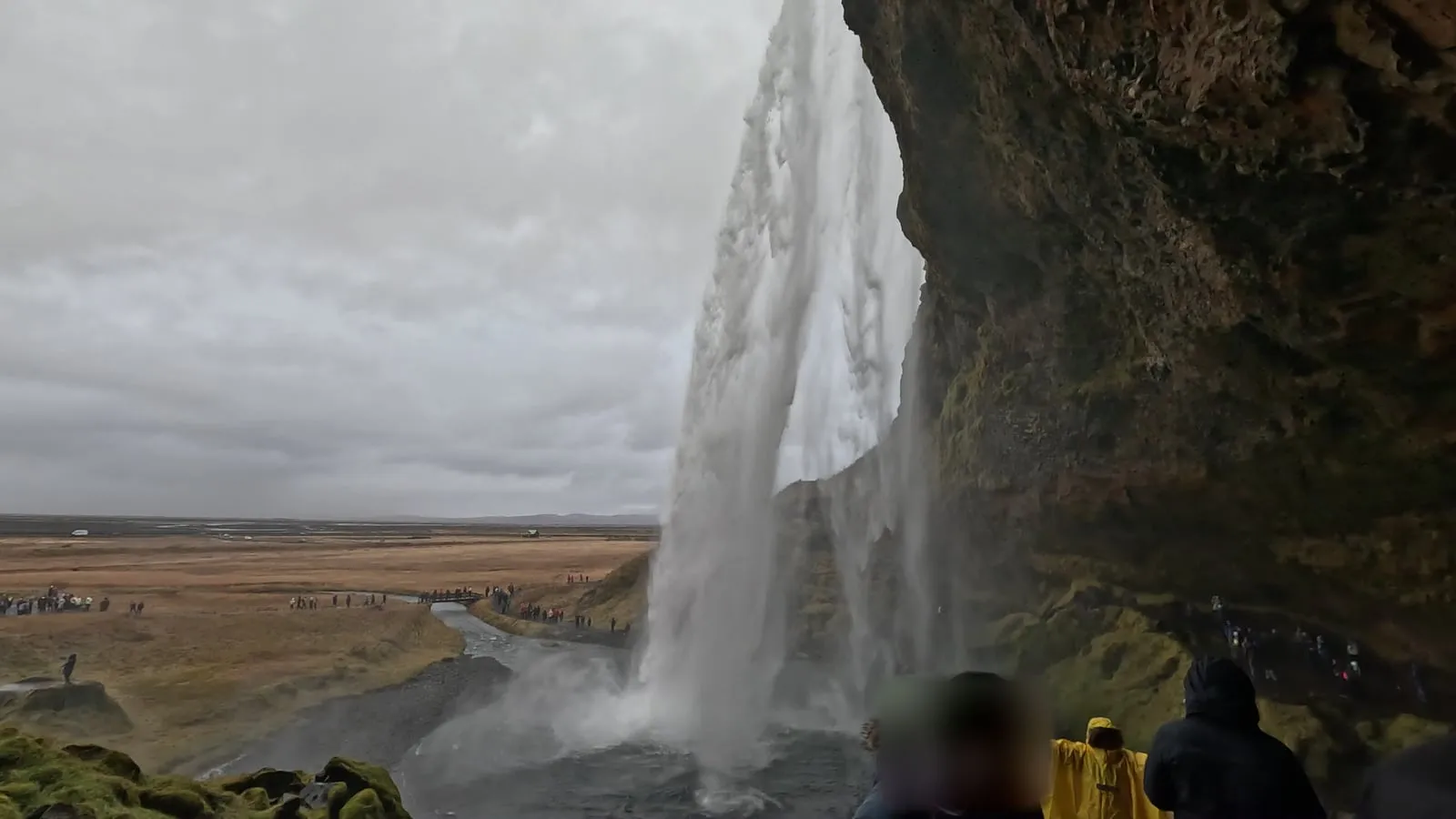
We couldn’t imagine coming here on an icy or wet day. It could be very slippery, there are no handrails on the steep stone steps, and you have to navigate the terrain. On the dry day we went it was super beautiful and a must do. You can walk right behind the waterfall, and it was one of the best stops of the trip.
It is about 60 metres high, falling from old sea cliffs, like Skógafoss. In winter the path behind it gets slippery, ice falls from the cliff and the iced-up path can break away as it thaws, so respect any closure.
Parking is ISK 900 a car for the day (about £5.50, $7.30). Cameras read your number plate, you pay at the machines or online with Checkit, stays under 10 minutes are free, and the toilets are included. There is a café by the car park (checked 15 November 2026).
Gljúfrabúi, the secret waterfall
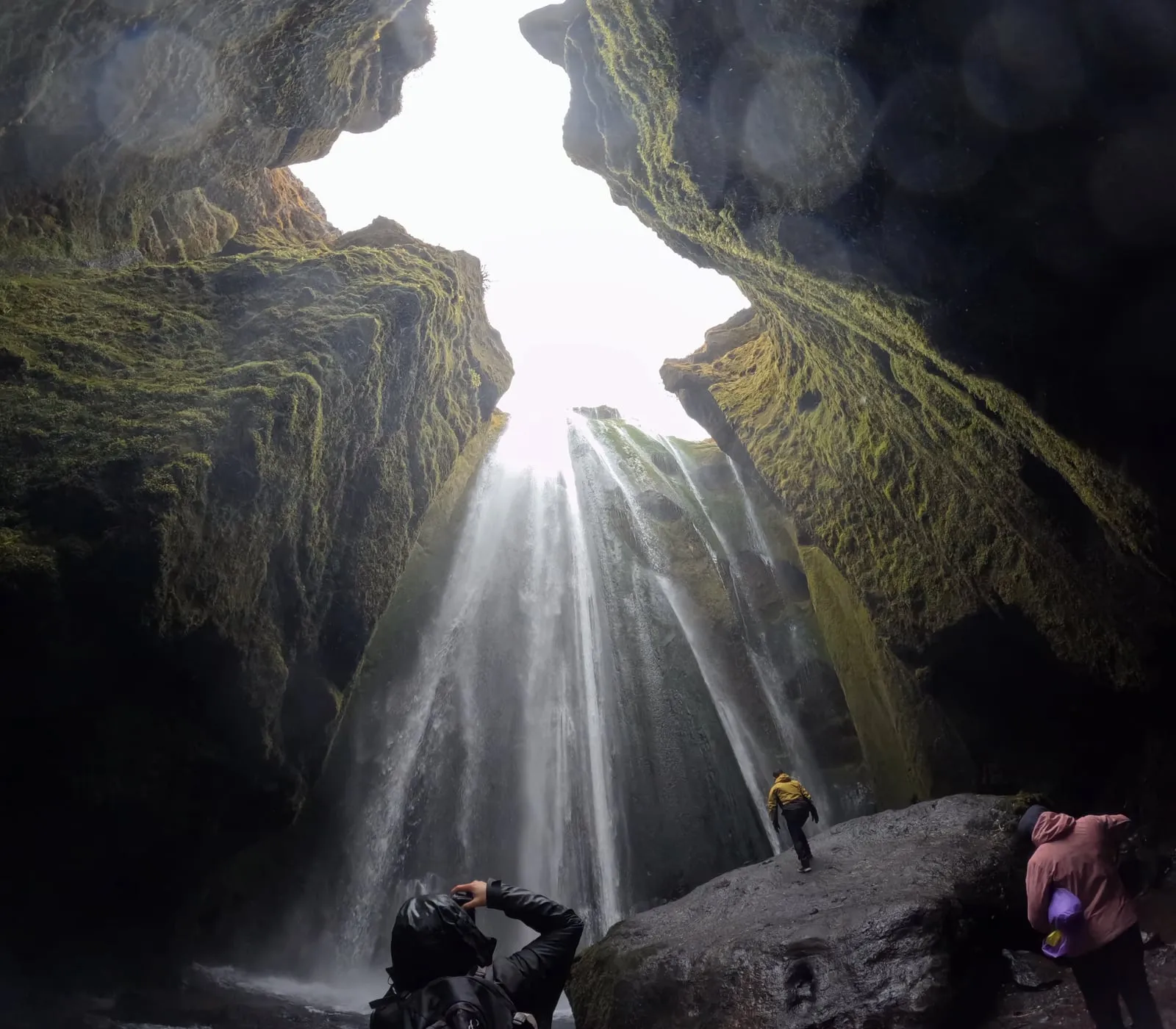
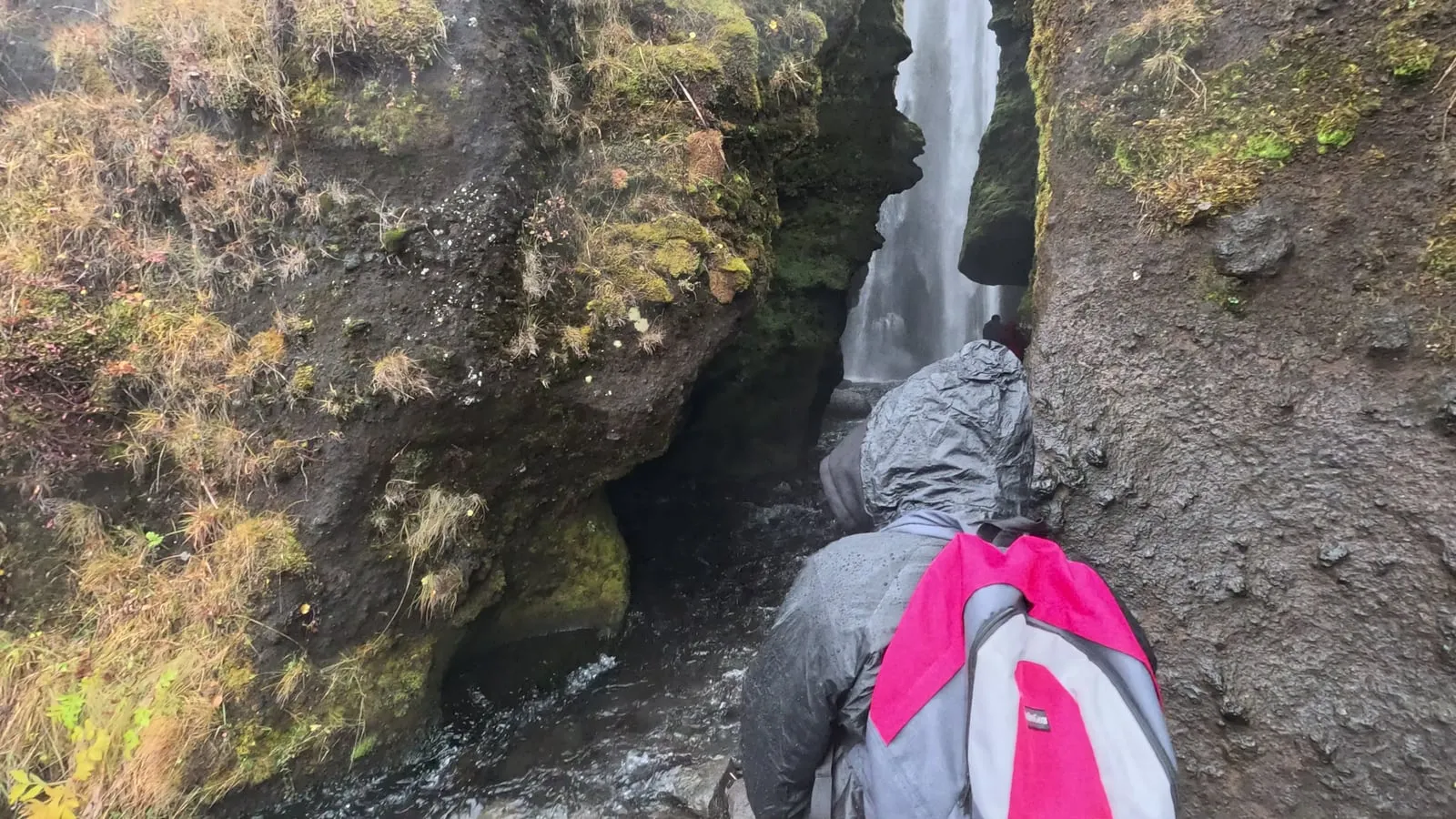
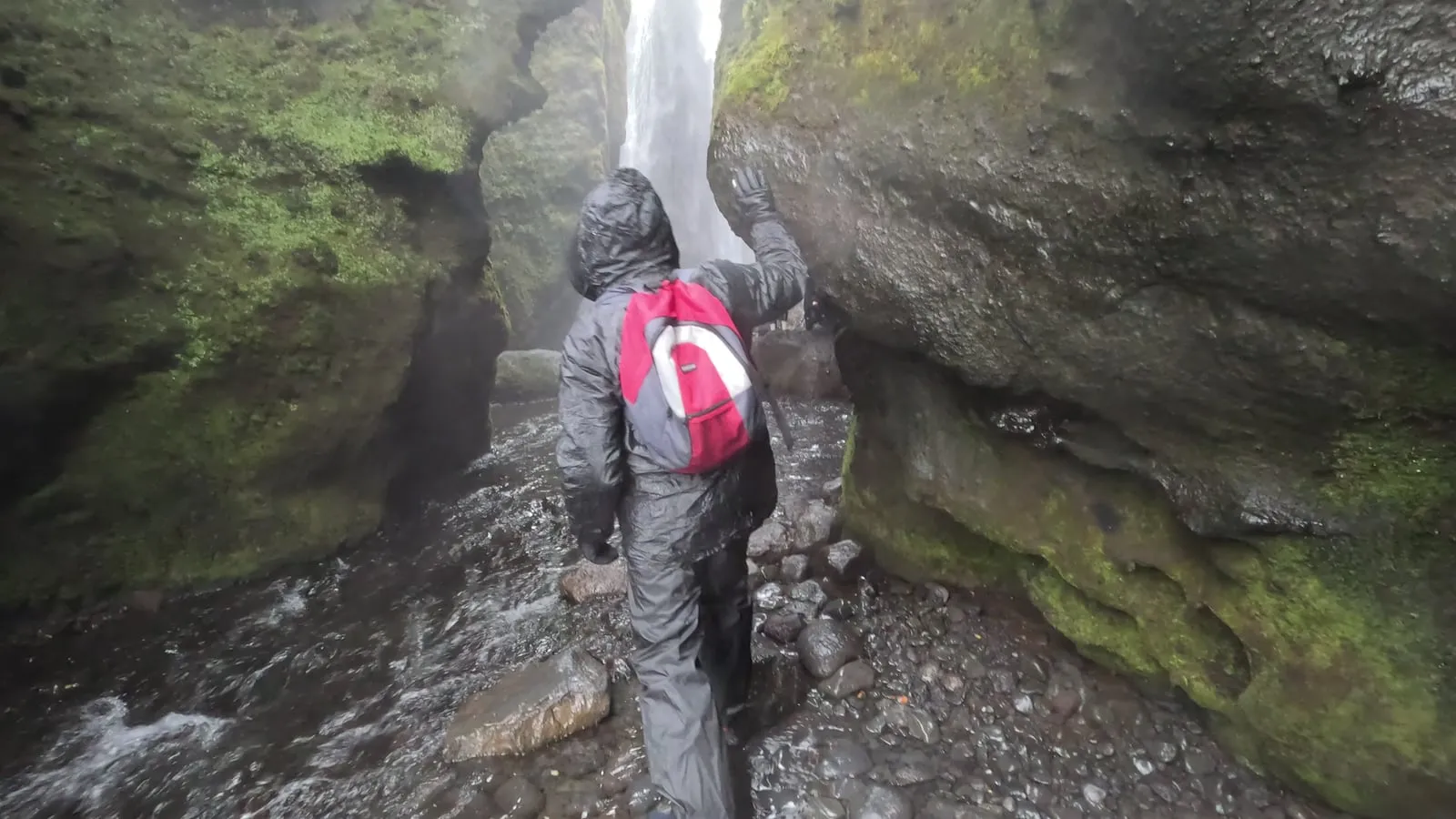
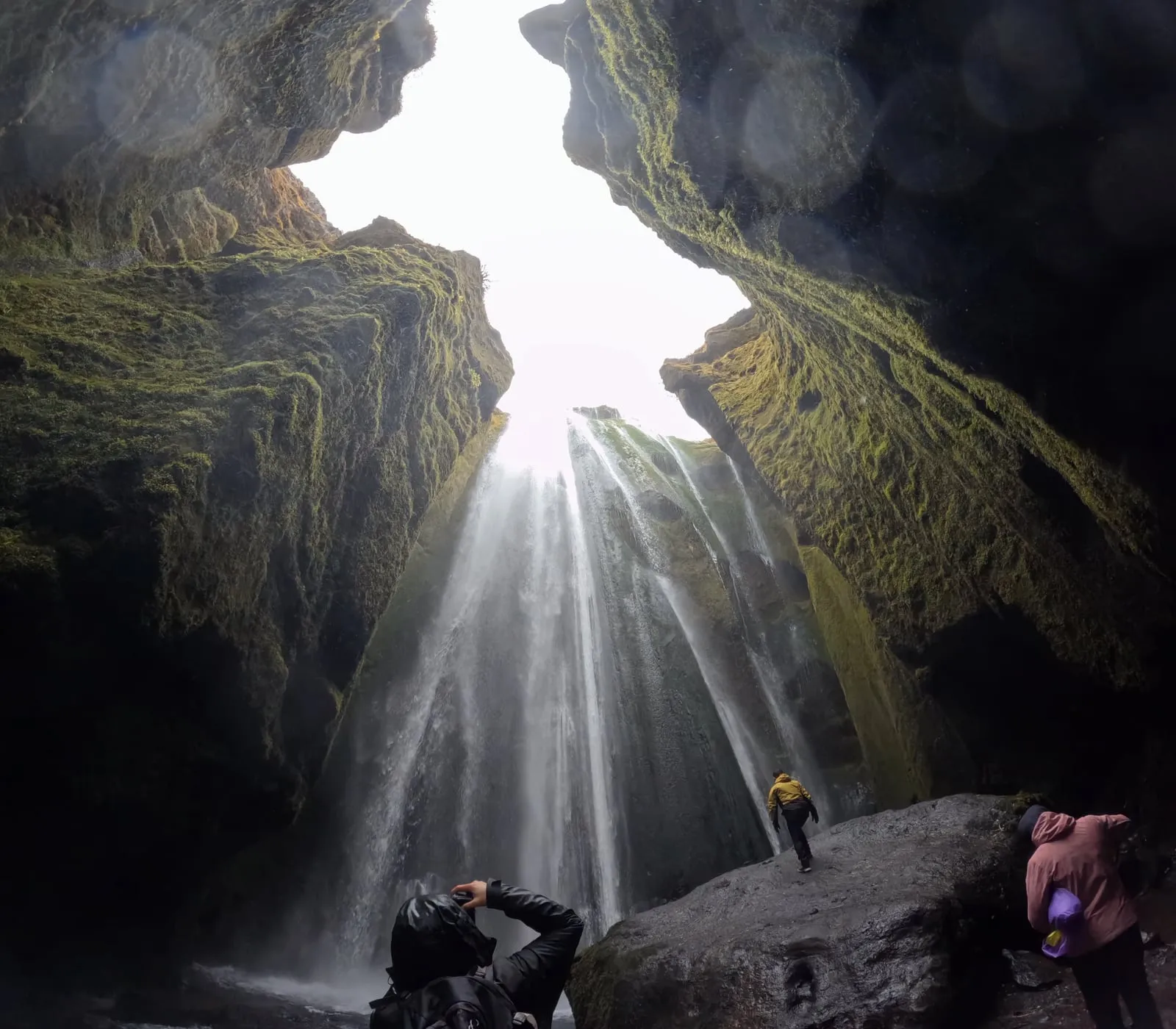
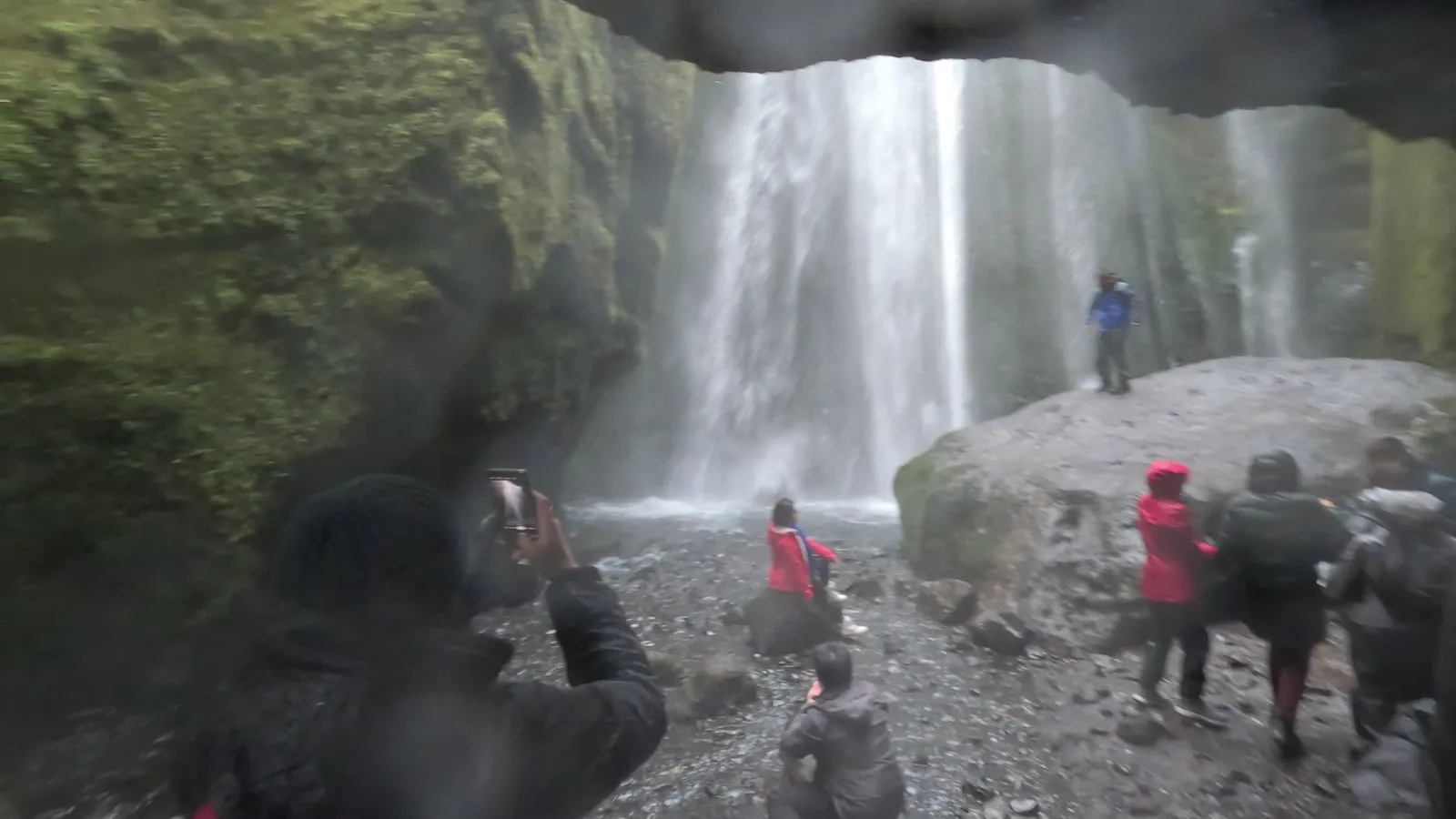
There’s a secret second waterfall if you walk to the side. Gljúfrabúi is about 600 metres north of Seljalandsfoss, roughly ten minutes along the cliff, and a big boulder hides most of it from outside. The name means something like canyon dweller.
For this one you do need waterproof shoes, as you’re going to get a little wet wading through water to reach the entrance. Nothing deep, but still wet. Our Gore-Tex shoes kept us completely safe without having to wear wellies, and they were a must have for the entire trip.
The view inside is beautiful. The water drops about 40 metres into the cleft. You have to climb the rock, which takes some agility, and then people take photos. A beautiful, hidden-ish secret, and a must do again. Katla Geopark warns of falling rocks in the canyon.
Urriðafoss, the quiet one near Selfoss
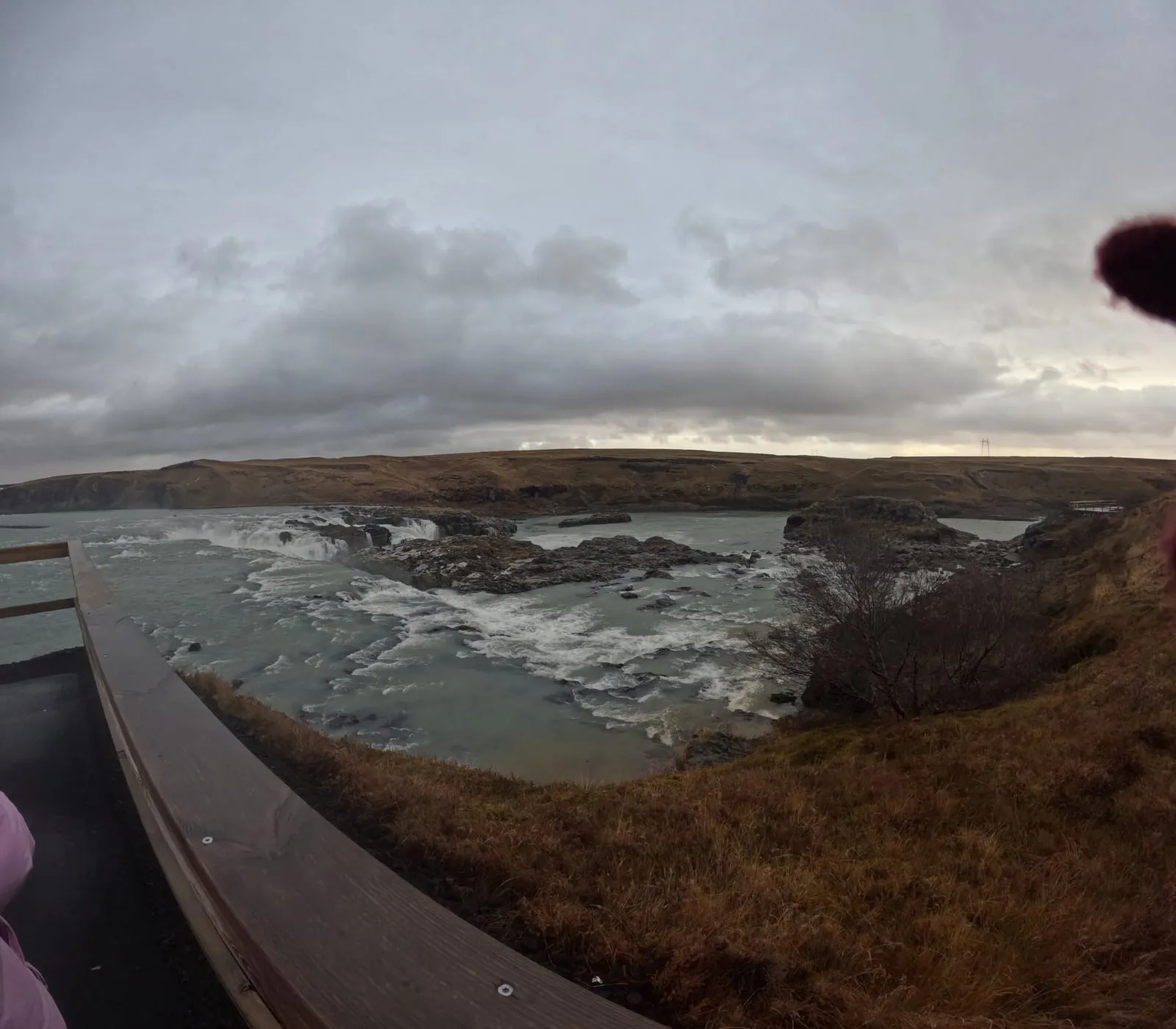
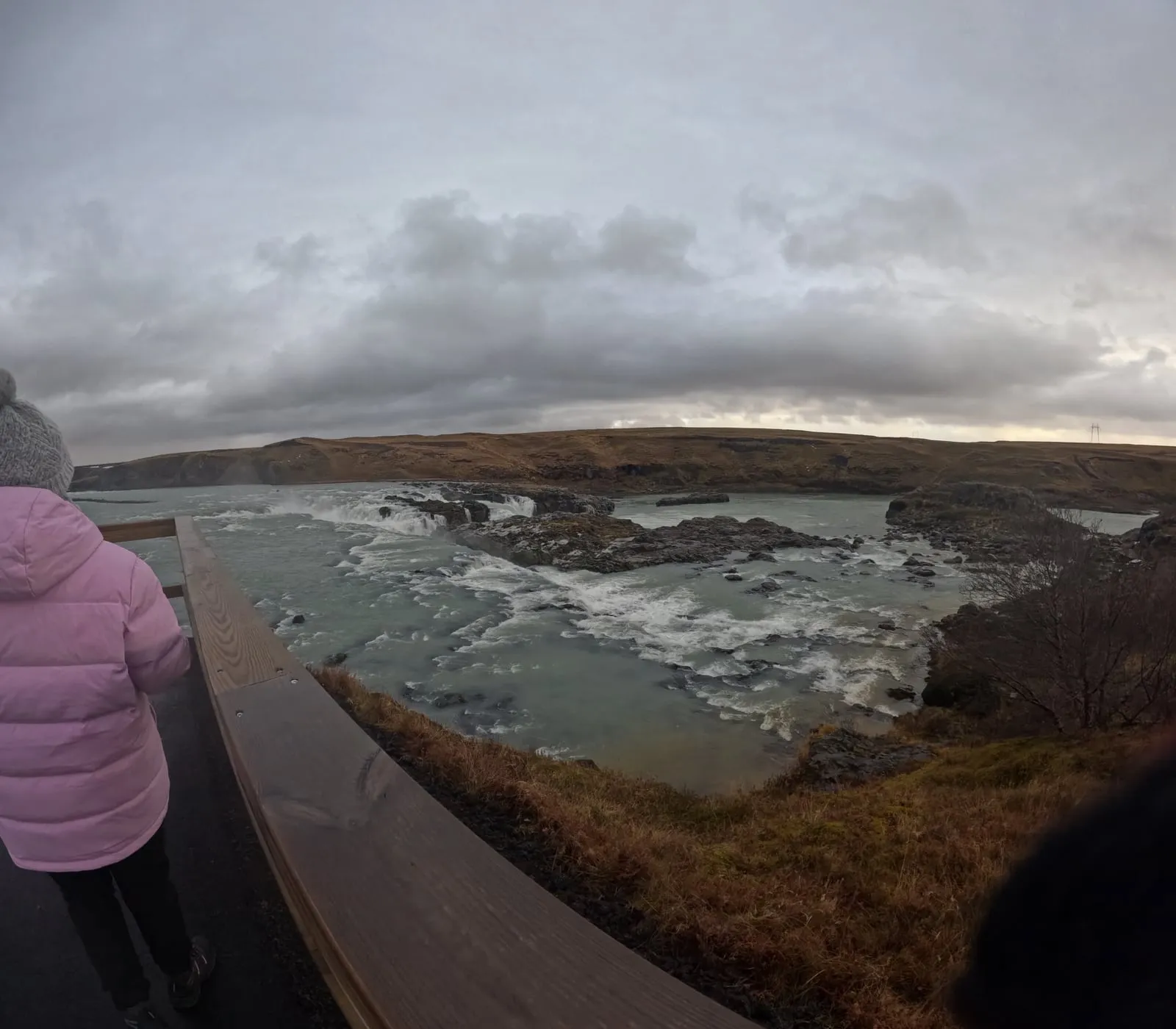
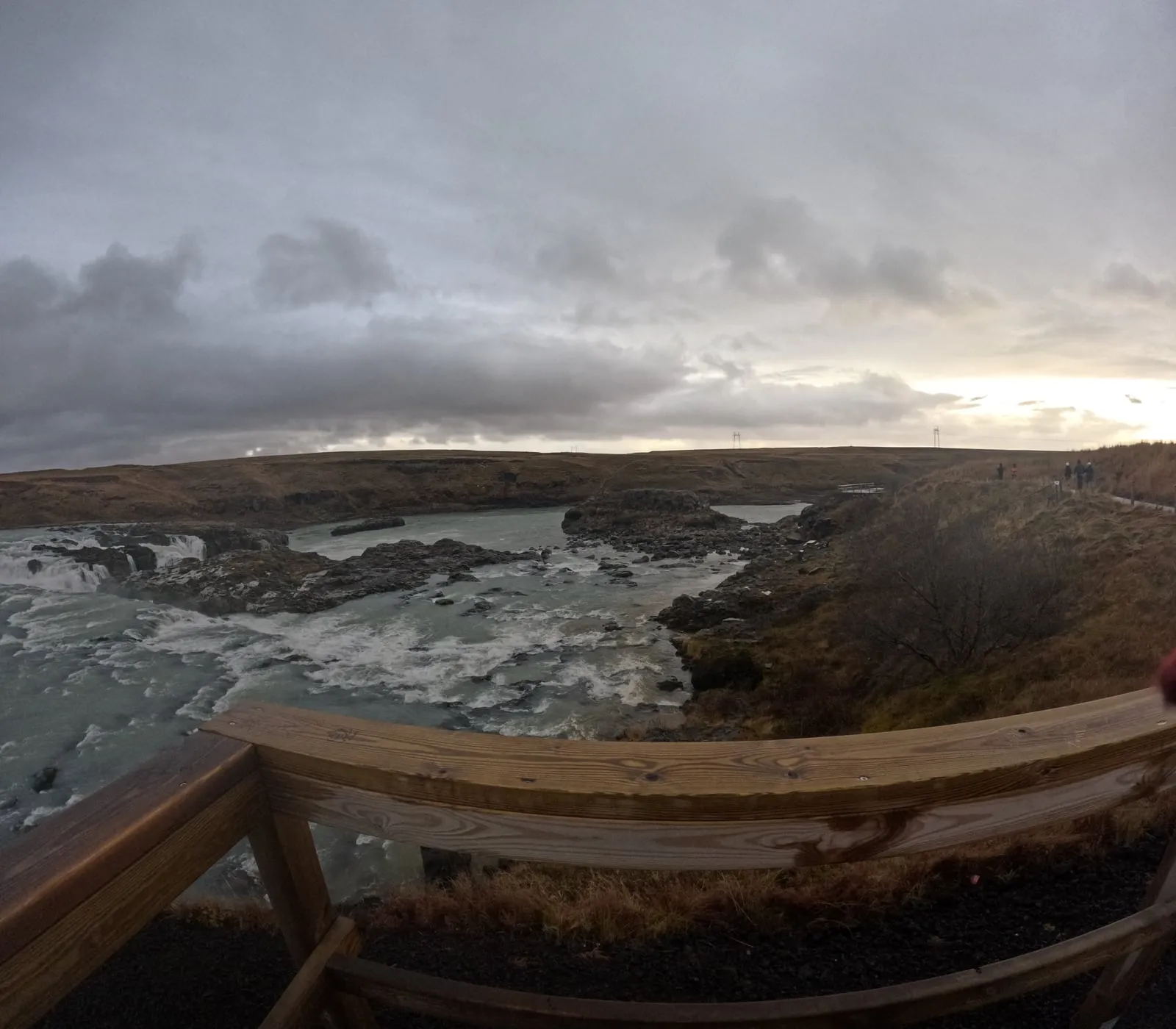
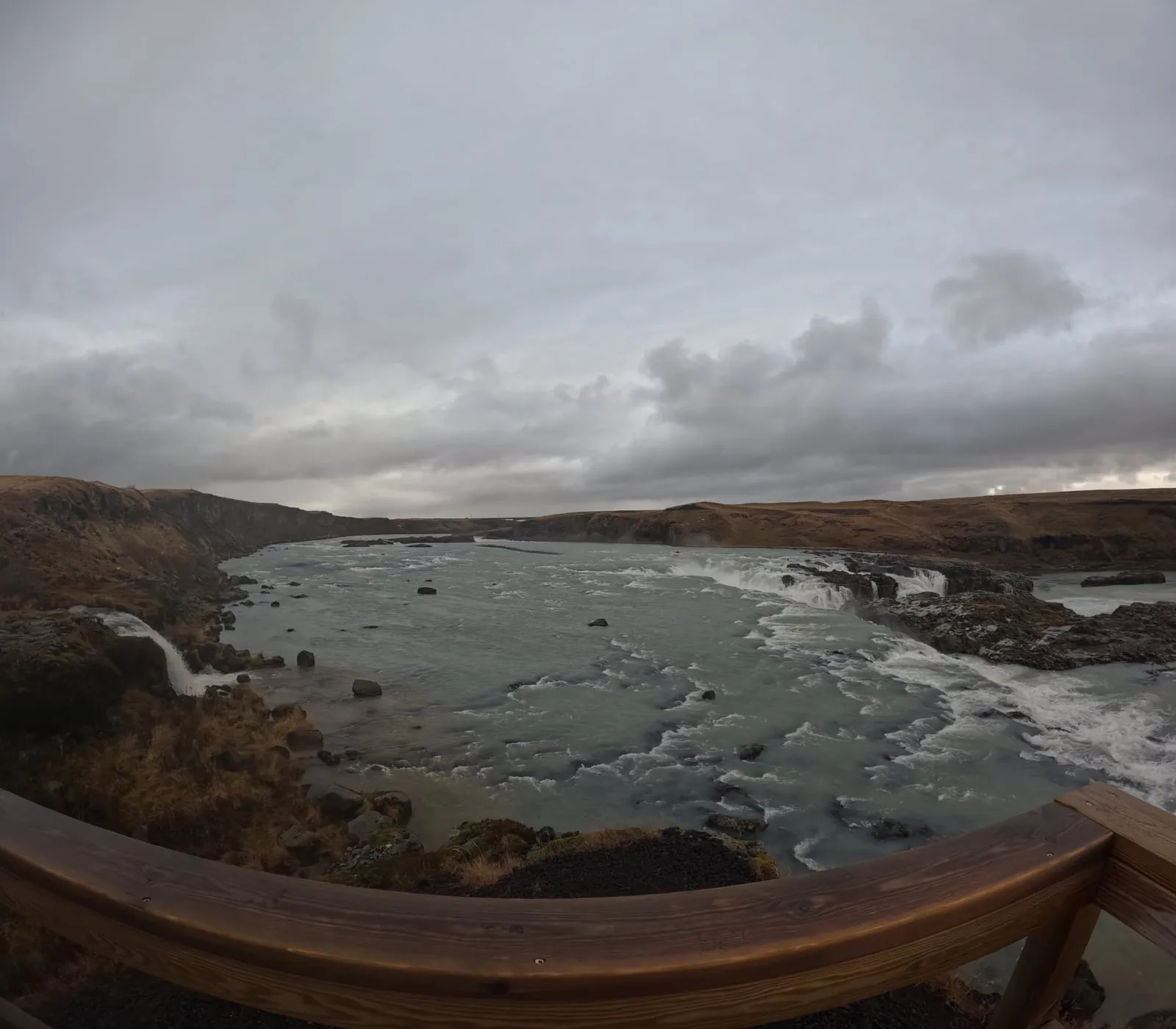
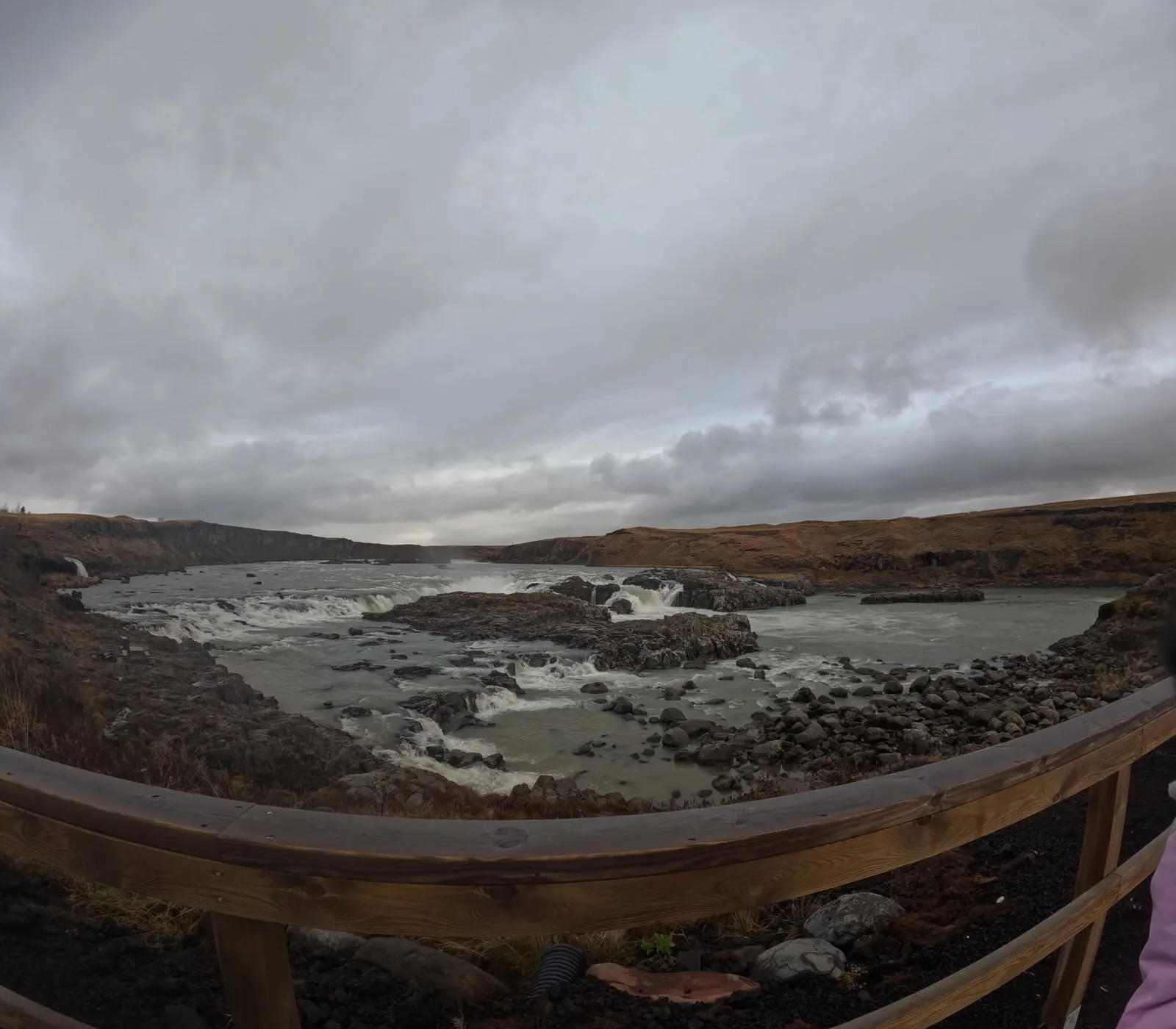
From here you could go east to Vík and the rest of the coast, but we had no time, so we drove back towards Reykjavík. On the way we found a waterfall we hadn’t seen anyone mention once: Urriðafoss, just off Route 1 near the town of Selfoss. We called it Selfoss at the time. The waterfall actually named Selfoss is in the north of Iceland, by Dettifoss.
It is very easy to get to. Road 302 leaves Route 1 on the Selfoss side of the bridge over the Þjórsá, about 16 km east of Selfoss. Coming from Reykjavík or Selfoss, turn right onto 302 just before the bridge; coming from Hella, as we were, cross the bridge and turn left. Follow 302 for about a kilometre, then turn left down a short track to the car park.
We only had one or two other people there. Peaceful, nice, and a somewhat secret place. Visit it on the way, 100%.
It isn’t tall, but Urriðafoss carries about 360 cubic metres of water a second, more than any other waterfall in Iceland. The river is the Þjórsá, Iceland’s longest, and urriði means brown trout. Plans for a power station here have been on hold since February 2026, while more research is done on the river’s wild salmon.
Parking is ISK 750 for up to two hours (about £4.60, $6.10), paid through Parka by number plate for stays over 10 minutes (checked 15 November 2026).
Iceland has loads of wonders like this. When you see something on the map, pull over and have a look, as it’s likely beautiful.
Parking at the waterfalls in 2026
What it costs a car now (checked 15 November 2026):
- Skógafoss: ISK 1,000 a day (about £6.10, $8.10), plus ISK 89 online. Paid since spring 2025.
- Seljalandsfoss: ISK 900 a day (about £5.50, $7.30). Under 10 minutes is free.
- Urriðafoss: ISK 750 for up to two hours (about £4.60, $6.10). Under 10 minutes is free.
- Reynisfjara, if you go on to Vík: ISK 1,000 for up to four hours (about £6.10, $8.10), plus ISK 89 online.
All of them read your number plate. Pay on the day: an unpaid fee goes to the car’s owner with a late charge (ISK 1,960 at the Parka sites), and with a hire car that means the rental firm, which may add a fee of its own.
What to wear
Waterproof shoes above all. Our Gore-Tex shoes were a must have for the entire trip, and they got us into Gljúfrabúi without wellies. Expect spray at every waterfall, and wrap up: October 2024 was a cold month in Iceland, and the 18th and 19th brought one of its windiest spells. Visit Iceland’s own list for October adds warm layers, a waterproof and windproof outer layer, gloves and a hat.
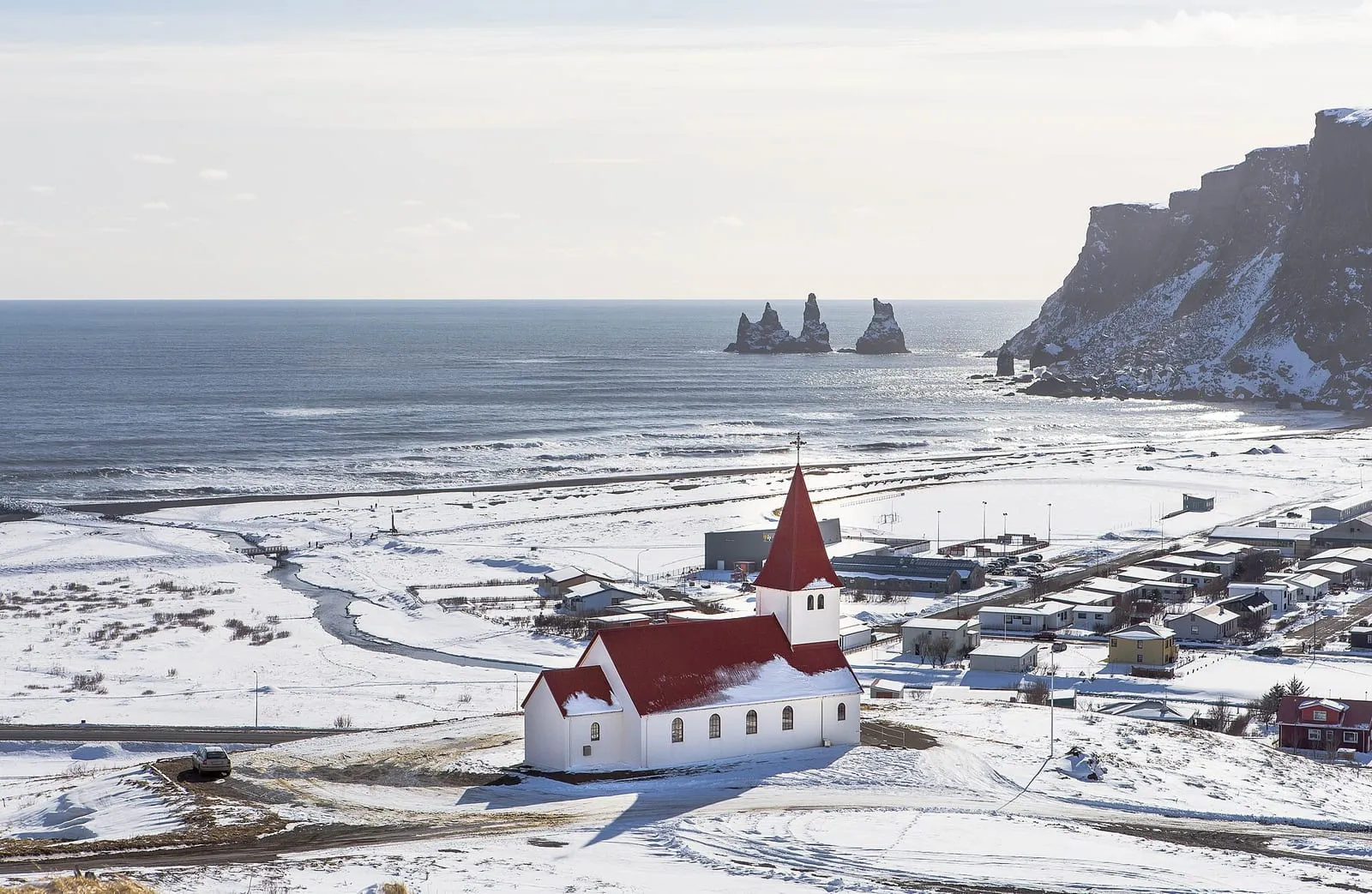
Next time: Vík and the black beach
We seriously regret not going the whole coastline. We’ll be doing that next trip, the full tour all the way round the island, and definitely staying at Hotel Rangá on the way.
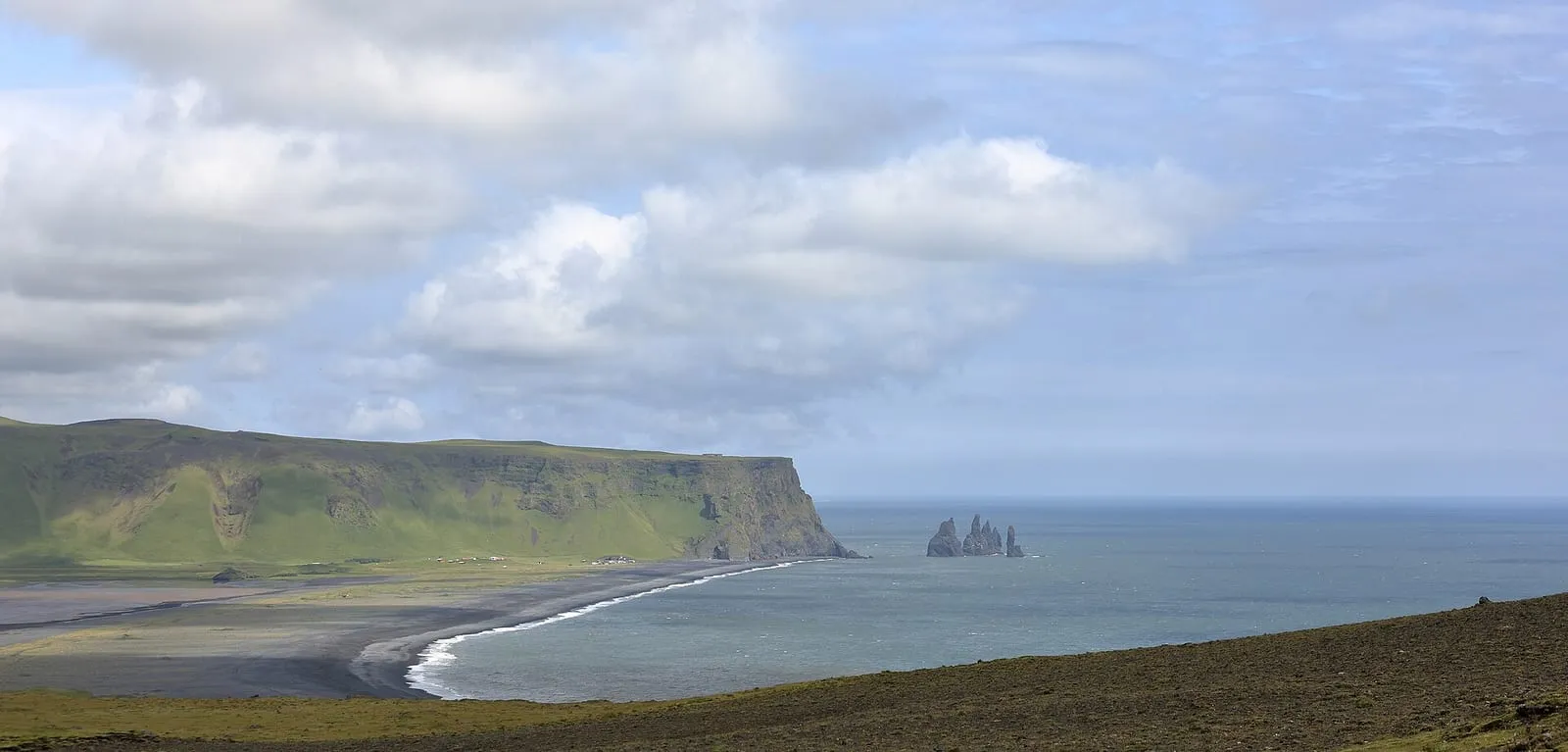
Vík is about 55 minutes past Seljalandsfoss, or half an hour past Skógafoss. The black beach near it, Reynisfjara, is dangerous: sneaker waves run much further up the sand than the ones before them, without warning, and can sweep an adult out to sea. Six people have died there since 2007, the latest a nine-year-old girl in August 2025.
The warning lights now run from yellow to orange, when you keep at least 25 metres from the sea, to red, when the beach is closed and you watch from the viewing area. Storms in February 2026 wore away part of the beach and its viewing platform, and on 15 November 2026 the beach could only be viewed from the viewpoint. Check safetravel.is before you go.
Our tips
- Do the south coast, not just the Golden Circle, and hire a car to do it.
- Wear waterproof shoes. You wade into Gljúfrabúi.
- Go behind Seljalandsfoss on a dry day, and mind your footing on the stone steps.
- Walk on to Gljúfrabúi. It is ten minutes from Seljalandsfoss.
- Stop at Urriðafoss on the way back to Reykjavík. It is a couple of minutes off Route 1.
- Pay for parking on the day, by number plate.
- When something on the map looks good, pull over and have a look.
- Leave time for Vík if you can. We wish we had.
South coast waterfalls FAQ
How far is Seljalandsfoss from Reykjavík? About 129 km, roughly two hours on Route 1 without stops.
Where is Skógafoss in Iceland? On the south coast, just off Route 1 under the Eyjafjöll mountains, about 30 km east of Seljalandsfoss and 35 km west of Vík.
Can you walk behind Seljalandsfoss? Yes. A path runs right round the back of it. It is steep, wet and stony, with no handrails on the stone steps, and it can close when it ices up in winter.
Do you get wet at Seljalandsfoss? Expect spray on the path behind it. Wear a waterproof jacket and waterproof shoes.
How much is parking at Seljalandsfoss? ISK 900 a car for the day, about £5.50, paid by number plate (checked 15 November 2026).
How do you get to Gljúfrabúi from Seljalandsfoss? Walk about 600 metres north along the cliff, around ten minutes, then wade up the stream through the gap.
Is Urriðafoss worth it? Yes. It is a couple of minutes off Route 1 near Selfoss, it carries more water than any other waterfall in Iceland, and we had it almost to ourselves.
Skógafoss or Seljalandsfoss? Both if you can: they are half an hour apart. Seljalandsfoss, which you can walk behind, was one of the best stops of our trip.
Is there a waterfall called Selfoss? Yes, but it is in the north of Iceland, next to Dettifoss. The one near Selfoss town on the south coast is Urriðafoss.
More from this trip
The waterfalls were the second full day of our Iceland trip in October 2024. The rest:
- Our Iceland trip review: the whole trip, and the verdict.
- 4 days in Iceland: our itinerary: day by day, with the drives.
- The Golden Circle by car: Þingvellir, Geysir and Gullfoss, the day before.
- Hotel Rangá review: where we stayed the night before.
- The Reykjavik EDITION review: where we drove to that afternoon, and were refused at check-in on debit cards.
- Our self-guided Reykjavík food walk: five stops that evening, and the fermented shark.
- Where we ate and drank in Reykjavík: our nights out.
- Icelandic hot dogs: the famous stand, a petrol station and the airport.
- The Reykjanes peninsula: Gunnuhver and Brimketill.
- The Silica Hotel review: our last night, next to the Blue Lagoon.
- The Blue Lagoon review: the lagoon, and Lava restaurant.
Photo credits
Our photos and video stills are our own, from October 2024. Stock photos, resized, each under its own licence:
- Reynisfjara and the Reynisdrangar sea stacks: Martin Falbisoner, CC BY-SA 4.0, Wikimedia Commons.
- Vík’s church in winter: Jon Flobrant, CC0 (from Unsplash), Wikimedia Commons.