Iceland in October: Our Honest Trip Review
Our honest Iceland trip review: four nights by car in October 2024, from the Golden Circle and Hotel Rangá to the Blue Lagoon, and what it all cost.
The short version
- Our score: 5 out of 5.
- Worth it? Yes. Iceland is stunning, one of the best places we’ve ever visited: super clean, very good food, scenic, and unspoiled beauty, which is rare in the world today.
- Go if you want huge scenery on a short trip and you’re happy to drive yourself. Hire a car: it really makes it so much better.
- Skip if you hate the cold. It hits you the moment you land, and we’d never felt cold like it in Britain.
- Our trip: Thursday 17 to Monday 21 October 2024, four nights, a couple, flying Jet2 from Birmingham with a hire car from Keflavík airport. One night each at Hótel Reykjavík Saga, Hotel Rangá, the Reykjavik EDITION and the Silica Hotel.
- Still the same? Mostly, but it costs a bit more to get about: most of the big sights now charge for parking, hire cars pay a road charge since January 2026, and the króna is about 10% stronger against the pound. The Reykjanes peninsula has had no eruption since August 2025 (checked 15 November 2026).
Iceland is stunning, one of the best places we’ve ever visited. Super clean, very good food, scenic, unspoiled beauty in the world, which is rare today. Five stars, an amazing place.
Our verdict on Iceland

We had four nights in Iceland in October 2024 and packed a lot in: the Golden Circle, the south coast waterfalls, a food walk and a night out in Reykjavík, the Reykjanes peninsula, the Blue Lagoon, and four very different hotels, one a night. We drove ourselves the whole way.
This is the overall review, day by day. Each place has its own shorter review too, linked as we go and at the end.
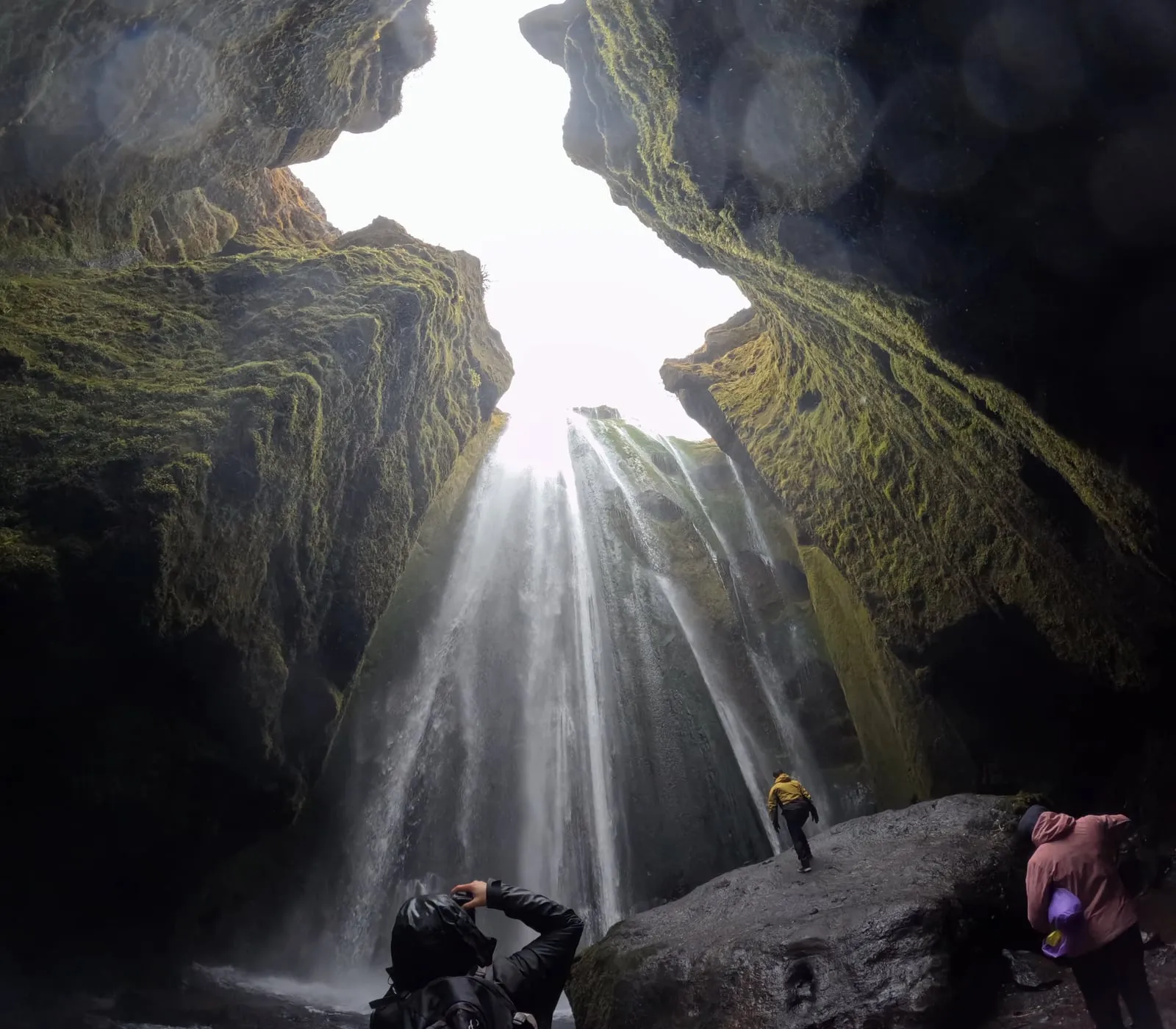
Our four days at a glance
- Thursday 17 October: the flight from Birmingham, the hire car at Keflavík, the drive into Reykjavík, Hótel Reykjavík Saga, tacos and cocktails.
- Friday 18 October: the Golden Circle (Þingvellir, Geysir, Gullfoss), Icelandic horses, and a night at Hotel Rangá.
- Saturday 19 October: the south coast waterfalls (Skógafoss, Seljalandsfoss, Gljúfrabúi, Urriðafoss), the Reykjavik EDITION, our own food walk, the Big Lebowski Bar, Skál! and the rooftop.
- Sunday 20 October: hot dogs, the Reykjanes peninsula (Gunnuhver and Brimketill), the Silica Hotel, the Blue Lagoon and Lava.
- Monday 21 October: one last hot dog at the airport, and home.
The full plan, with the times, the drives and what we’d change: 4 days in Iceland: our itinerary.
Day one: landing, the hire car and Reykjavík
Our Jet2 flight from Birmingham was due out at 3.50pm and into Keflavík at 5.50pm local time: three hours in the air, as Iceland was an hour behind the UK then. Iceland looks absolutely beautiful as you land: completely clean, and scenic.
Picking up the hire car was a very smooth experience, and right at the airport, which helped, because the Icelandic cold hits you immediately and it’s useful not to have to walk. We used Blue Car Rental, booked for three days: a Kia Sportage automatic, or as it turned out a similar car (they guarantee the category, not the model). With an extra driver, sat nav, gravel, theft and collision cover, and the liability waiver Blue told us was the highest insurance you can get, it came to ISK 61,896, about £345 at the time. We didn’t take the roadside assistance waiver, so a tow truck would have been ours to pay for.
Then it’s about 50 km into Reykjavík on Route 41, around 45 minutes, and in October it’s dark by then: the sun set at 5.59pm that day. We found parking eventually and walked to the hotel. The Saga has no car park of its own, so it’s the street or a city car park. Street parking in the centre was charged until 9pm then, and the city’s car parks close from midnight to 7am, apart from Bergstaðir, which is open all night.
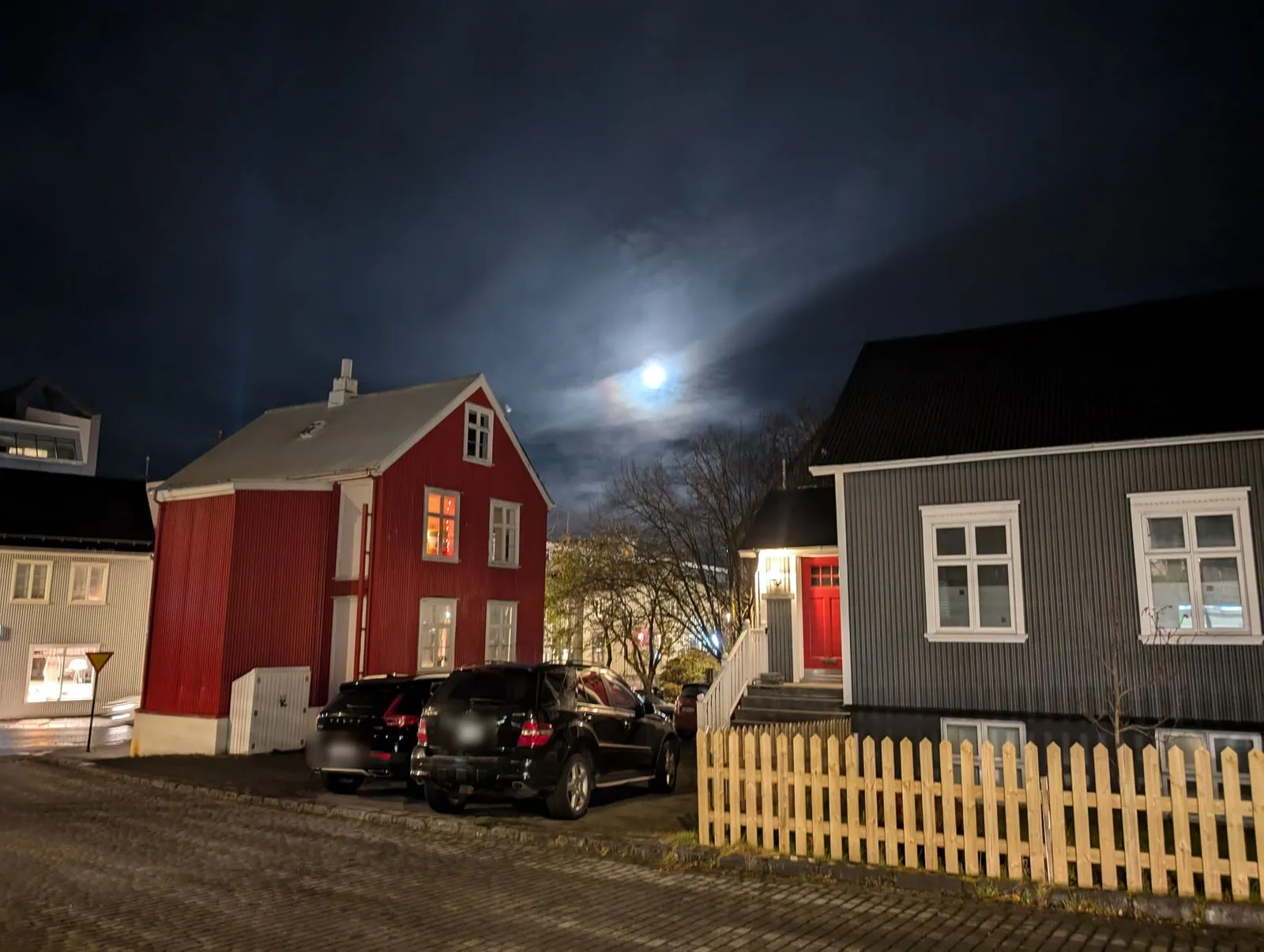
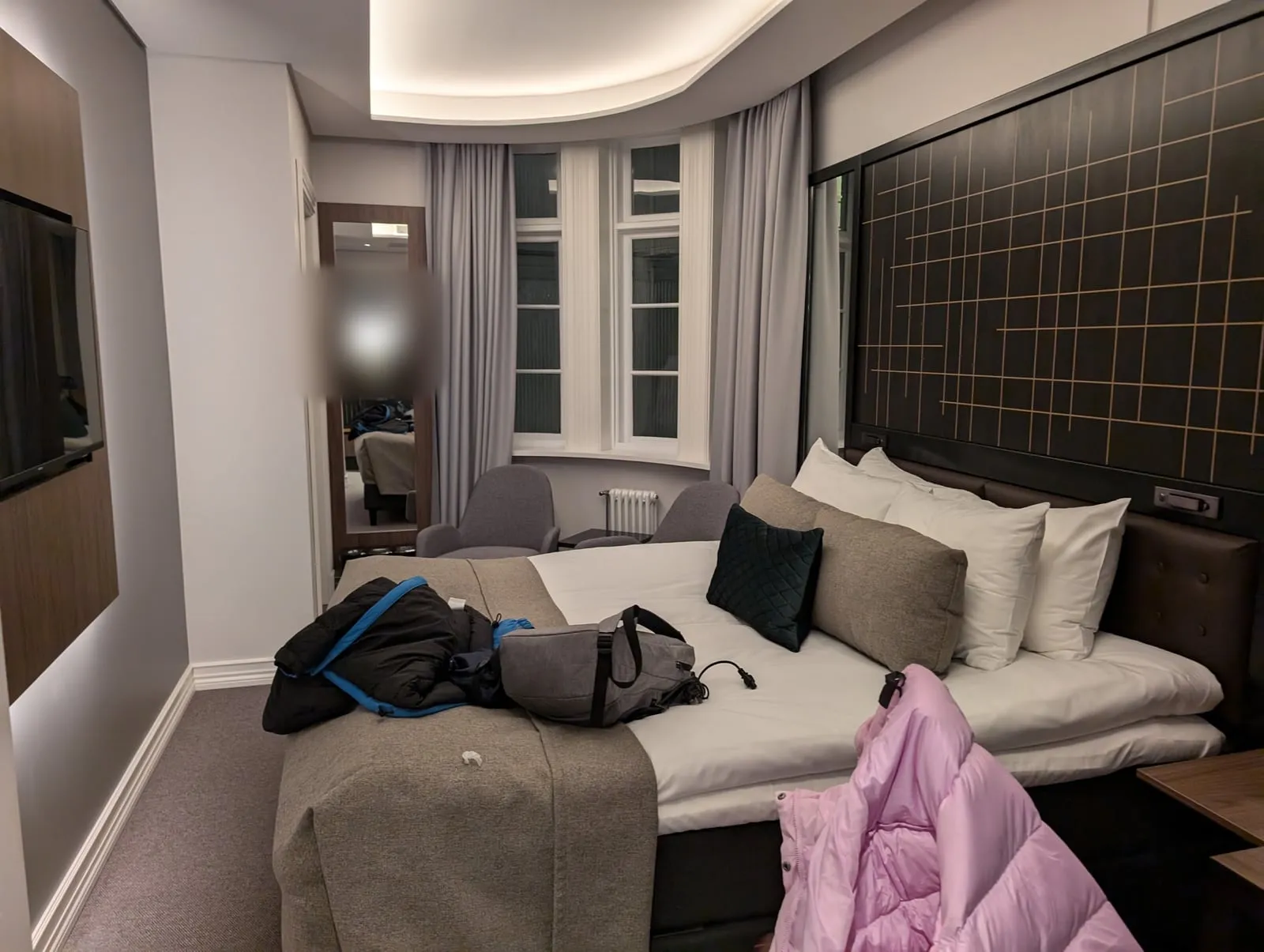
Hótel Reykjavík Saga was a very nice, quiet hotel, and the staff were super friendly. We paid €318 for a Standard Double, about £265, booked on Booking.com and paid at the hotel. It opened in 2022 on Lækjargata, by the pond, with 130 rooms, and it’s run by the Icelandic group Íslandshótel. We thought the bar closed early: its bar, Fröken Reykjavík, shuts at 11pm Sunday to Thursday and 1am at weekends today, and we were there on a Thursday. Other guests rate it 9.2 on Booking.com and number one of 61 Reykjavík hotels on TripAdvisor, and the same room is about ISK 44,000 (£269) on a weekday in October 2027, so the price has hardly moved (checked 15 November 2026).
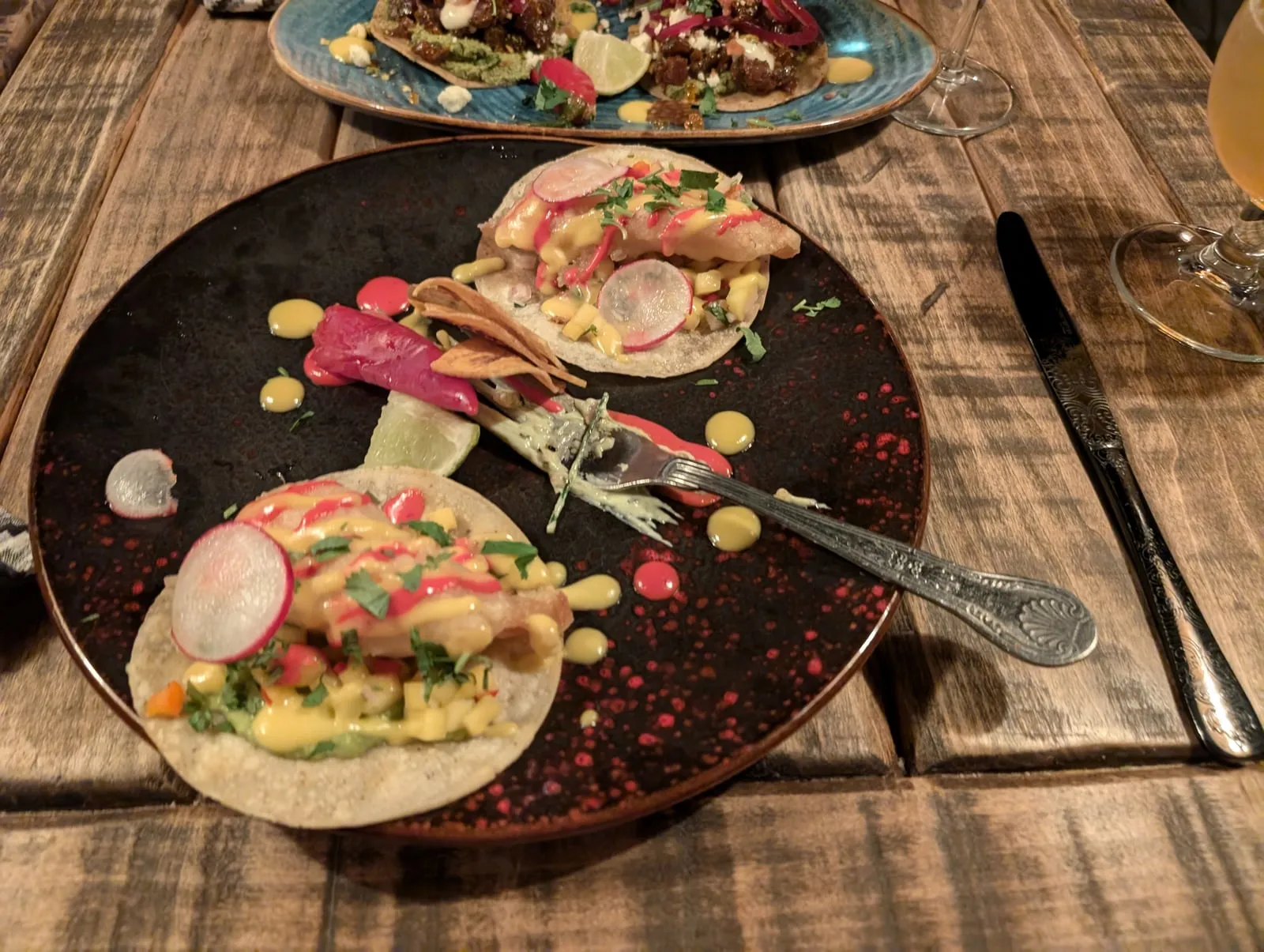
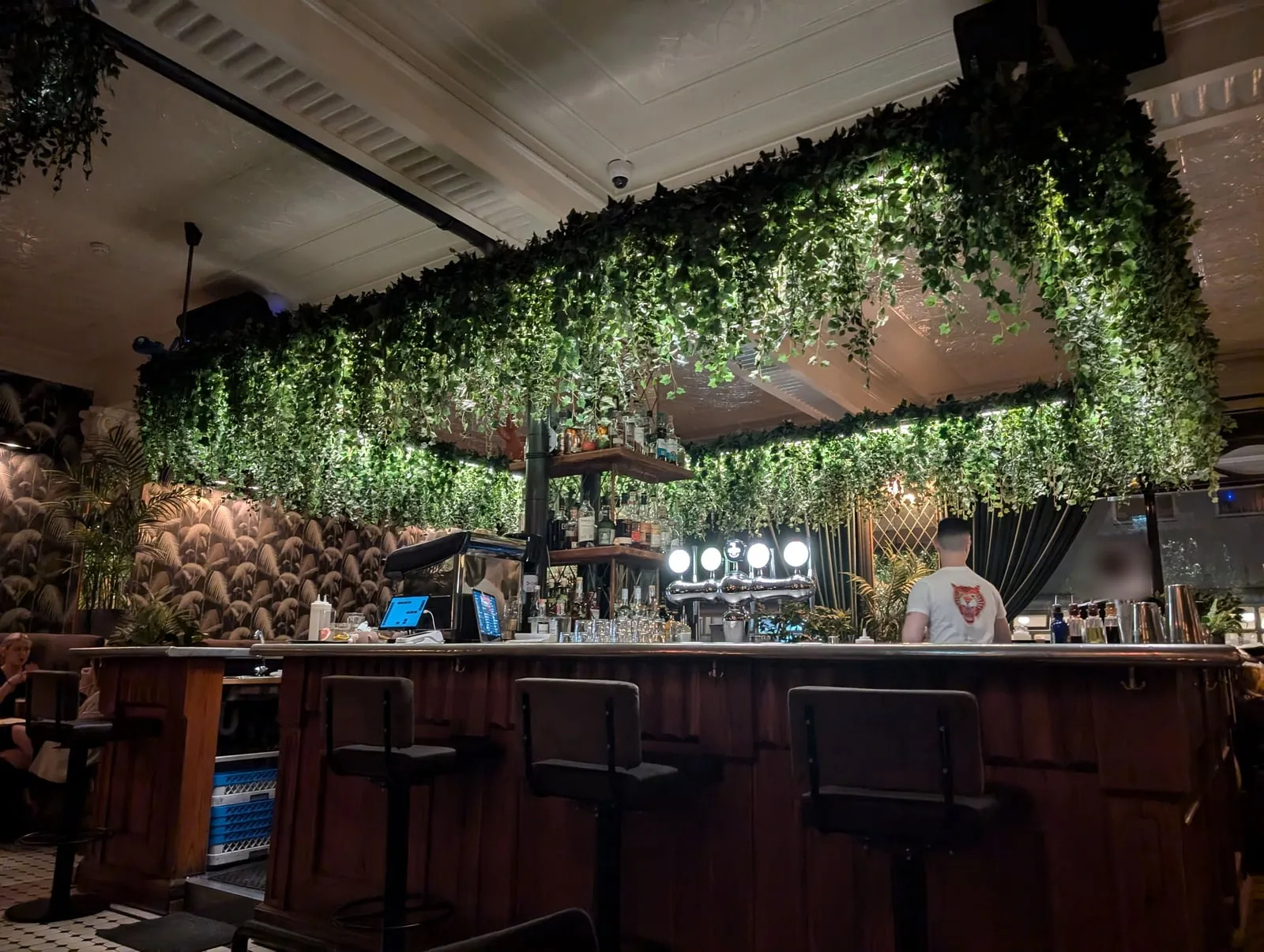
Our photos say we went straight out: a beer at the Pósthús food hall, tacos at Tres Locos on Hafnarstræti (two tacos were 3,490 or 3,590 kr, about £20), cocktails at Jungle on Austurstræti, and a last pint of Gull at the English Pub on the same street. More in where we ate and drank in Reykjavík.
Day two: the Golden Circle by car
On Friday we got onto the road and did the Golden Circle. It’s a beautiful, scenic drive on very safe, open roads, and you barely see anyone until you stop at each place.
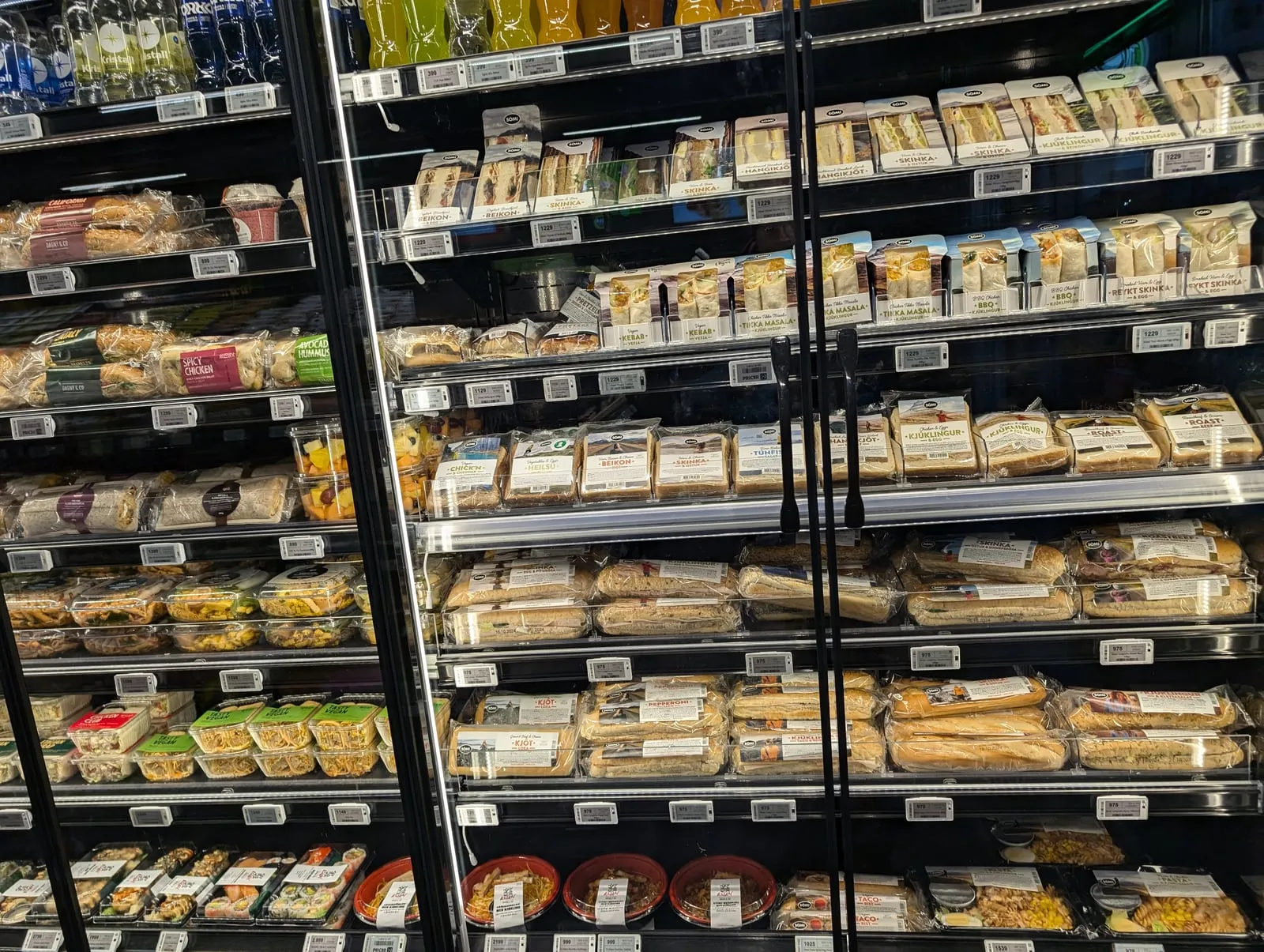
We picked up supplies first at the 10-11 on Austurstræti. It was a clean, lovely shop with plenty of options, nothing like the UK, and the prices weren’t insane like people say: sandwiches were 1,229 kr (about £7) and a hot dog 770 kr. Locals do call 10-11 the dearest chain, so Bónus or Krónan will be cheaper.
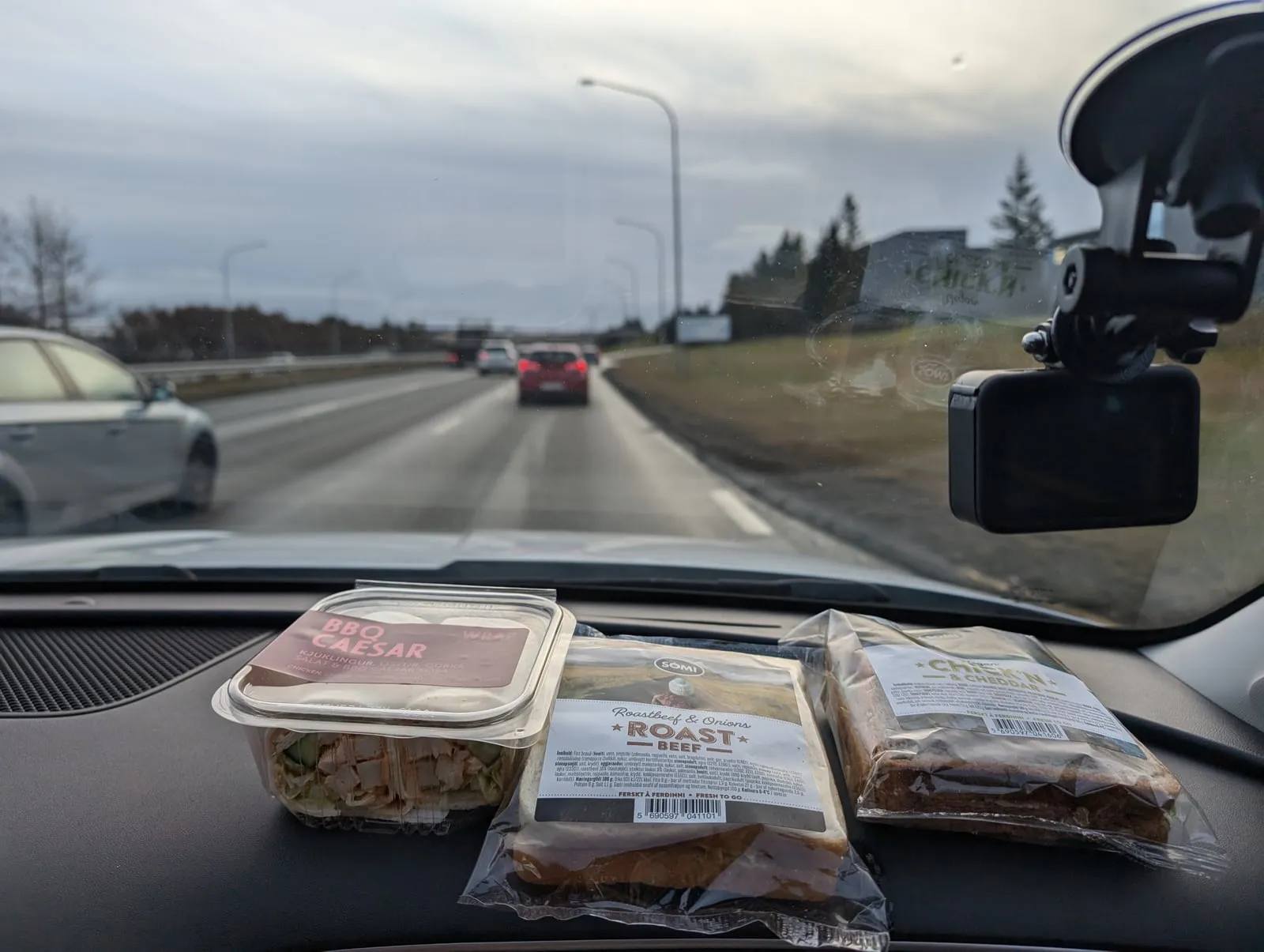
We stuck an action camera to the windscreen, where it can charge while you drive. Highly recommended: it filmed the drives you see in our video.
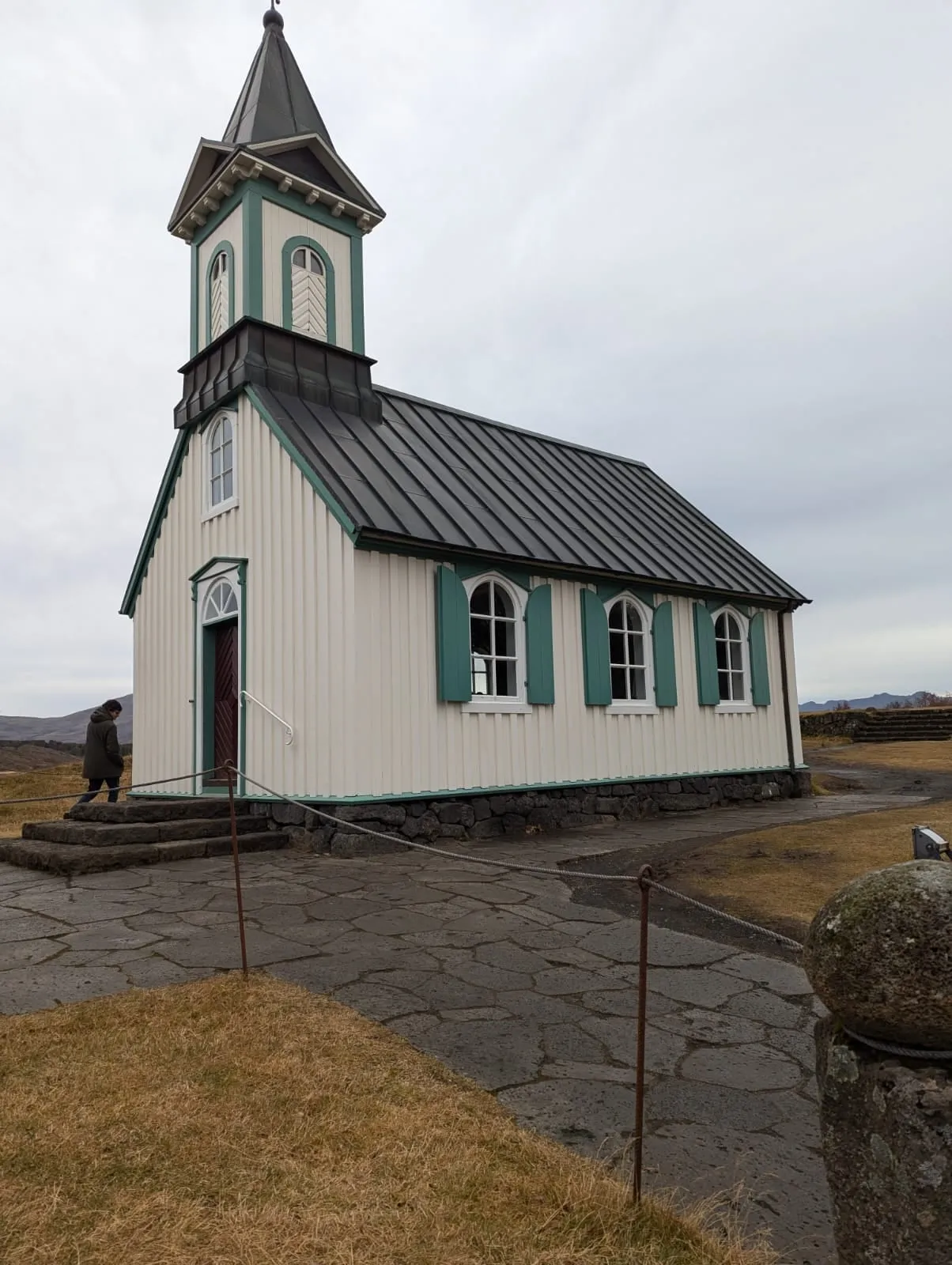
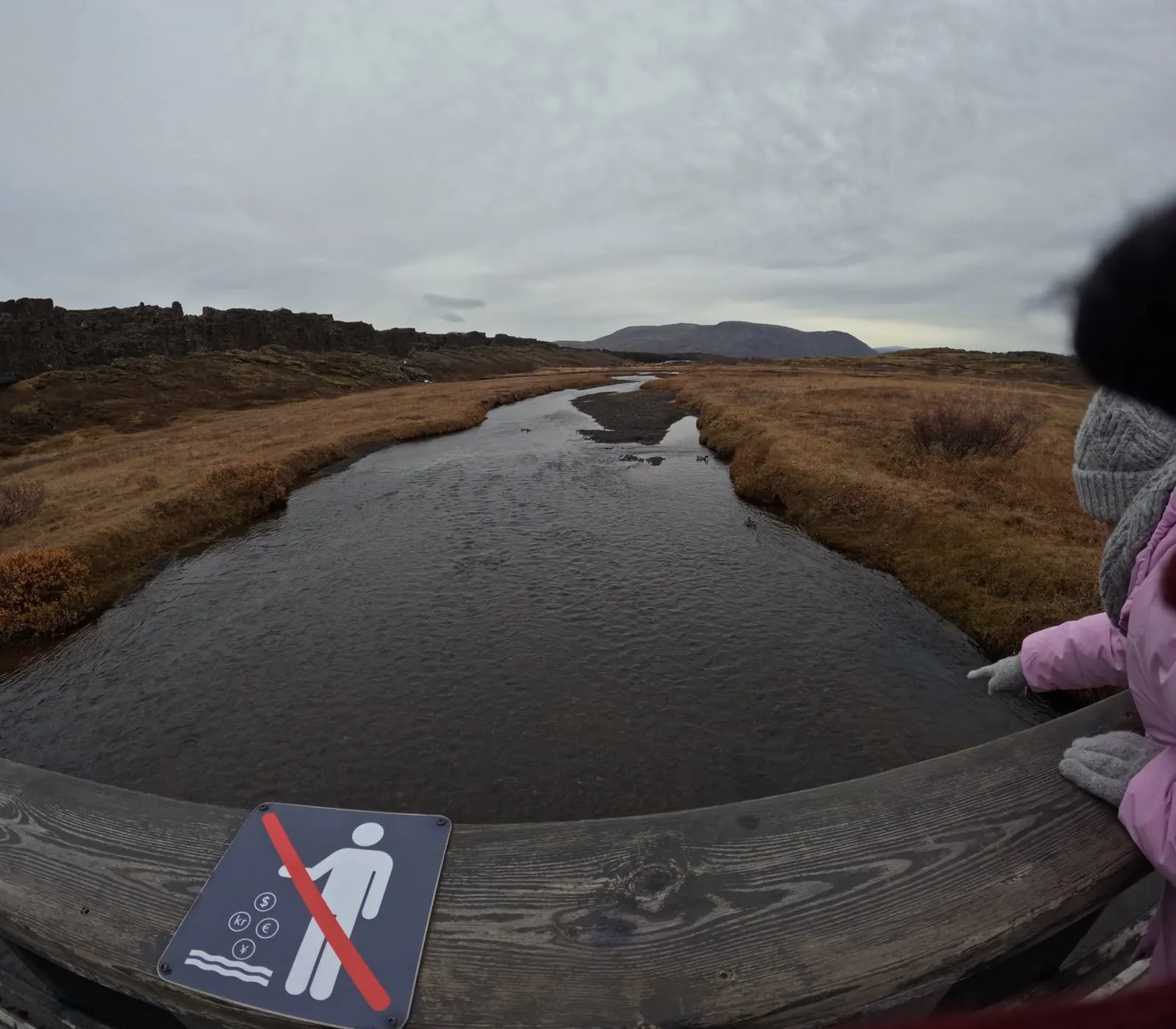
Þingvellir National Park was our first stop, and the longest. It’s a beautiful, open area with a nice church, and a good introduction to Iceland. From the footbridge you can see fish in the water in front of you. We thought they were Arctic char, but in October they’re most likely brown trout swimming up the Öxará to spawn: the park even runs a trout walk every autumn. Iceland’s parliament met here from 930 to 1798, it has been a UNESCO World Heritage Site since 2004, and the cliff of Almannagjá marks the edge of the North American plate. Parking is ISK 1,000 a car for the day, read by camera and paid at a machine or online, the same as in 2024.
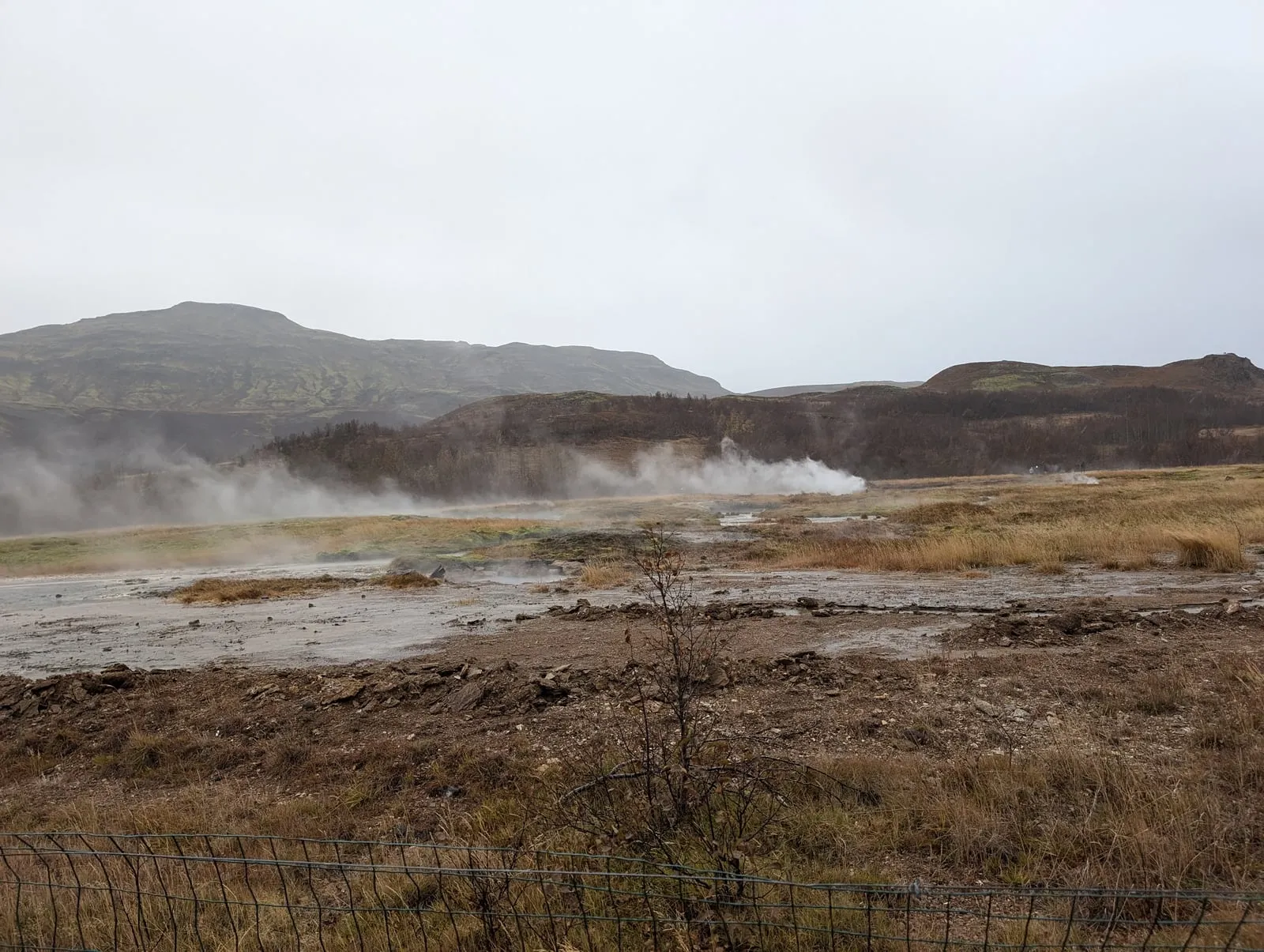
Geysir has plenty of parking (ISK 1,080 for up to eight hours now). This is where the cold really hit us. A scarf and a hat are a must: we’d never felt cold like it in Britain. Iceland’s Met Office says October 2024 was a cold month, and the 18th and 19th were among its windiest days.
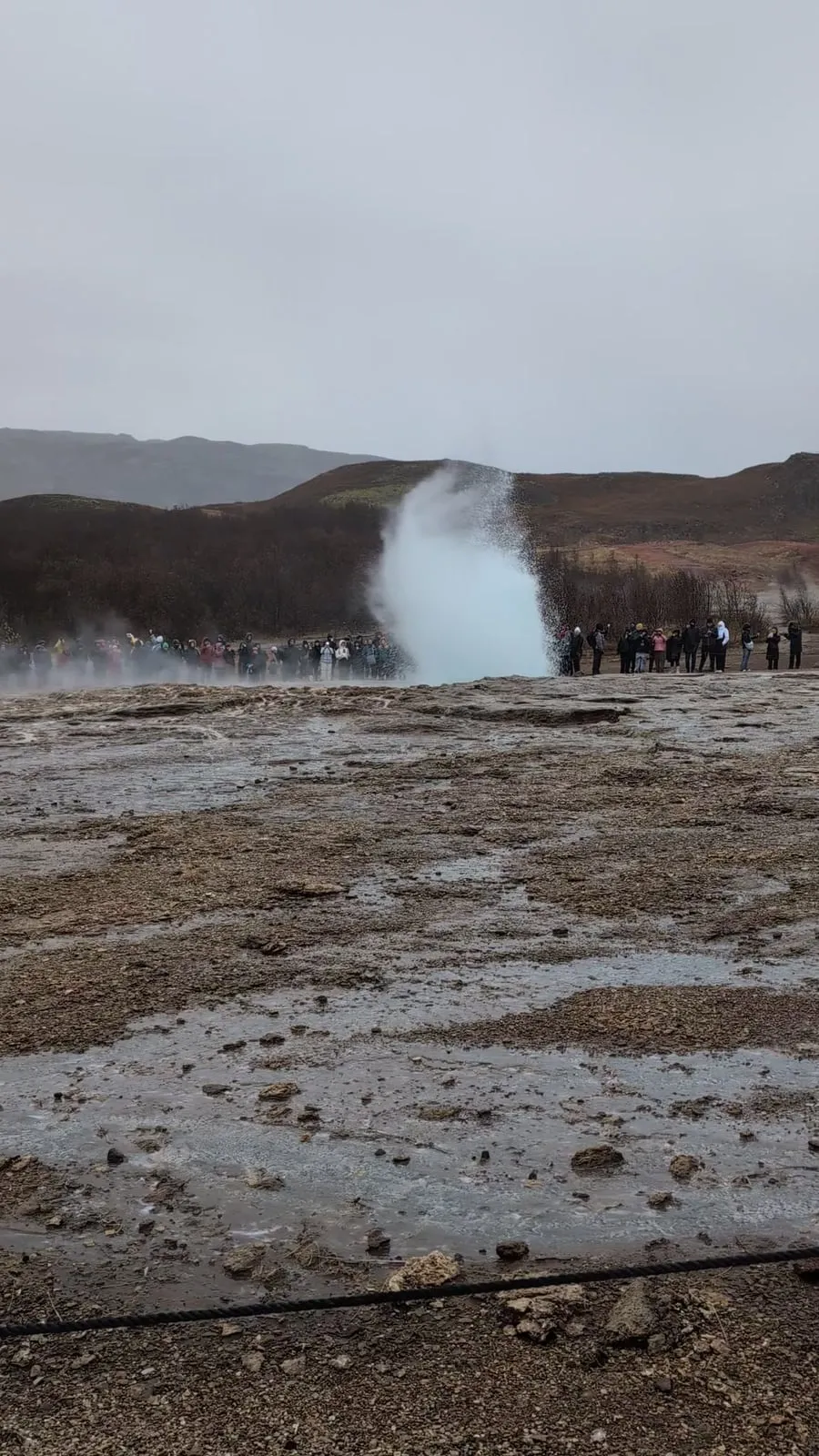
The geyser is a very short walk across the road. It’s a little anticlimactic, but still a cool watch and a must do, and it’s very busy. The one that goes off is Strokkur, every six to ten minutes, usually 15 to 20 metres high; the Great Geysir itself hasn’t been seen to erupt since 2016. The smell isn’t as bad as people say. It’s hydrogen sulphide, and your nose soon stops noticing it.
The shop across the road, the Geysir Center, was the best tourist shop we saw the entire trip: plenty to buy, and a very nice place to look around or grab a coffee. You feel like you’re truly in Iceland at this point.
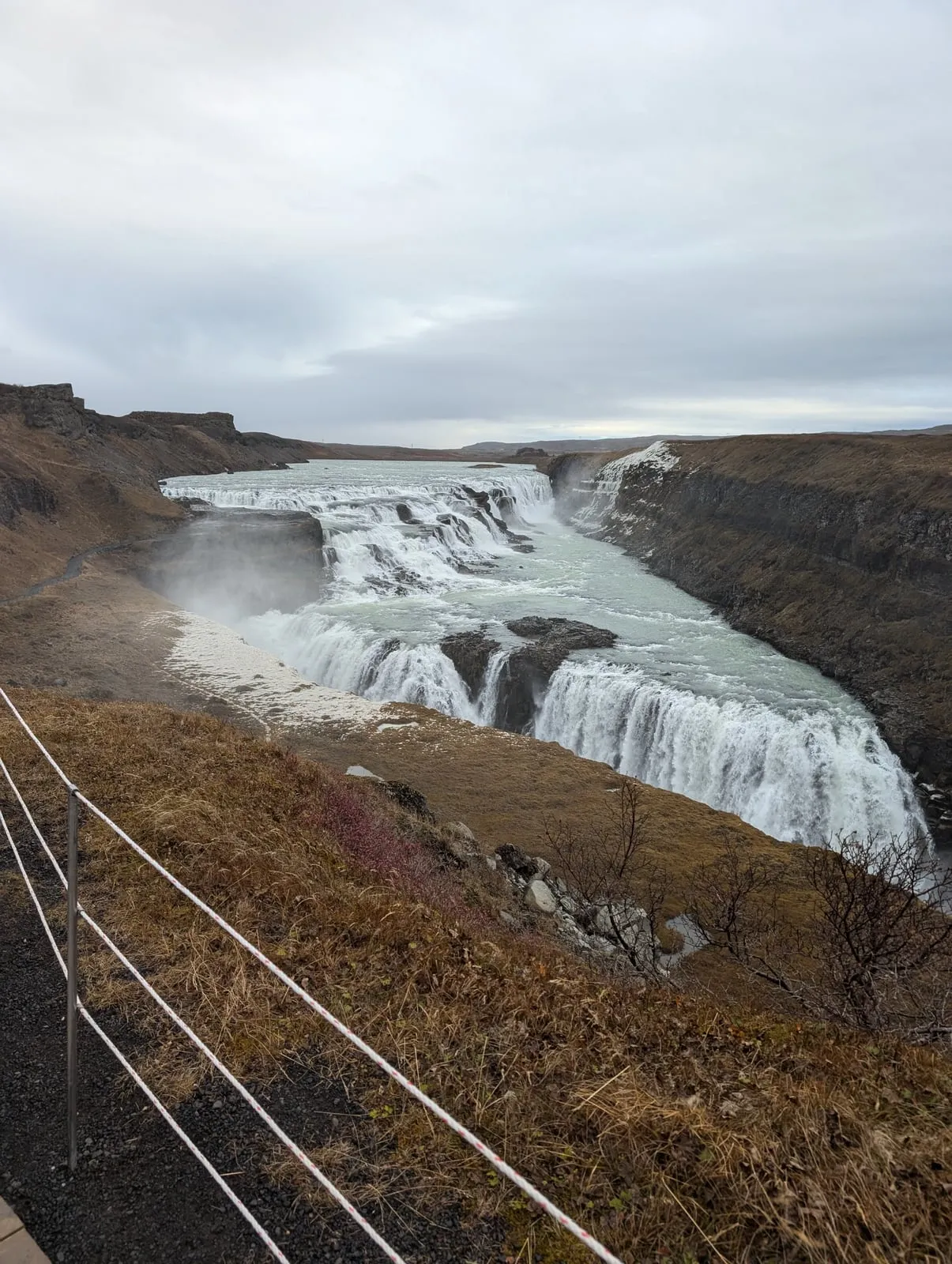
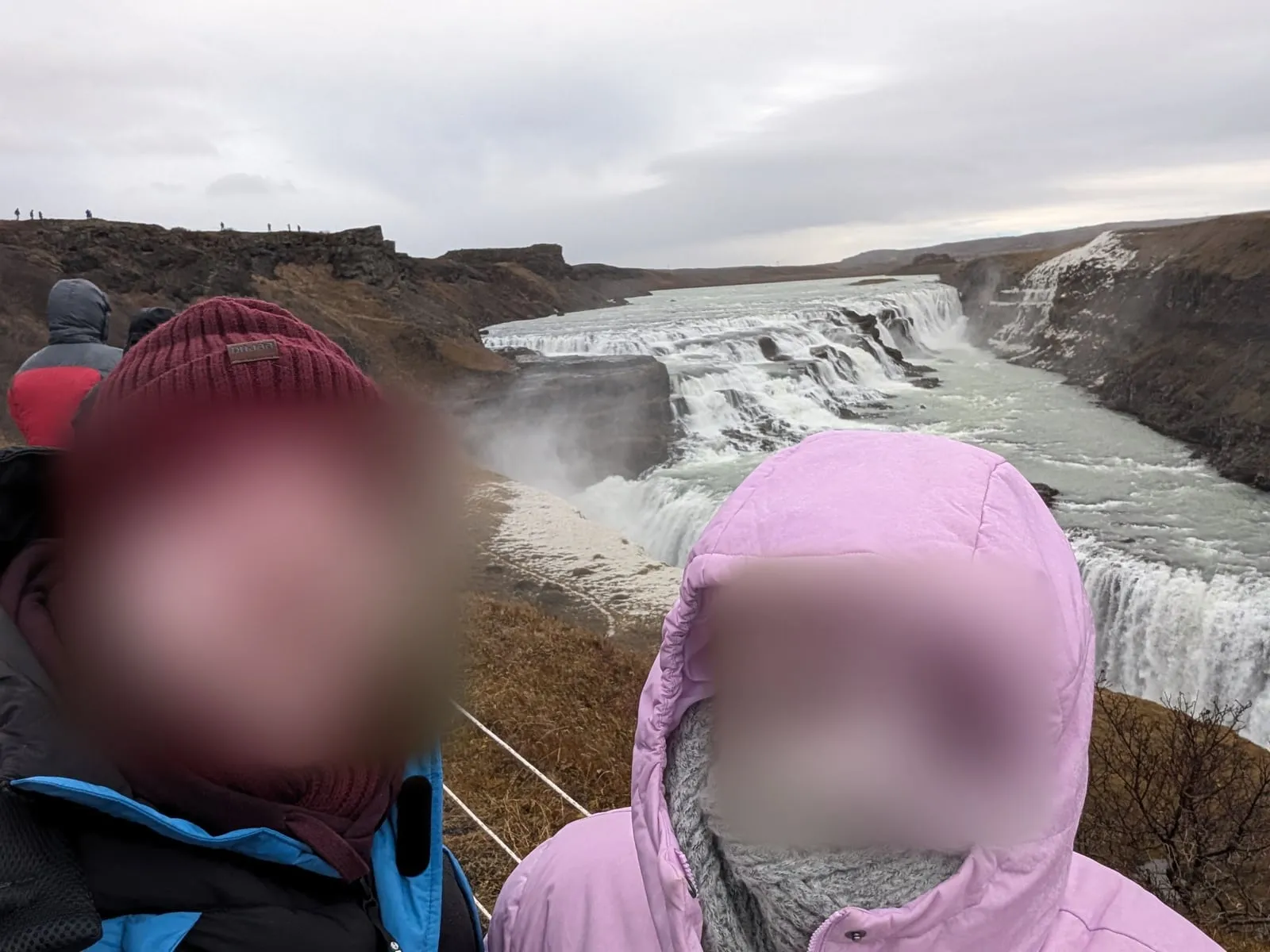
Gullfoss, the big waterfall, is a sight to behold and definitely worth it. It’s a bit of a walk down, but very, very overwhelming to see: massive and beautiful. The river drops about 32 metres in two steps into a gorge. The falls are free to visit; parking is ISK 1,080 for four hours now, and it was probably free when we went.
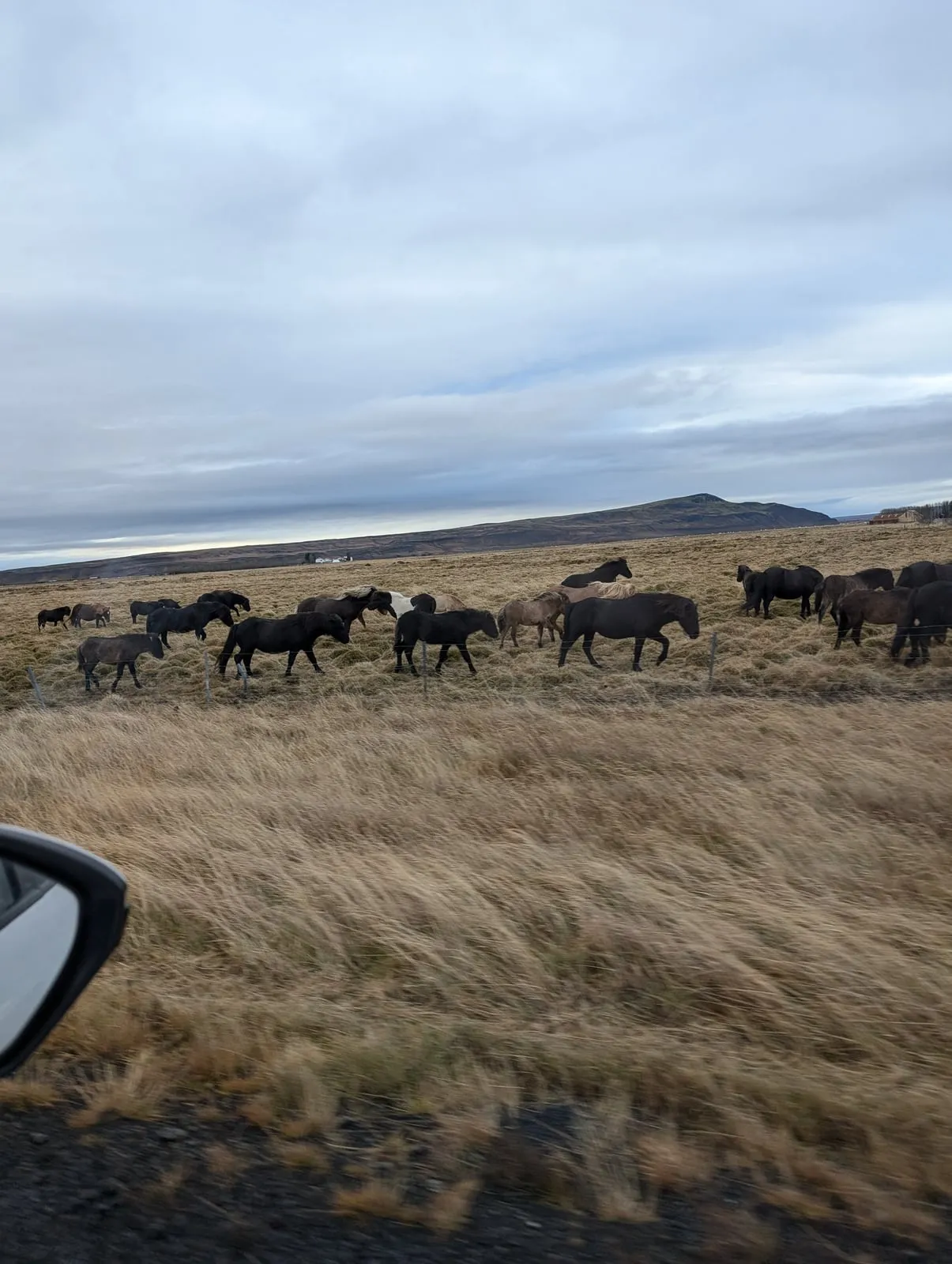
On the way to Rangá we saw Icelandic horses by the road, which are very cool. Some facts about them: no horse may be brought into Iceland, and one that leaves can never come back, so the breed has been kept pure for about a thousand years. They also have two gaits other horses don’t, the very smooth tölt and the flying pace. If you want a photo, pull right off the road first.
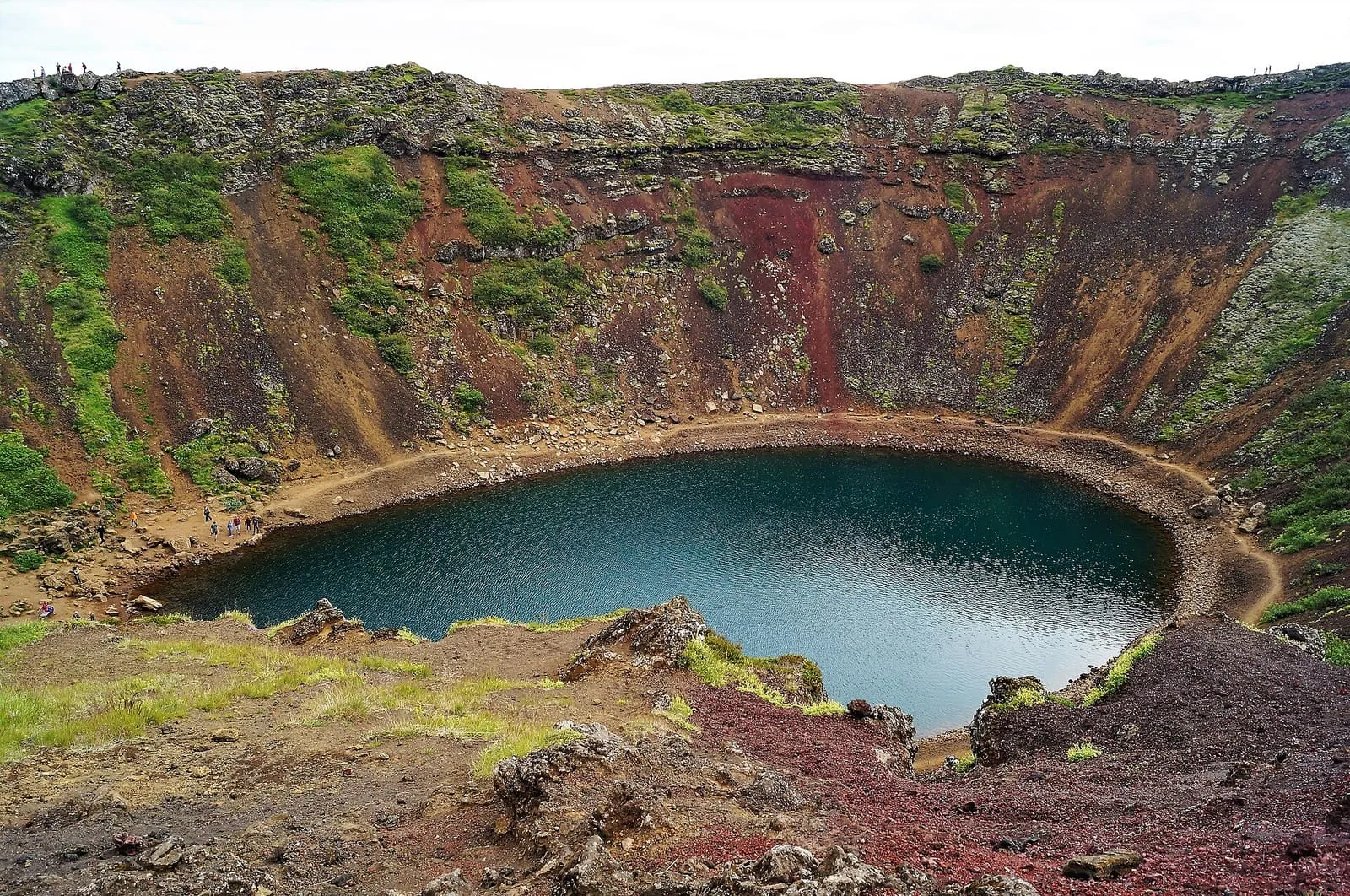
From Gullfoss we skipped Kerið, the crater lake, as we didn’t want to drive at night and it was a long journey to the hotel. Looking at our times, we’d probably have made it before dark: the sun set at 5.55pm and we were at Rangá by about 4.30pm, and the detour adds only about 23 minutes of driving, plus the stop. If you have the light, go. Entry is ISK 700.
Every stop, with the times and the prices: the Golden Circle by car.
Hotel Rangá: the best stay of the trip
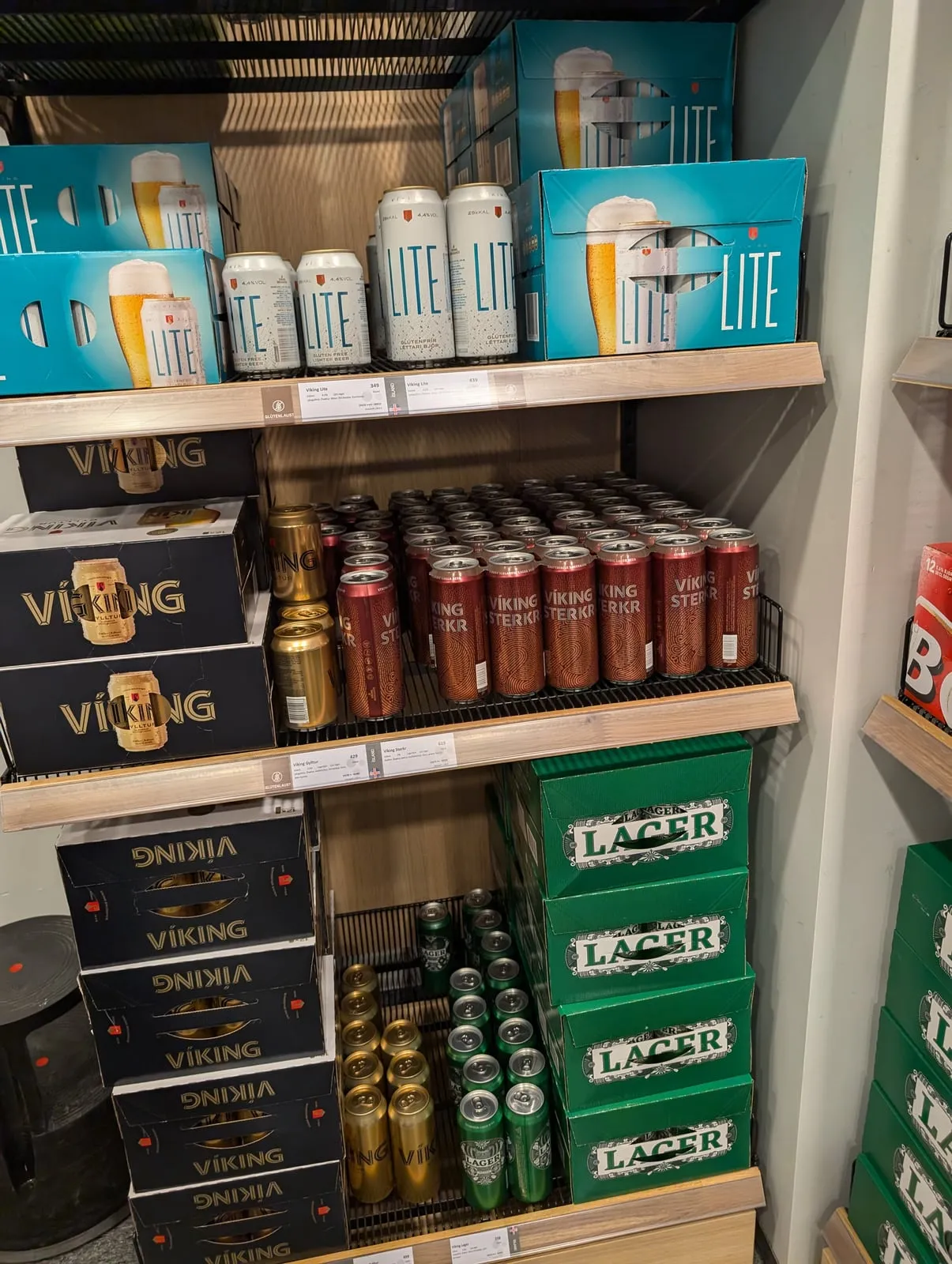
On the way we stopped in Hella and picked up some bits at a shop for locals. The supermarket there shares a building with Vínbúðin, the state alcohol shop: supermarkets in Iceland can only sell beer up to 2.25%, so anything stronger comes from Vínbúðin. A 330 ml can of Víking Lite was 349 kr, about £2.
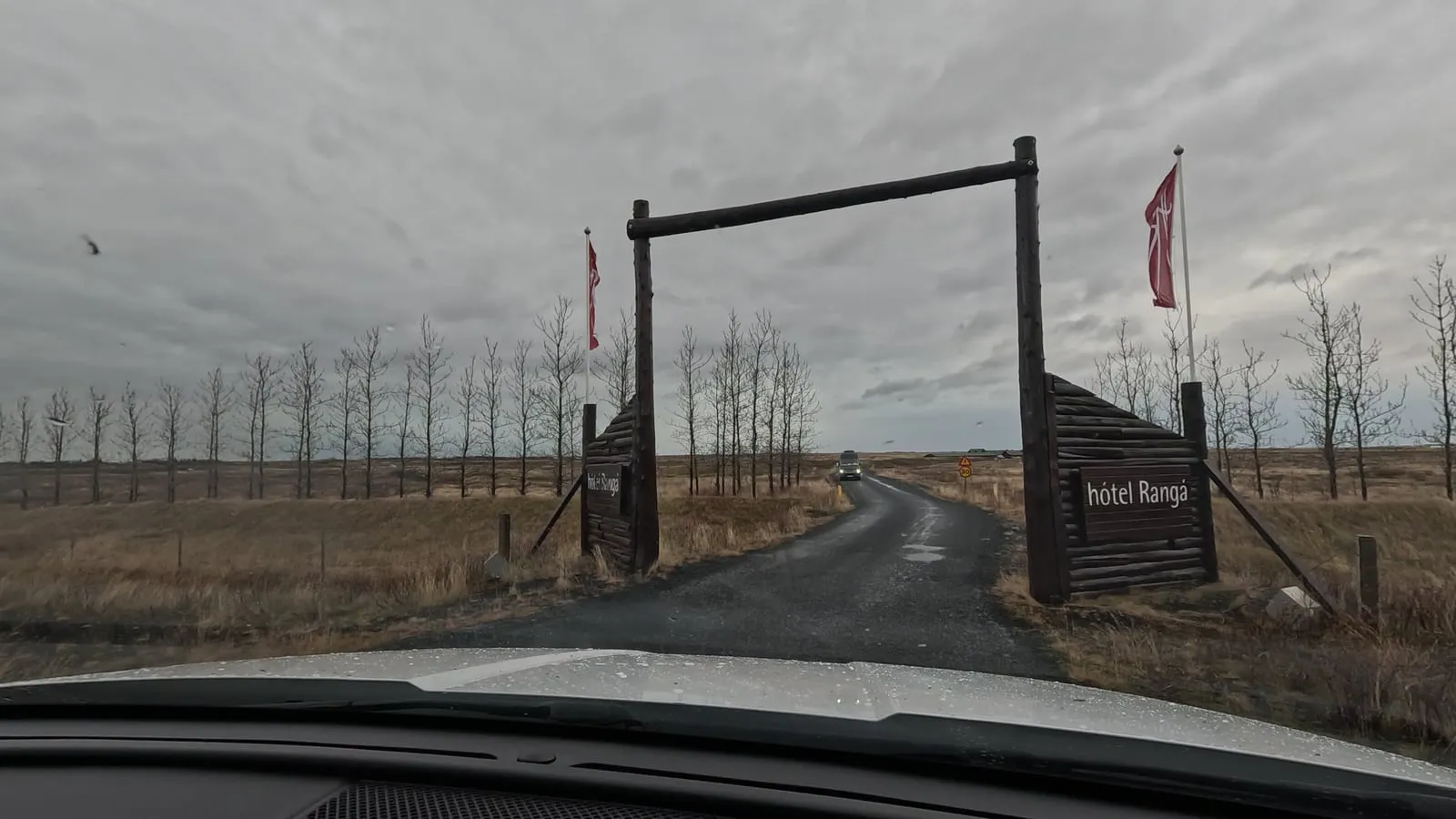
Hotel Rangá was one of the best stays of the trip. It was one of the cheapest hotels we stayed at, €408 for the night against the Saga’s €318, and it was absolutely amazing. My top recommendation of anything to do in Iceland would be to stay here, over all the things people usually recommend.
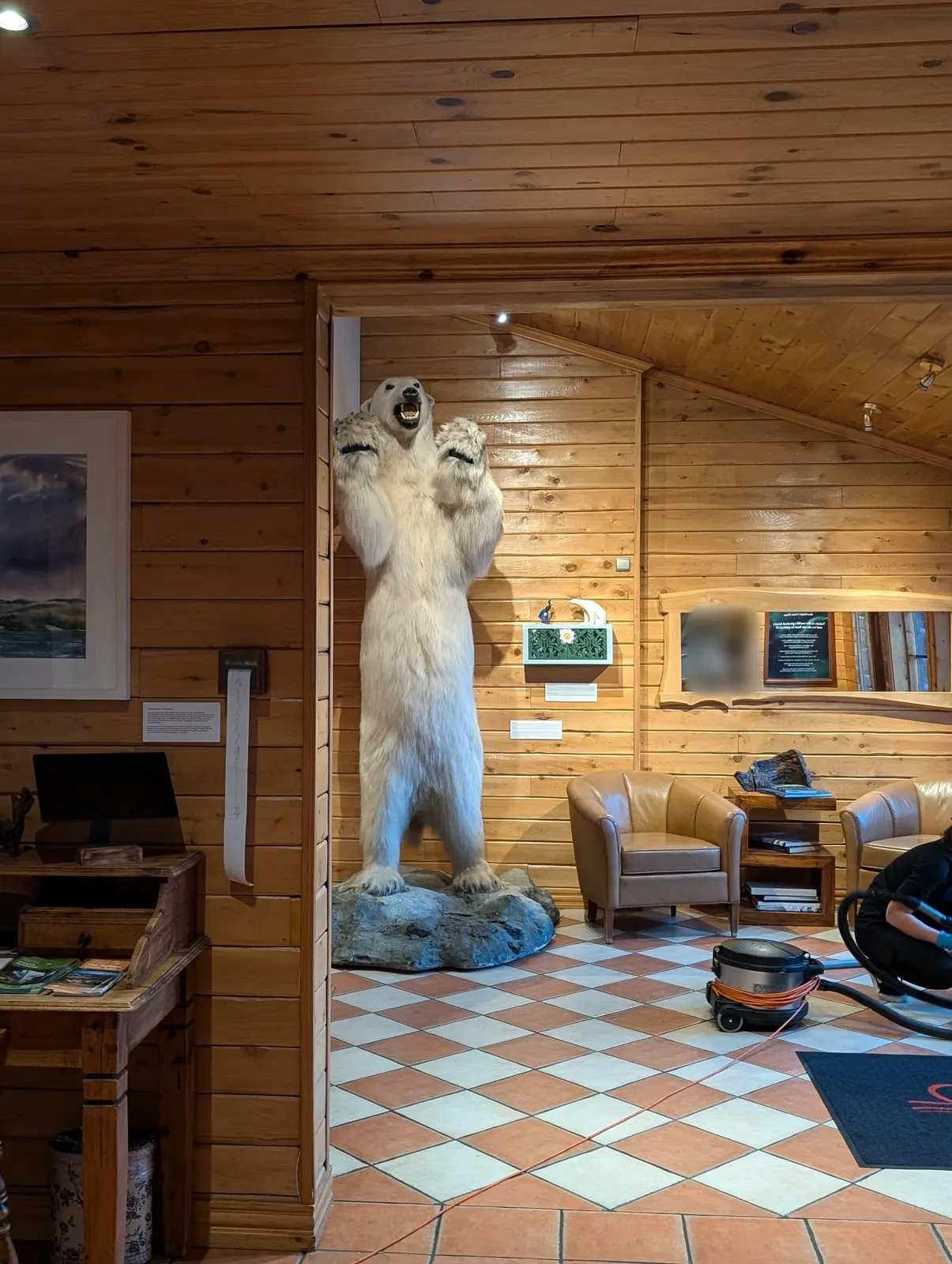
You arrive and feel like a real explorer finding their base for the first time. Check-in was easy, and a stuffed polar bear stands in the lobby: Hrammur, which means paw, a name a local child picked in a competition. The hotel says he came from Greenland, stood in a Reykjavík outdoor shop until it went bust, and has been at Rangá since 2003.
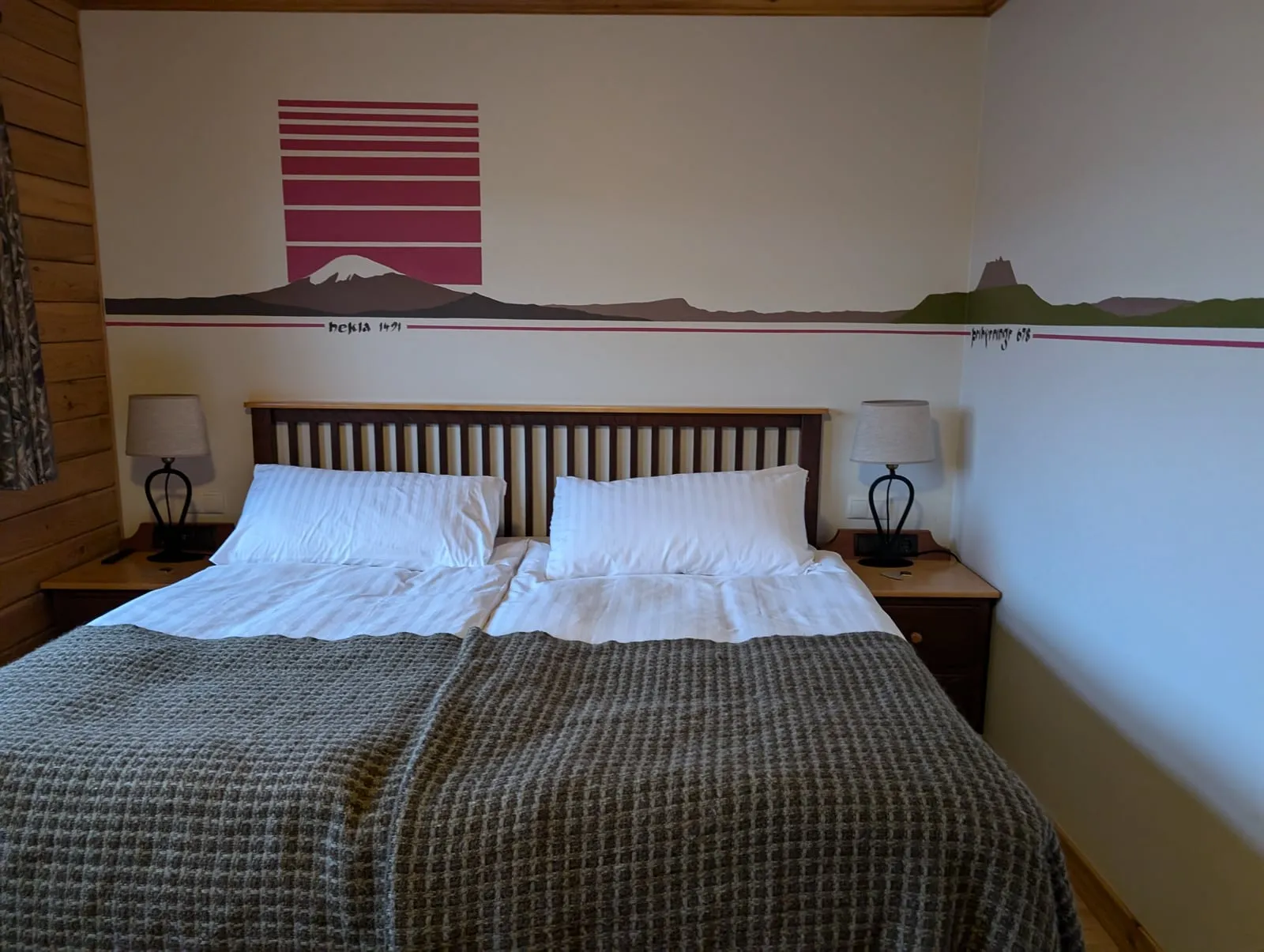
We had a basic, cheap room facing the car park, the only one available, and no problems with it at all. It was a Standard, 18 square metres, with a mural of the volcano Hekla on the wall.
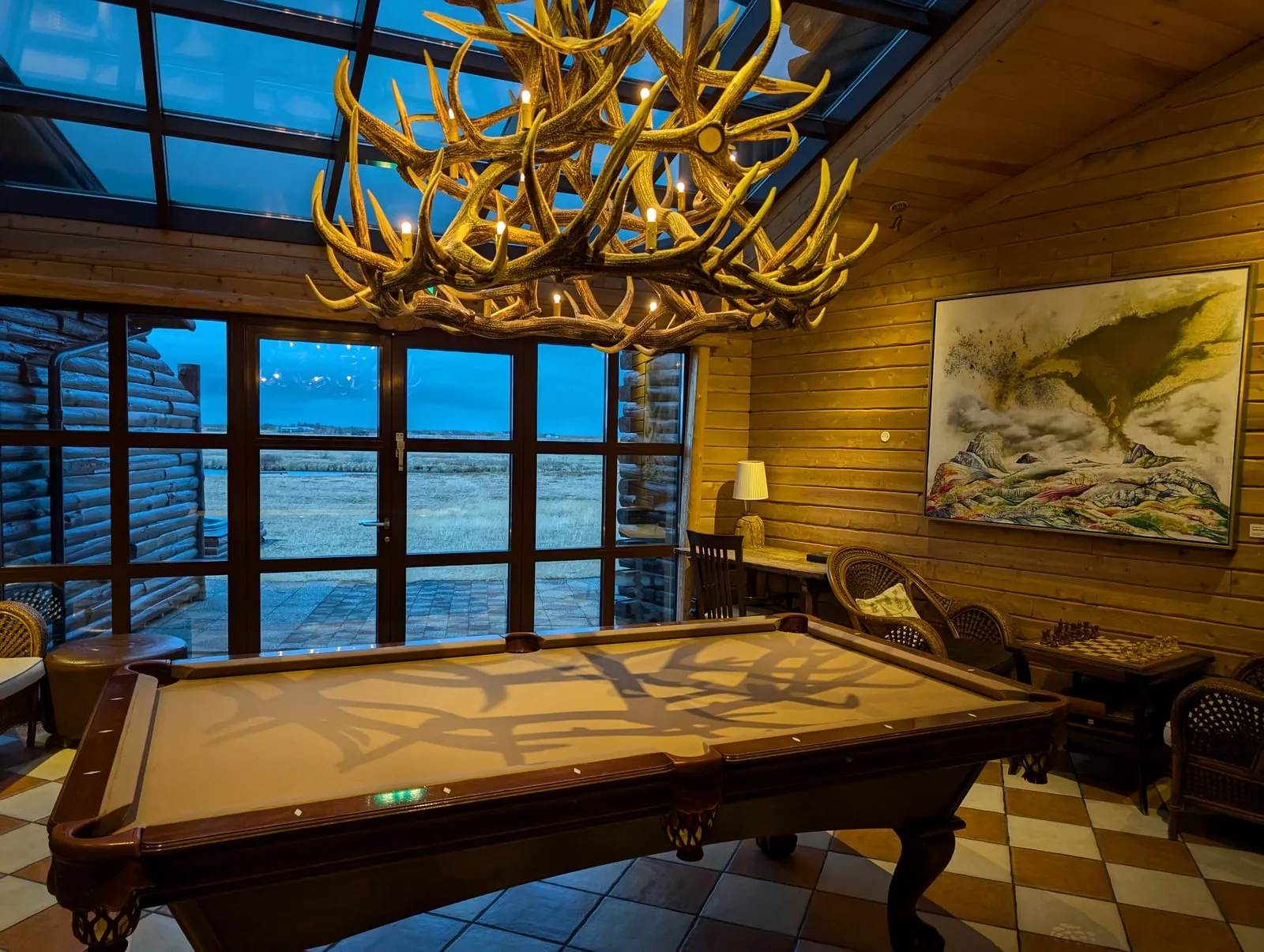
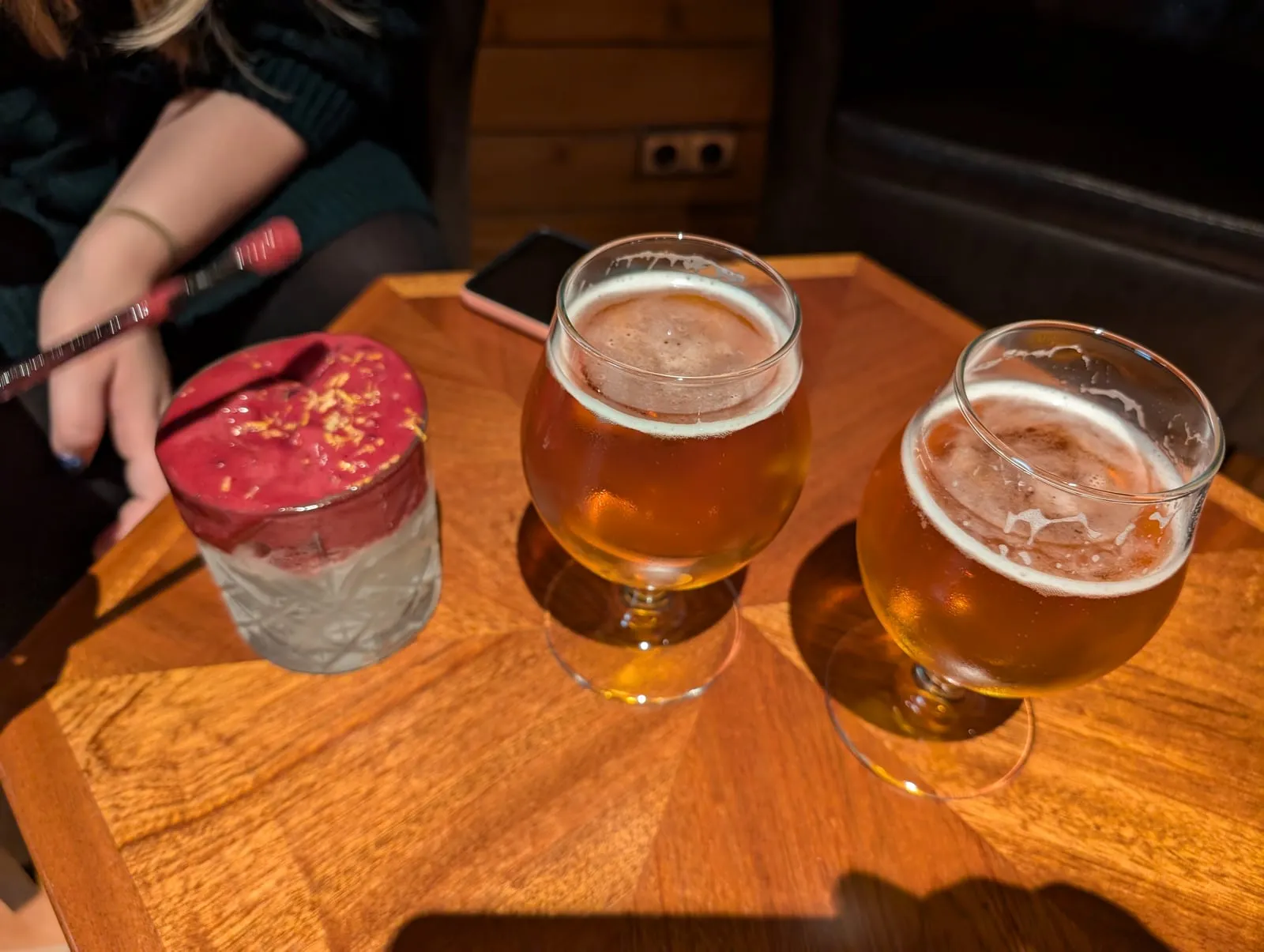
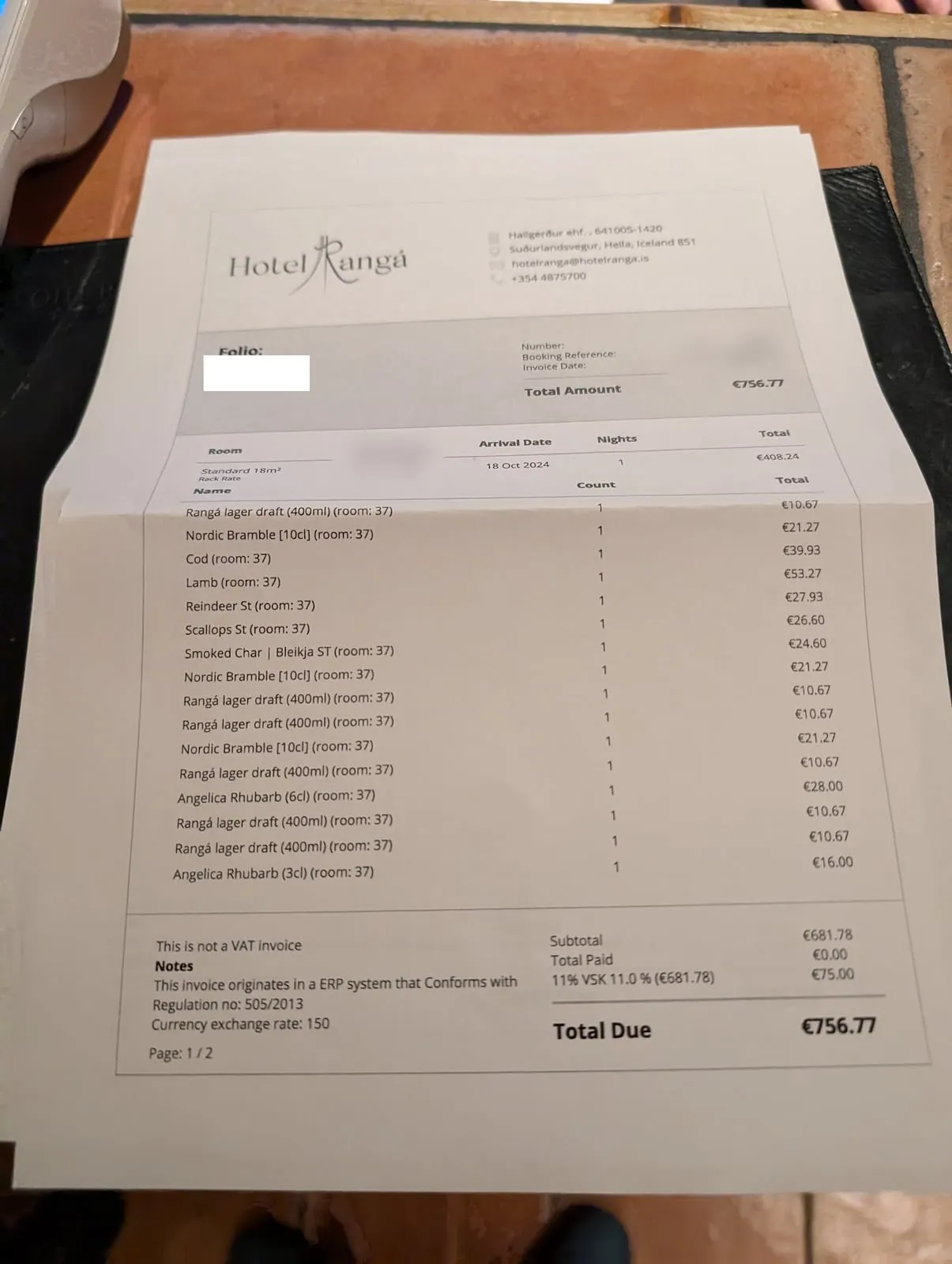
The bar is really nice. It goes upstairs and feels like an explorers’ club, and we waited there for our dinner reservation and had lots of drinks. The house beer is Rangá Lager. The barman told me it comes from the local brewery (Ölvisholt, started by two farmers in South Iceland in 2007), and it’s a very nice beer to drink. My partner still talks about the cocktails today: one of the best she’s ever had. The only cocktail on our bill is the Nordic Bramble, made with Icelandic gin and juniper, at €21.27 each; the lagers were €10.67.
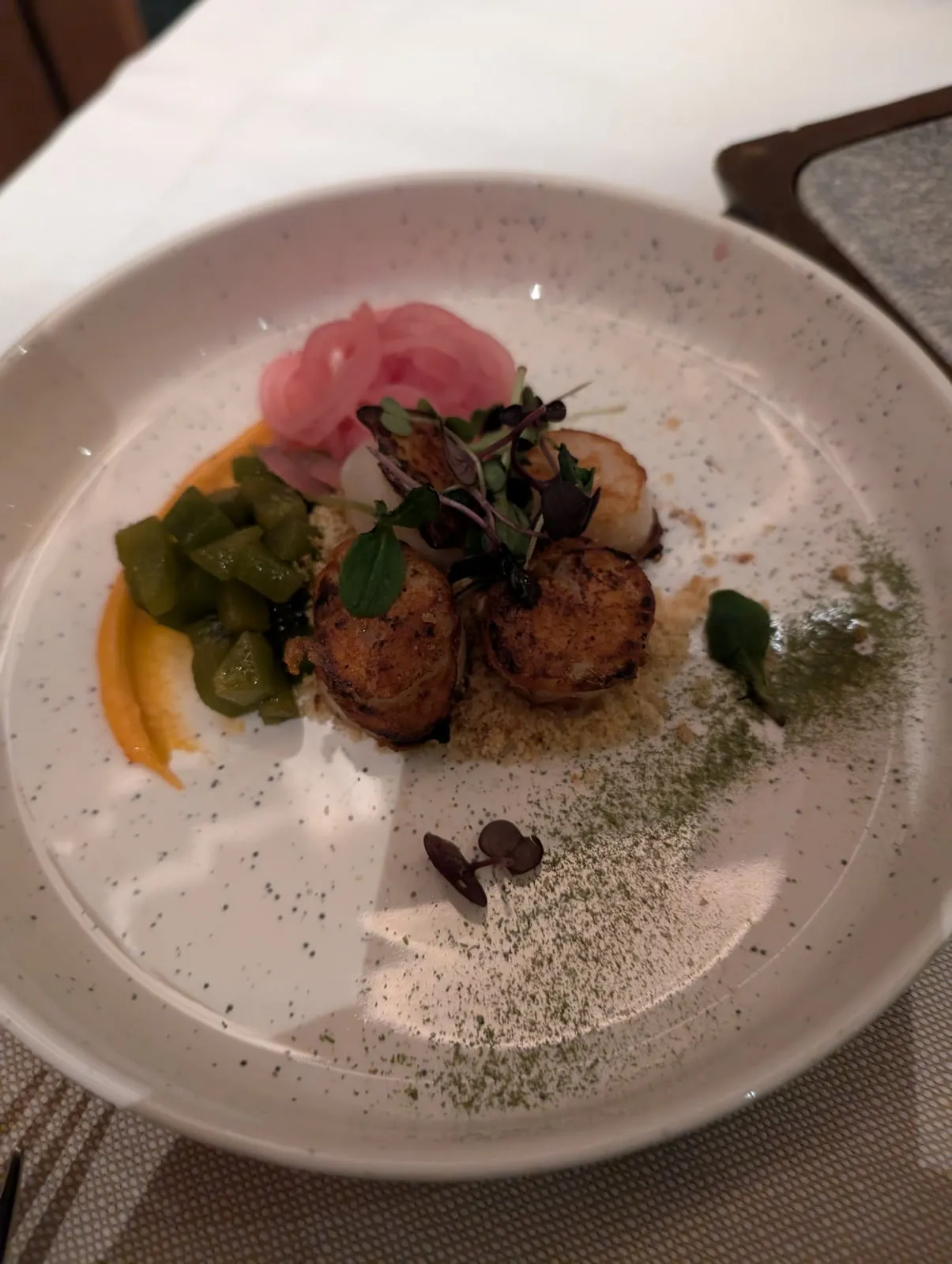
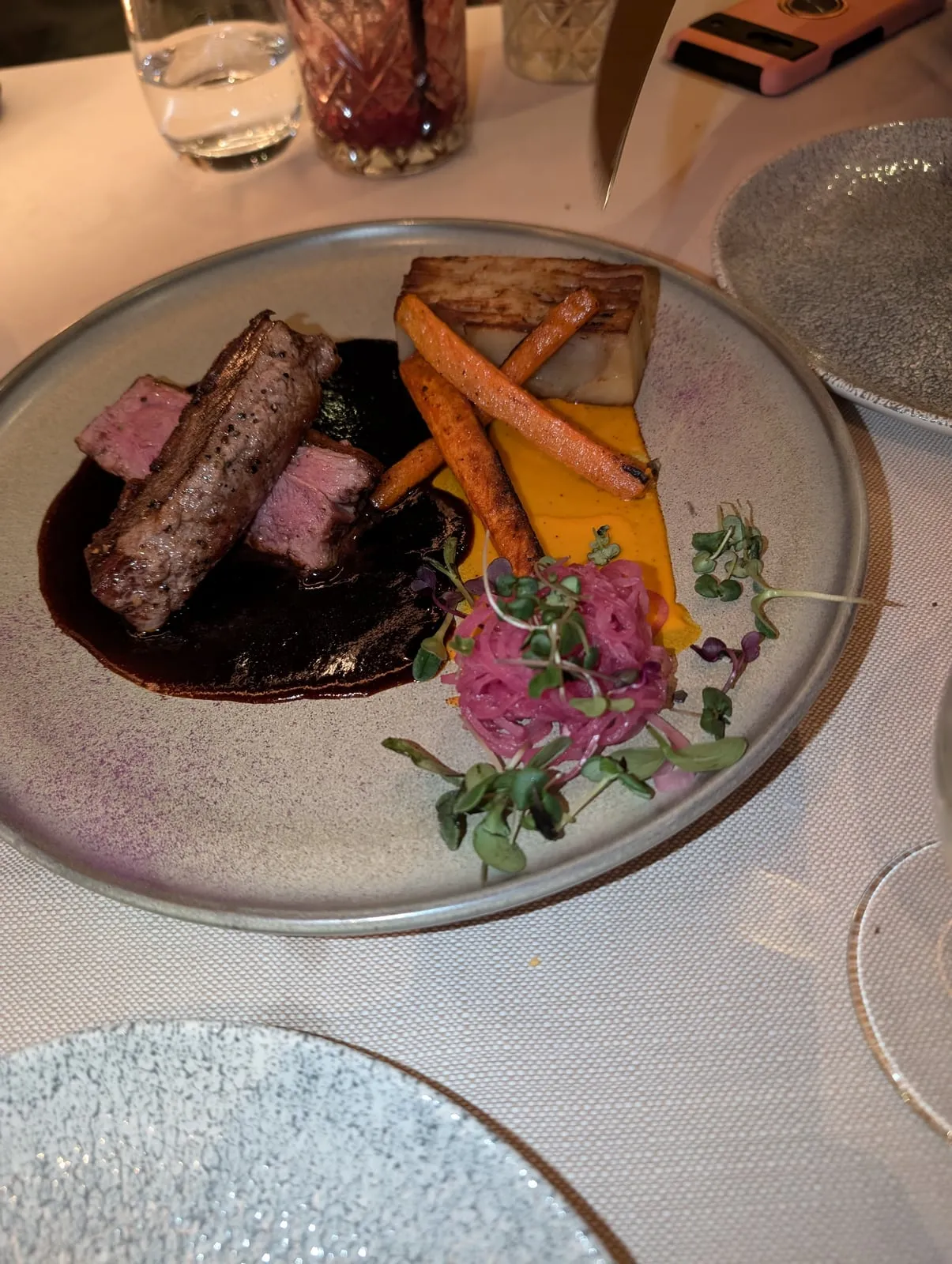
Dinner was very delicious: fine dining, and one of the most memorable parts of the trip. We’d recommend anyone who visits Iceland 100% goes. We had smoked Arctic char, scallops and reindeer carpaccio to start, then the cod and the lamb, at 3,690 to 7,990 ISK a dish. Dinner and drinks came to about €345 (about £290) on top of the room. Rangá is a member of Small Luxury Hotels of the World and has a MICHELIN Key.
It also has a northern lights wake-up call (the staff ring your room when they appear), an observatory and outdoor hot tubs by the river. The whole review, with the menus and what the rooms cost now: Hotel Rangá review.
Day three: the south coast waterfalls
The next morning we drove to the waterfalls, and this part of the journey was much better than the Golden Circle. If you come to Iceland, don’t just do the Golden Circle tour: renting a car really makes it so much better. We seriously regret not going the whole coastline, and we’ll be doing that next trip, staying at Rangá again on the way.
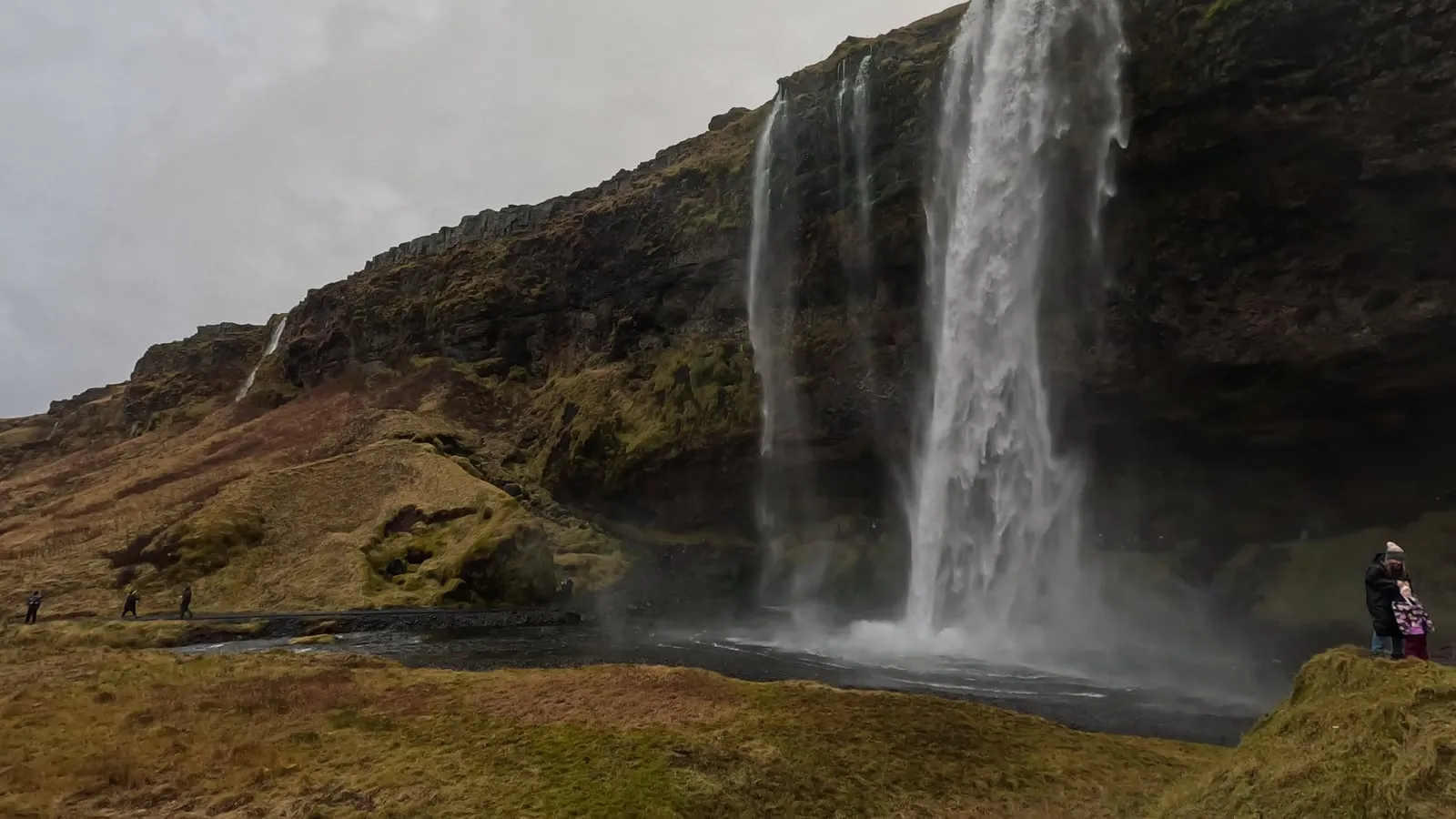
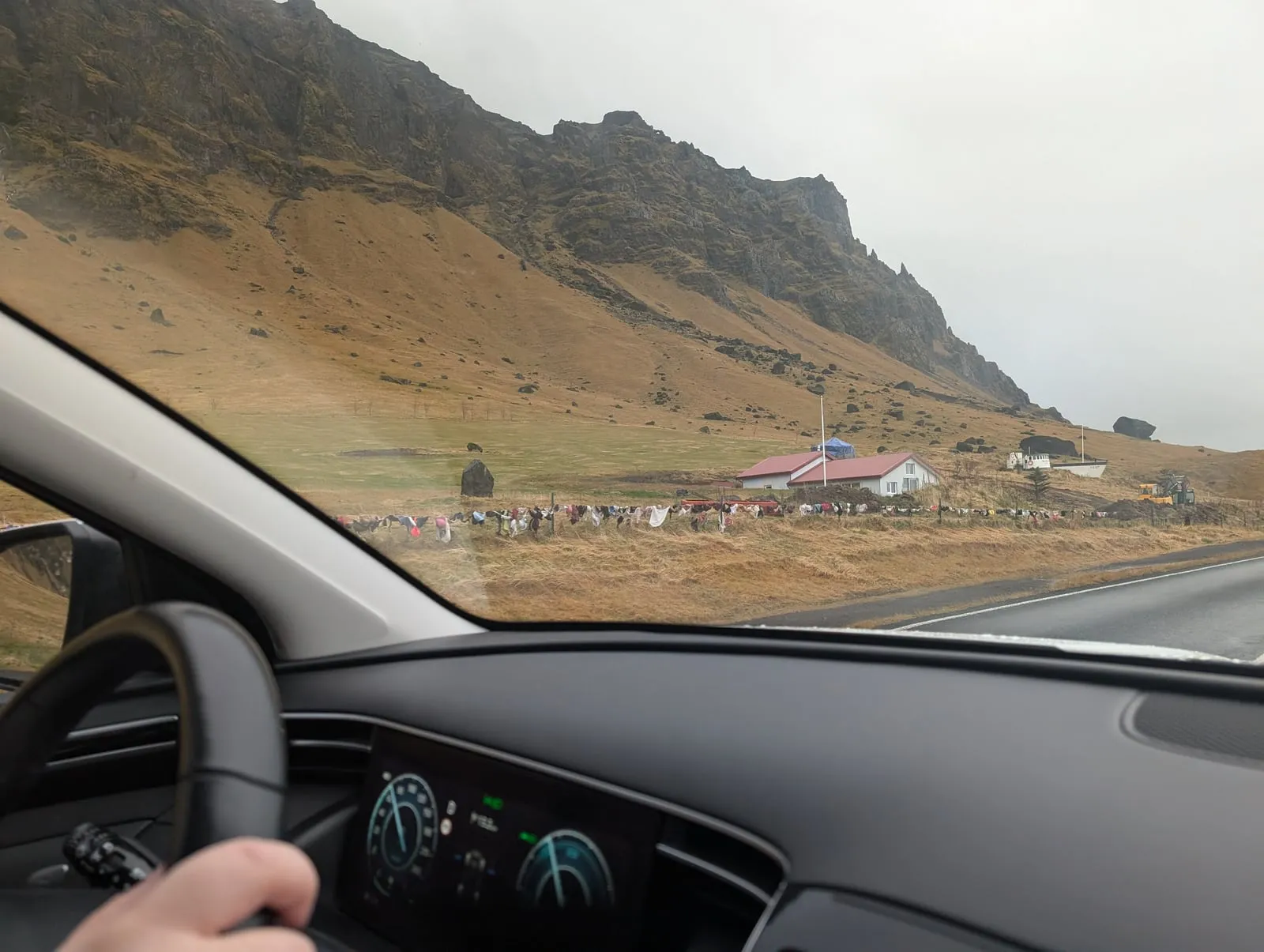
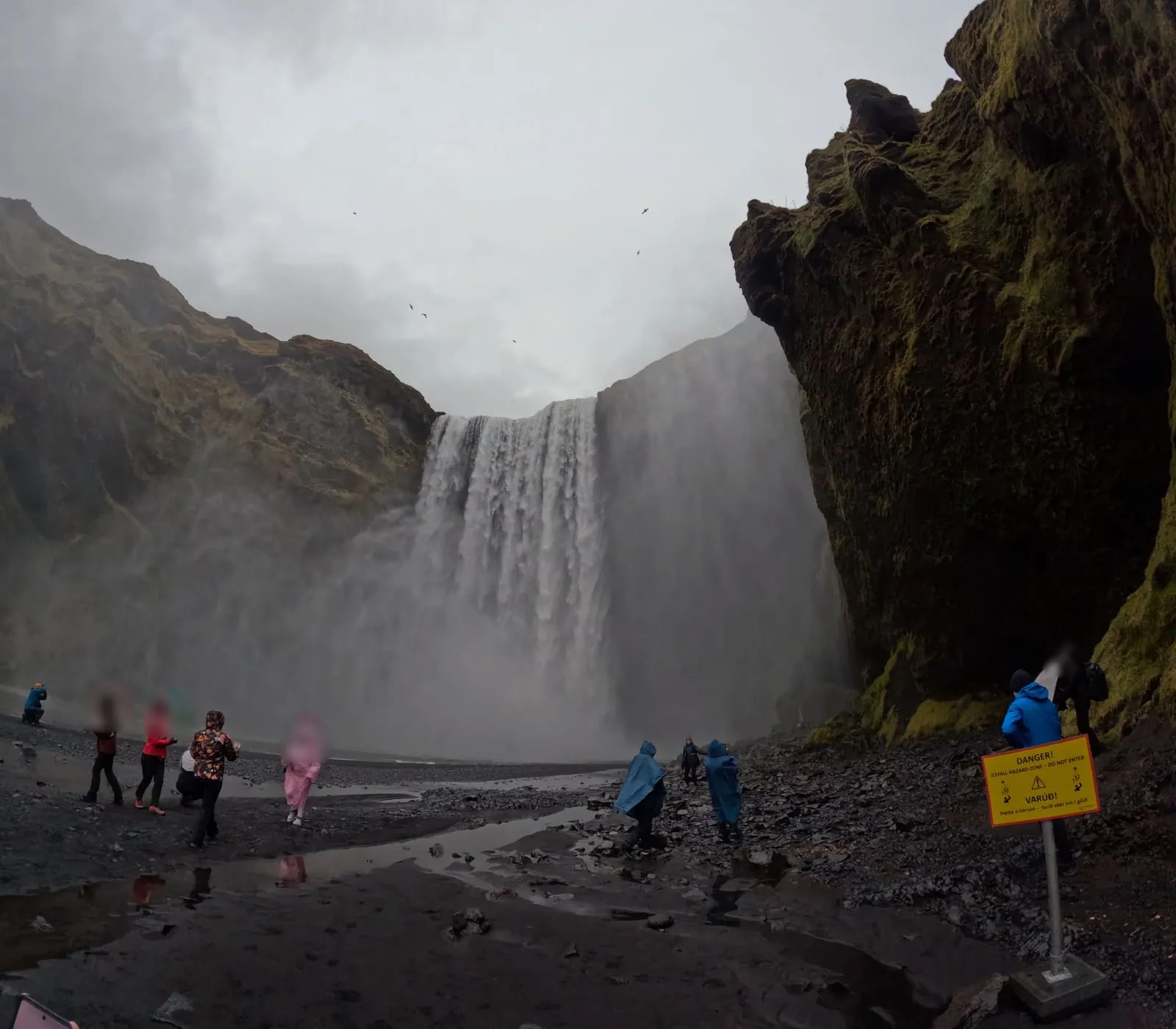
We drove east first, past the Bra Fence (hundreds of bras hung on a roadside fence under the Eyjafjöll cliffs), to Skógafoss. It’s about 60 metres high, falling over an old sea cliff, and the spray soaks you if you get close; a yellow sign by the pool warns of falling ice. Parking there has cost ISK 1,000 since spring 2025, and was probably free when we went.
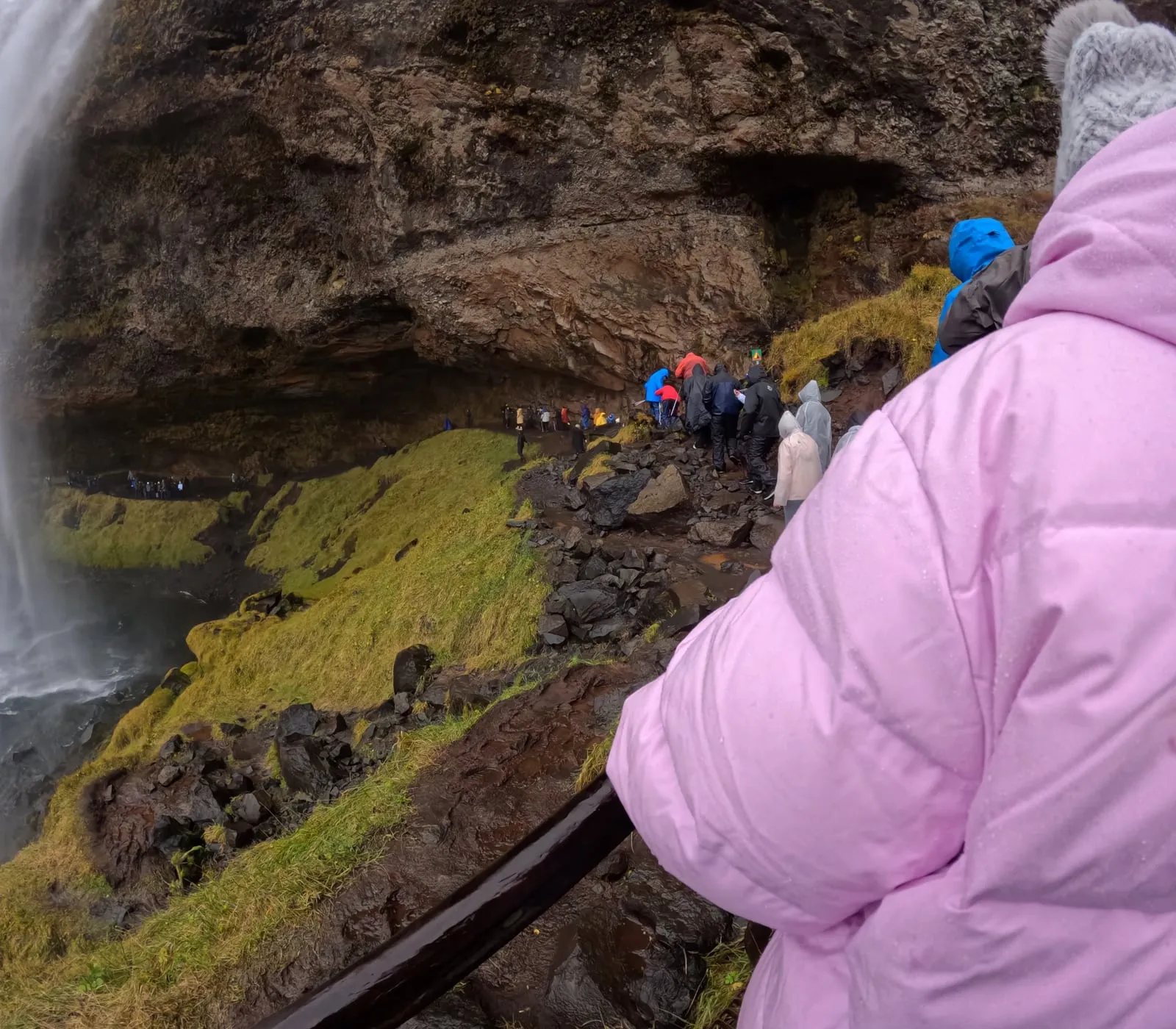
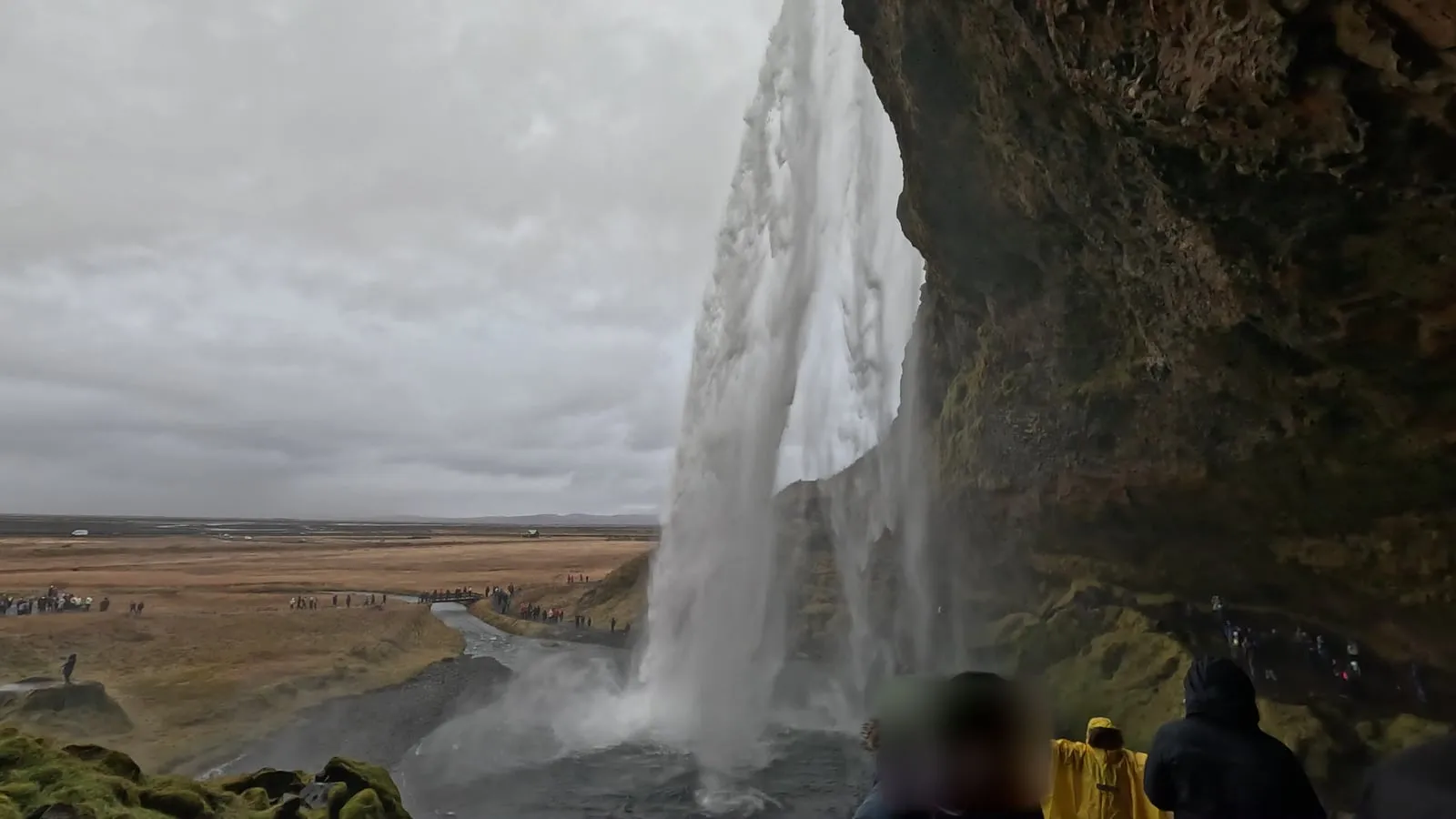
Then back west to Seljalandsfoss, which is beautiful. You can walk right behind the waterfall, and it was one of the best stops of the trip. The walk up is quite steep and you step on a lot of stones, so it’s not for anyone with mobility issues. My partner got scared and walked back down the stairs, which was super awkward. I couldn’t imagine going on an icy or wet day: it could be very slippery, and there are no handrails on the steep stone steps, so you have to pick your way over the terrain. On the dry day we went, it was super beautiful and a must do. Parking is ISK 900 a day, and in winter, respect any closures of the path.
There’s a secret second waterfall if you walk along to the side: Gljúfrabúi, about 600 metres away, hidden in a canyon behind a big rock. You need waterproof shoes, as you get a little wet wading through the water to the entrance. Nothing deep, but still wet. Our Gore-Tex shoes kept us completely safe without wellies, and they were a must have for the entire trip. Inside, you climb a rock, which needs some agility, and people take photos. The view is beautiful: a hidden-ish secret, and a must do.
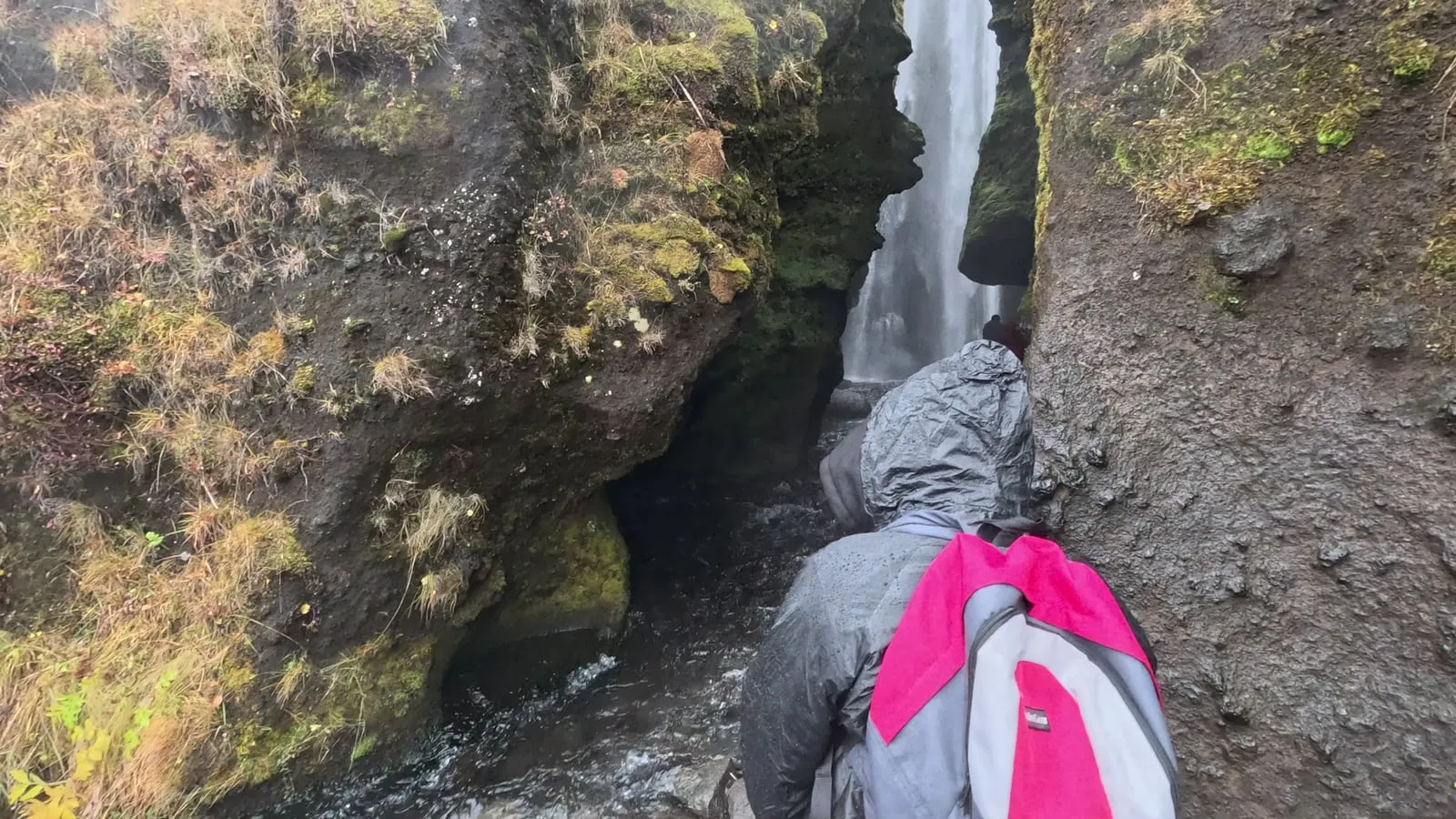
From there you could go east to Vík, about an hour on, but we had no time, so we drove back towards Reykjavík.
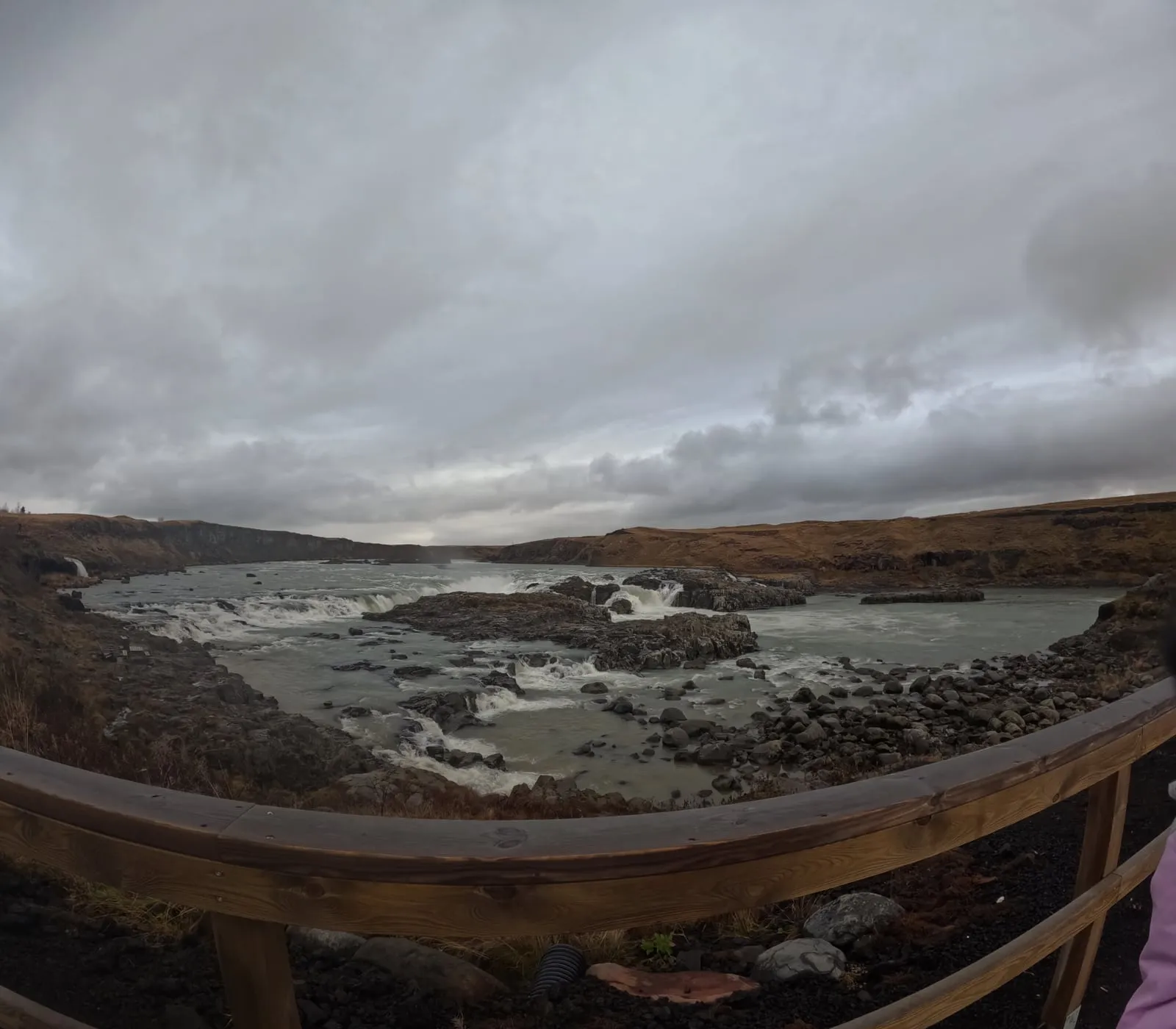
On the way we found a waterfall we’d heard no one mention once: Urriðafoss, near the town of Selfoss. We called it Selfoss at the time, but the waterfall really called Selfoss is in the north of Iceland. It’s very easy to get to: leave Route 1 on road 302, just on the Reykjavík side of the bridge over the Þjórsá, follow it for about a kilometre, then turn left down a short track to the car park. There were only one or two other people there when we went: peaceful, and a somewhat secret place. 100% visit on the way. It carries more water than any other waterfall in Iceland, and parking is ISK 750 for two hours now.
Iceland has loads of wonders like this. If you see something on the map, pull in properly off the road and have a look: it’s likely beautiful. All four waterfalls, with the parking, the steps and what to wear: the south coast waterfalls.
The Reykjavik EDITION: refused at check-in
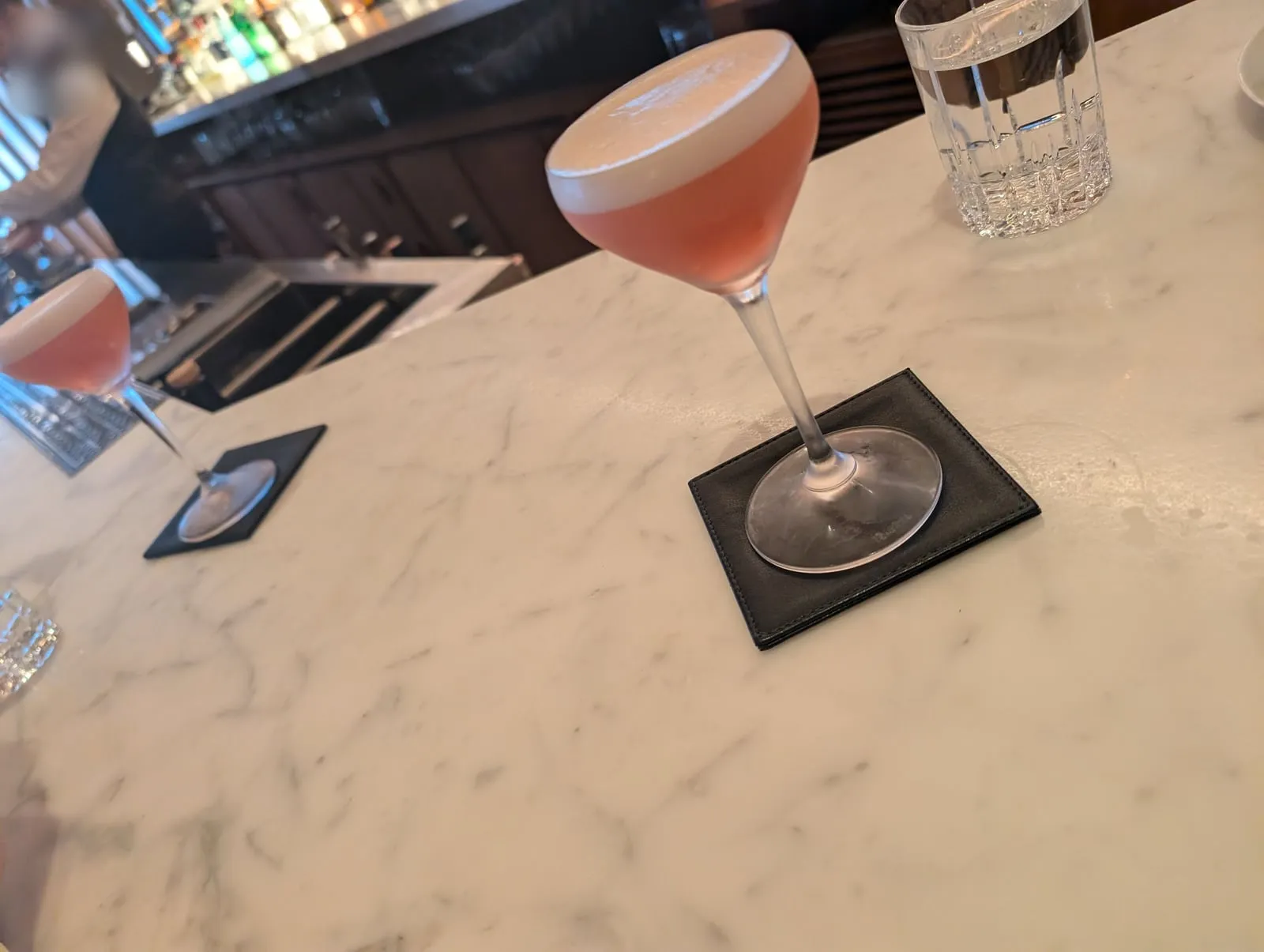
Back in Reykjavík we hit one of the most expensive hotels of the trip, the Reykjavik EDITION, which we had fully paid for: ISK 110,616 for a Superior King, about £615, non-refundable, on Booking.com. On arrival we had an extremely awkward standoff at reception. They refused to check us in without a credit card on file. We don’t travel with one, only travel debit cards for the exchange rates, which is common. We even offered to put a hold of about £800 on the debit card, but they said it must be credit.
We would have been homeless for the night if we hadn’t happened to find a card on Google Pay that they would take. Terrible service, and a very, very bad experience for a top hotel. So take a credit card, even if you’ve paid in full (more on cards below).
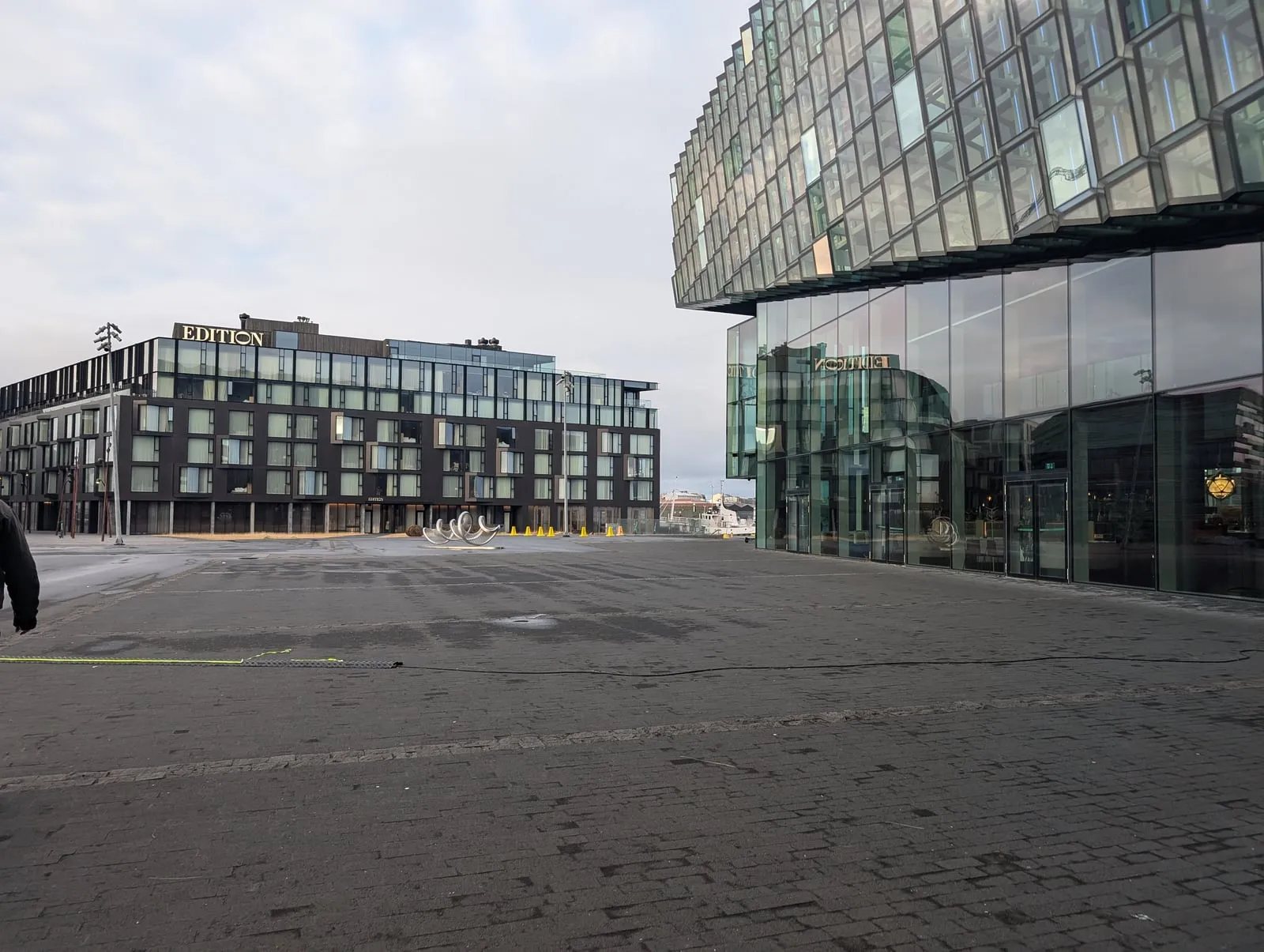
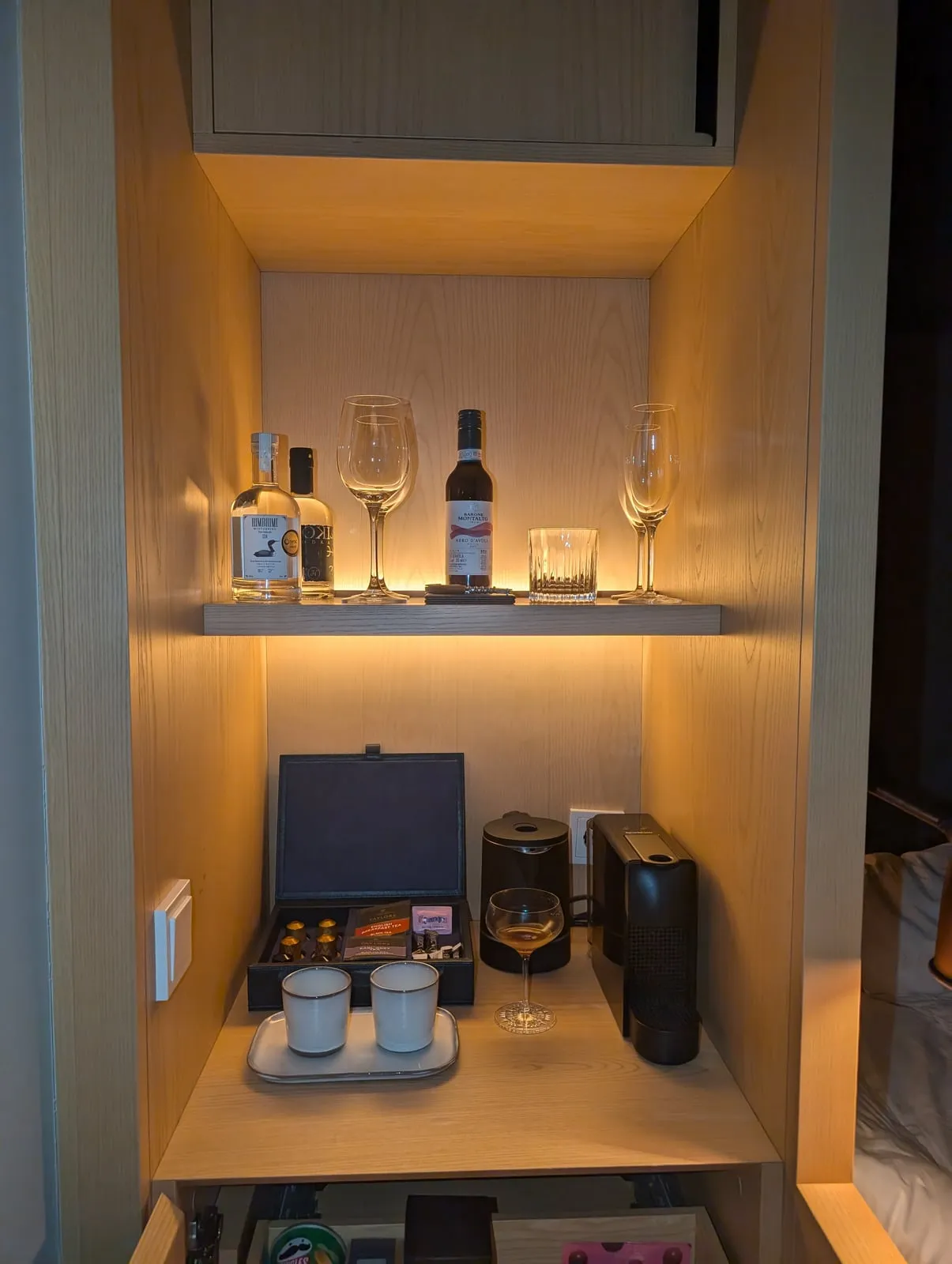
The hotel itself is nice: super modern, right on the harbour next to Harpa, and we had fire and ice cocktails for free on arrival. But the rooms have awful lighting, it’s so hard to see in there, and the check-in let it down so much that we would never return. Parking is valet at ISK 7,000 a night, or the Harpa car park next door (ISK 3,600 for 12 hours in 2024). The full story: the Reykjavik EDITION review.
Our do-it-yourself food walk
That afternoon was our first proper time in the capital. We’d watched loads of YouTube videos before coming, and we very cheekily copied a food walking tour to do on our own and mix up, as we’re a bit antisocial and didn’t want to be in a group. As we started, we saw the tour group walking away. So awkward. We were now following them like food stalkers.
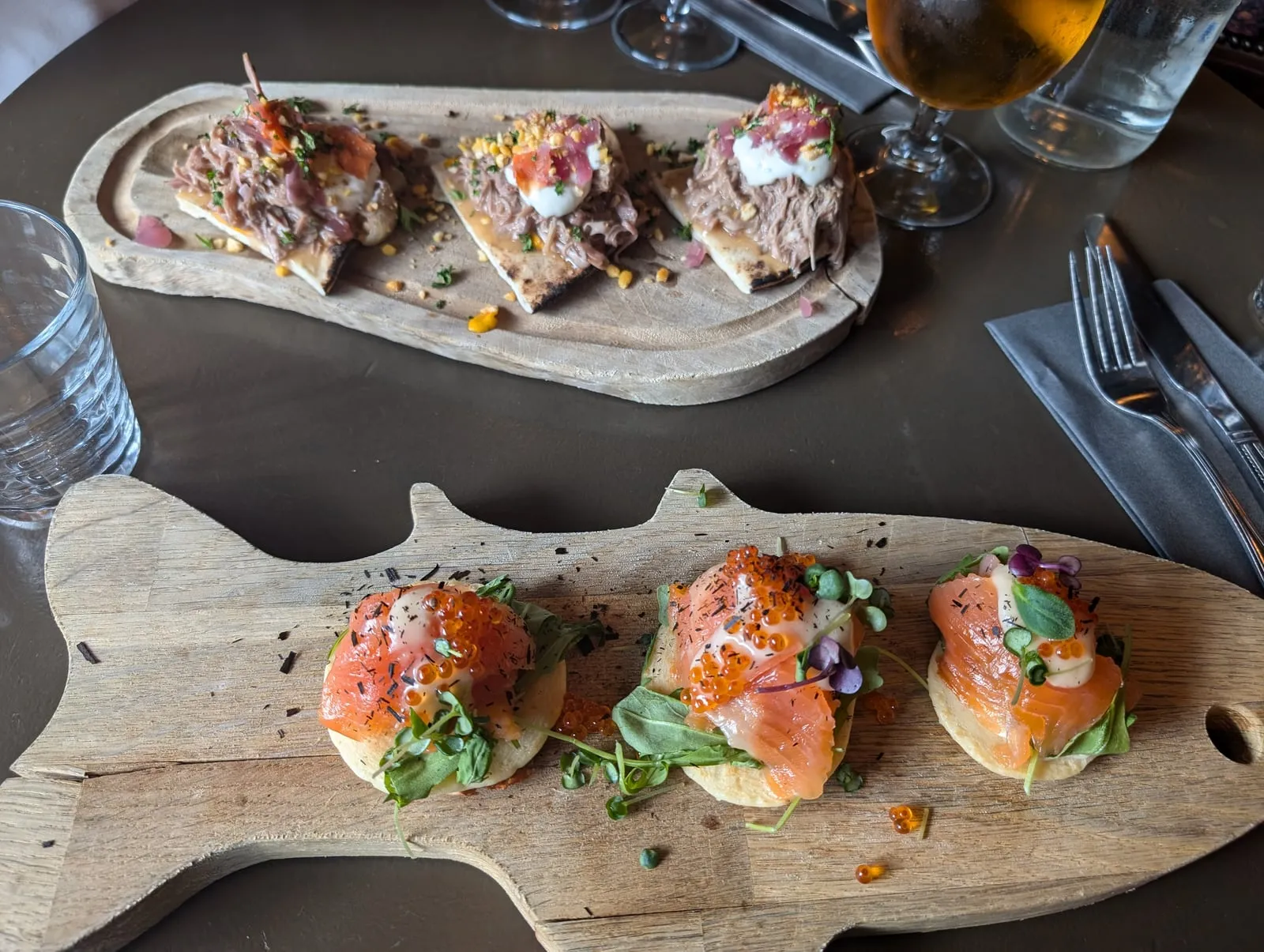
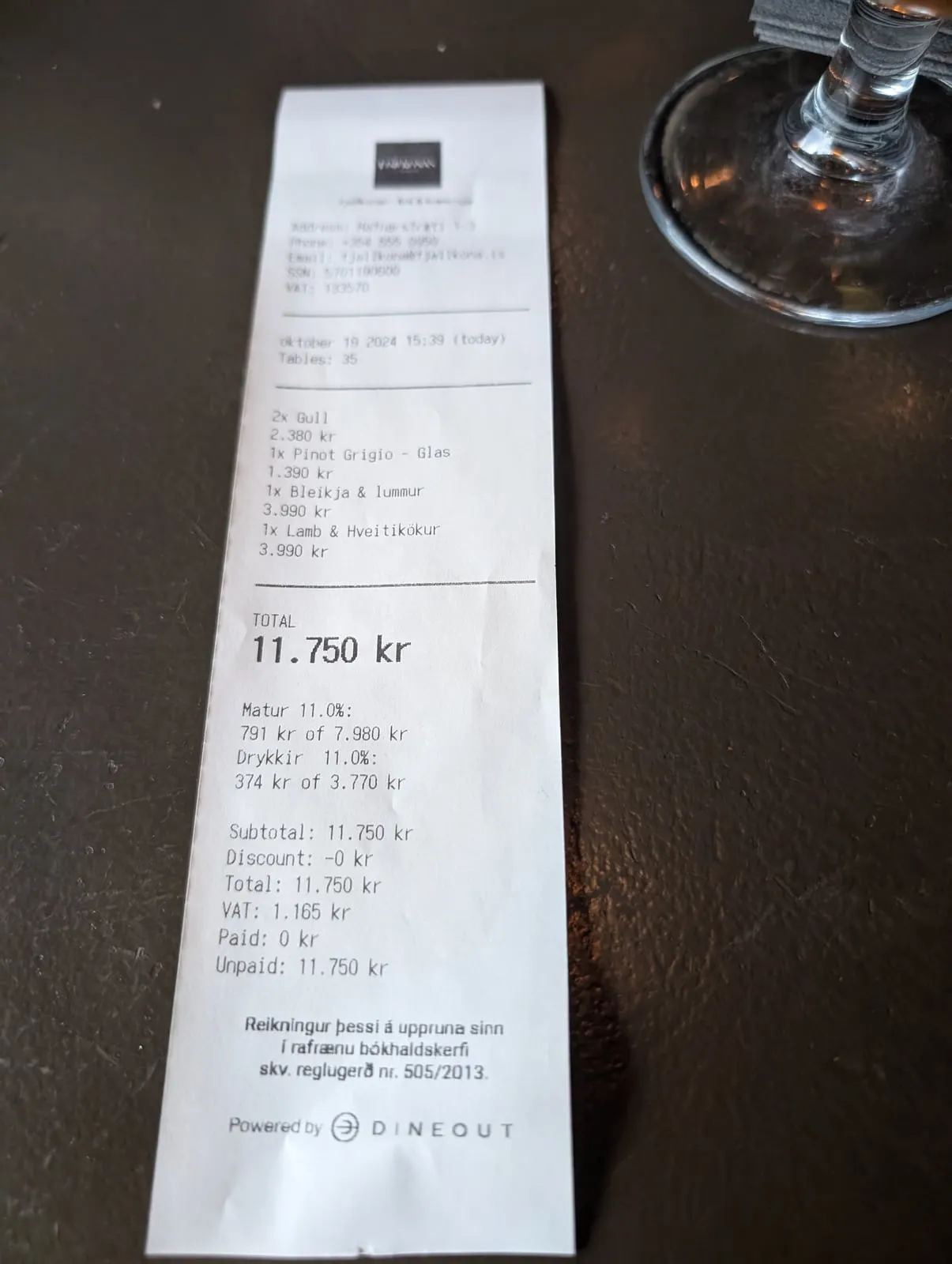
- Fjallkonan, Hafnarstræti: a lovely start. Arctic char on little pancakes and lamb on flatbread, with two beers and a glass of wine, came to 11,750 kr (about £66).
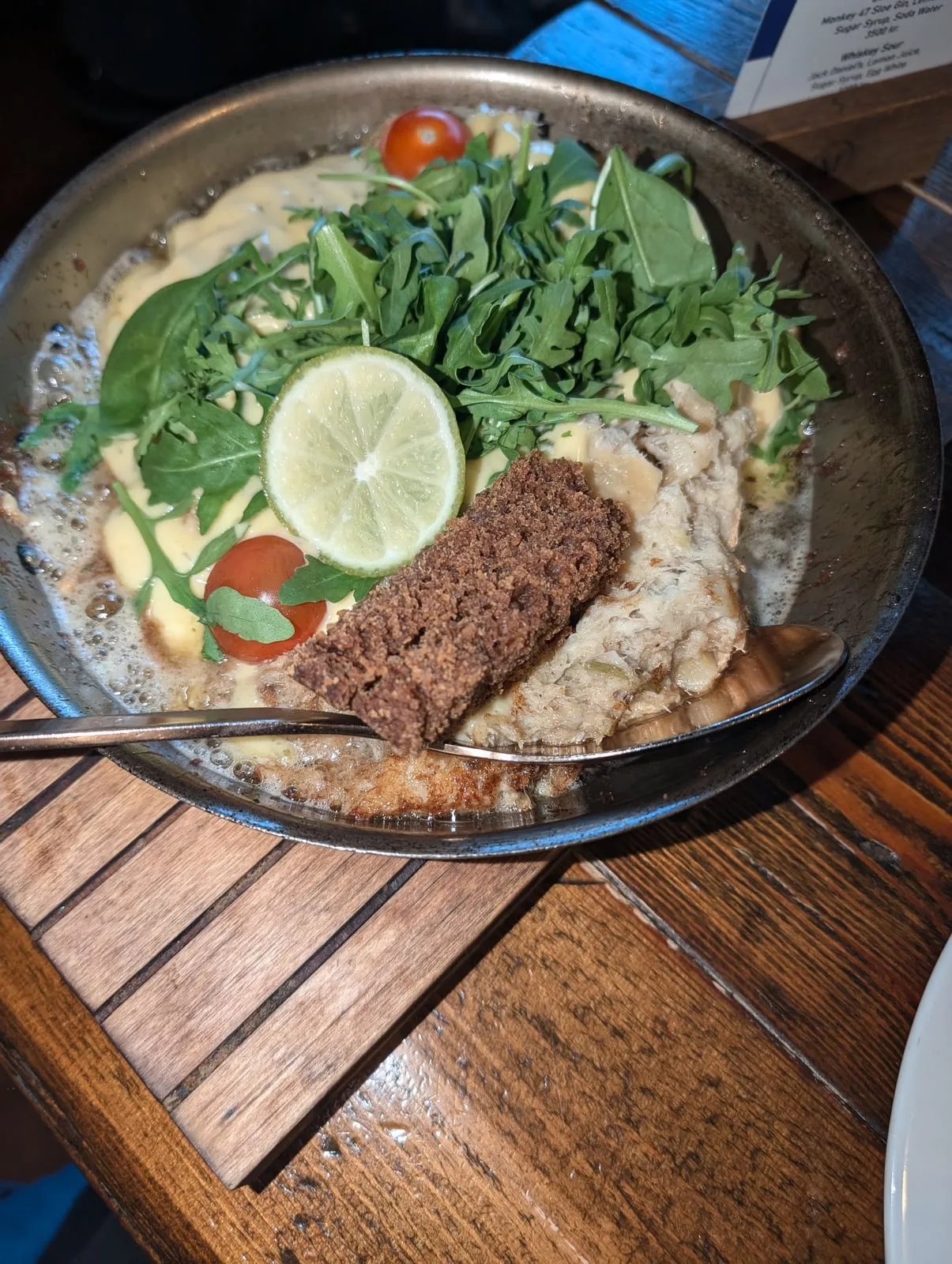
- Messinn, Lækjargata: fish pans, at 4,440 to 4,990 kr. Not quite our kind of food, and we laughed our heads off when the tour turned up while we were there. It felt like we were breaking the law. So silly.
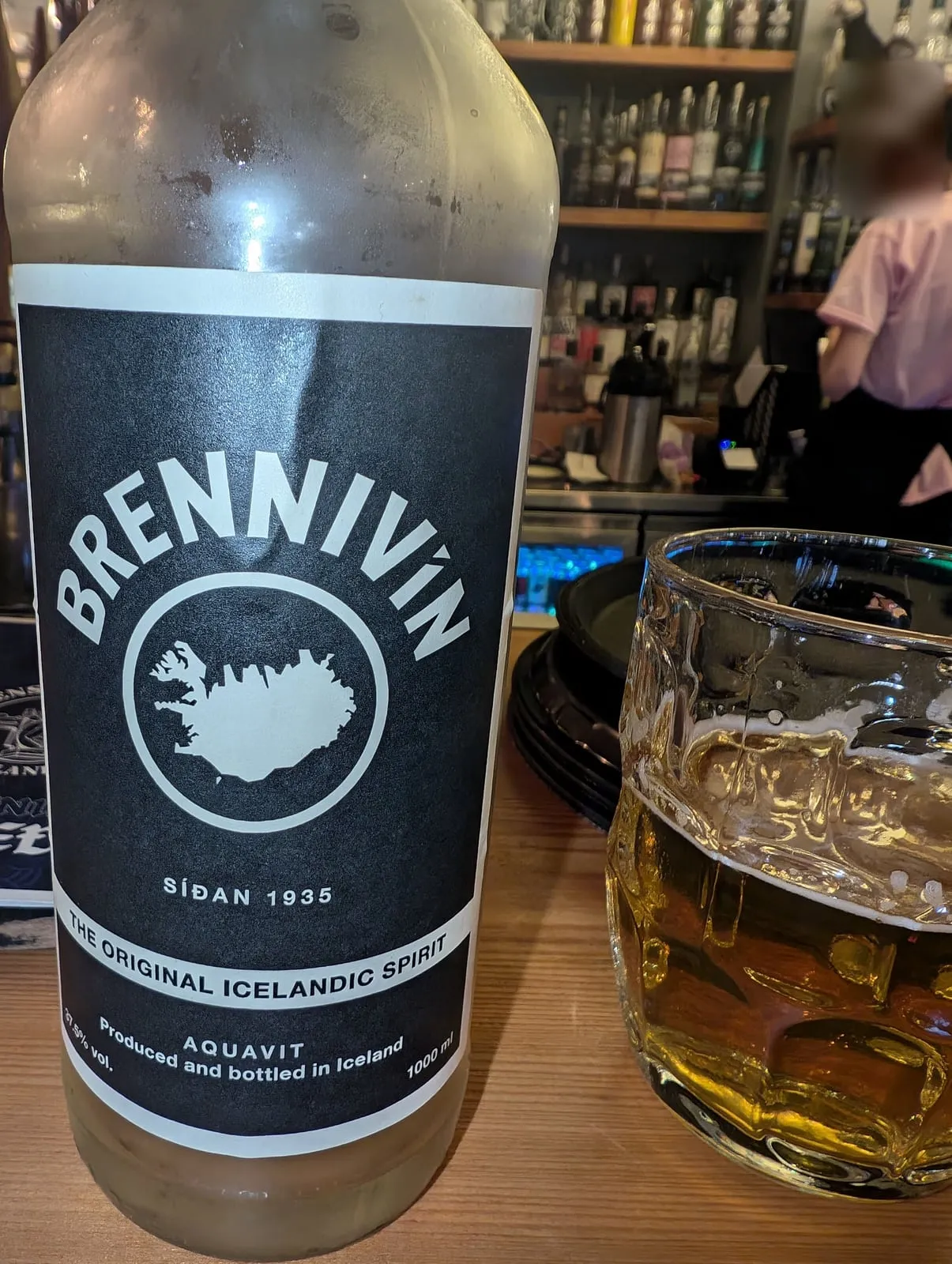
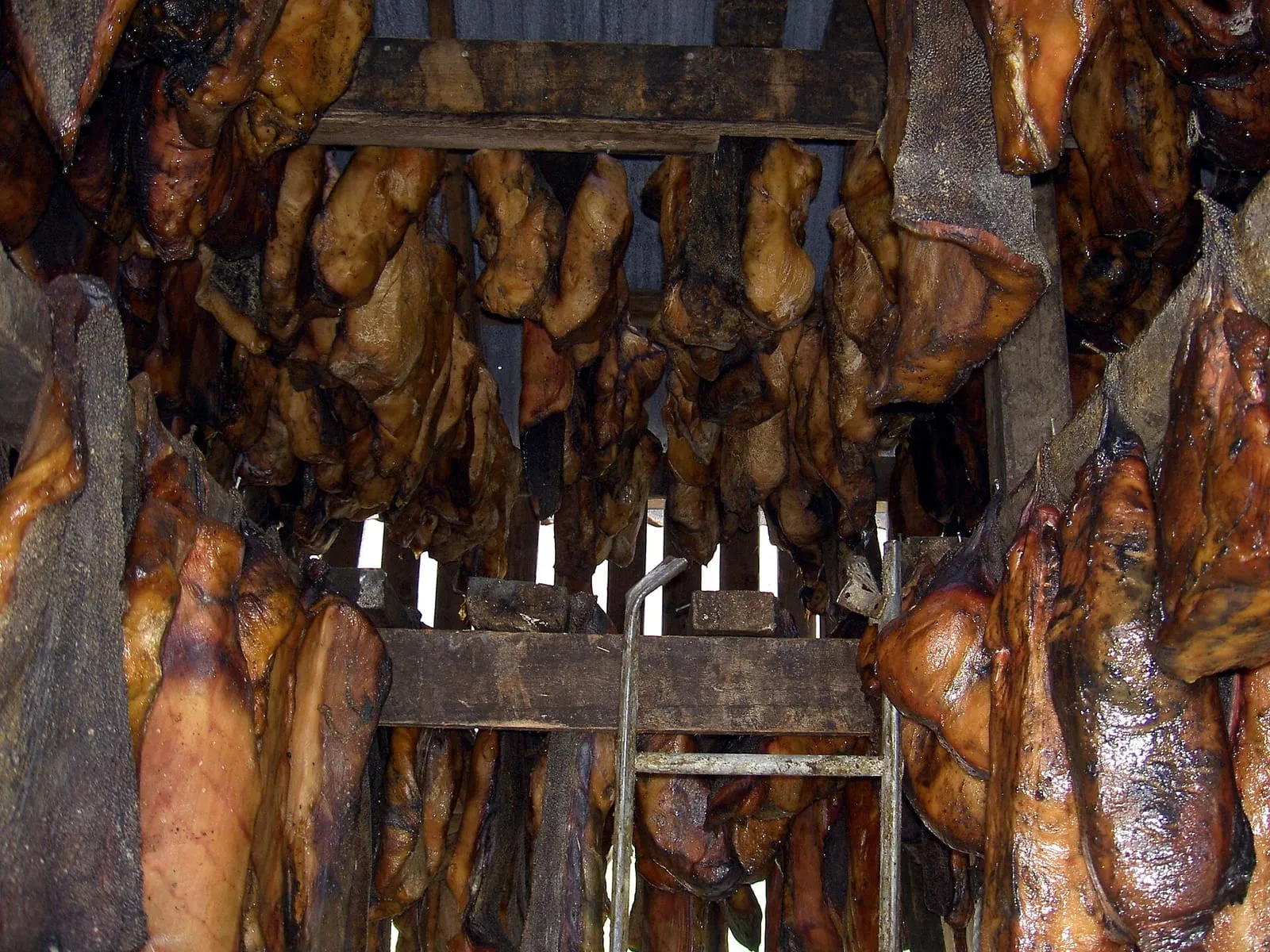
- Íslenski Barinn (the Icelandic Bar): the legendary shot and fermented Greenland shark. Hákarl is poisonous fresh, so it’s fermented and then hung to dry for months. I didn’t find it too bad, and some Americans did it with us at the same time, quite the experience. My partner hated it and it ruined her day, so be careful. A very nice place, super busy, with helpful staff.
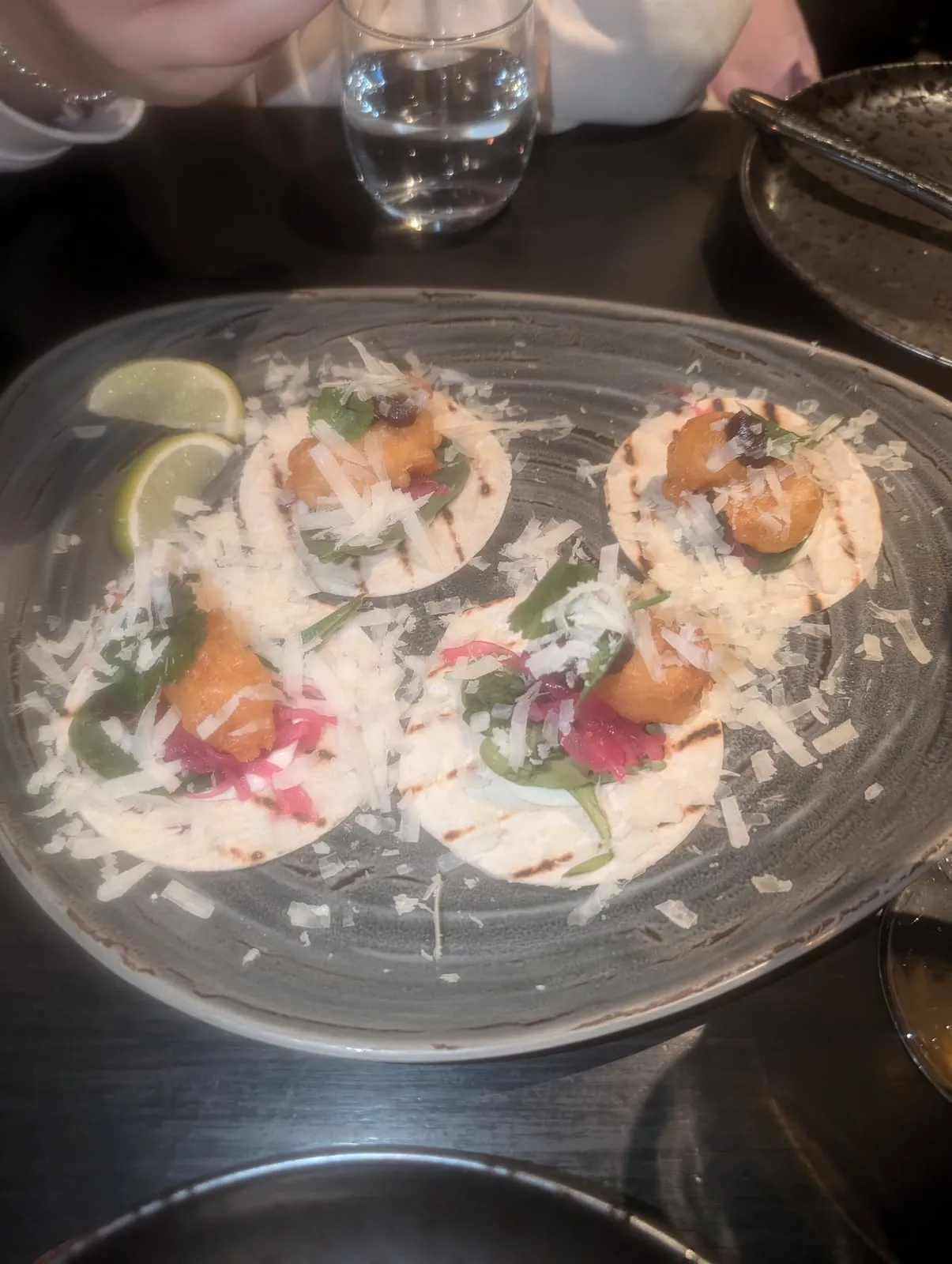
- Sjávargrillið (the Seafood Grill): langoustine tacos. Very posh inside, with a quiet atmosphere. My partner was unwell from the shark, but I loved them: one of the best things I’ve ever eaten, a meal I’ll remember for life, and I need to try them again. Was I hallucinating from the shark? I don’t know. Four tacos are 4,490 kr at dinner now (about £27).
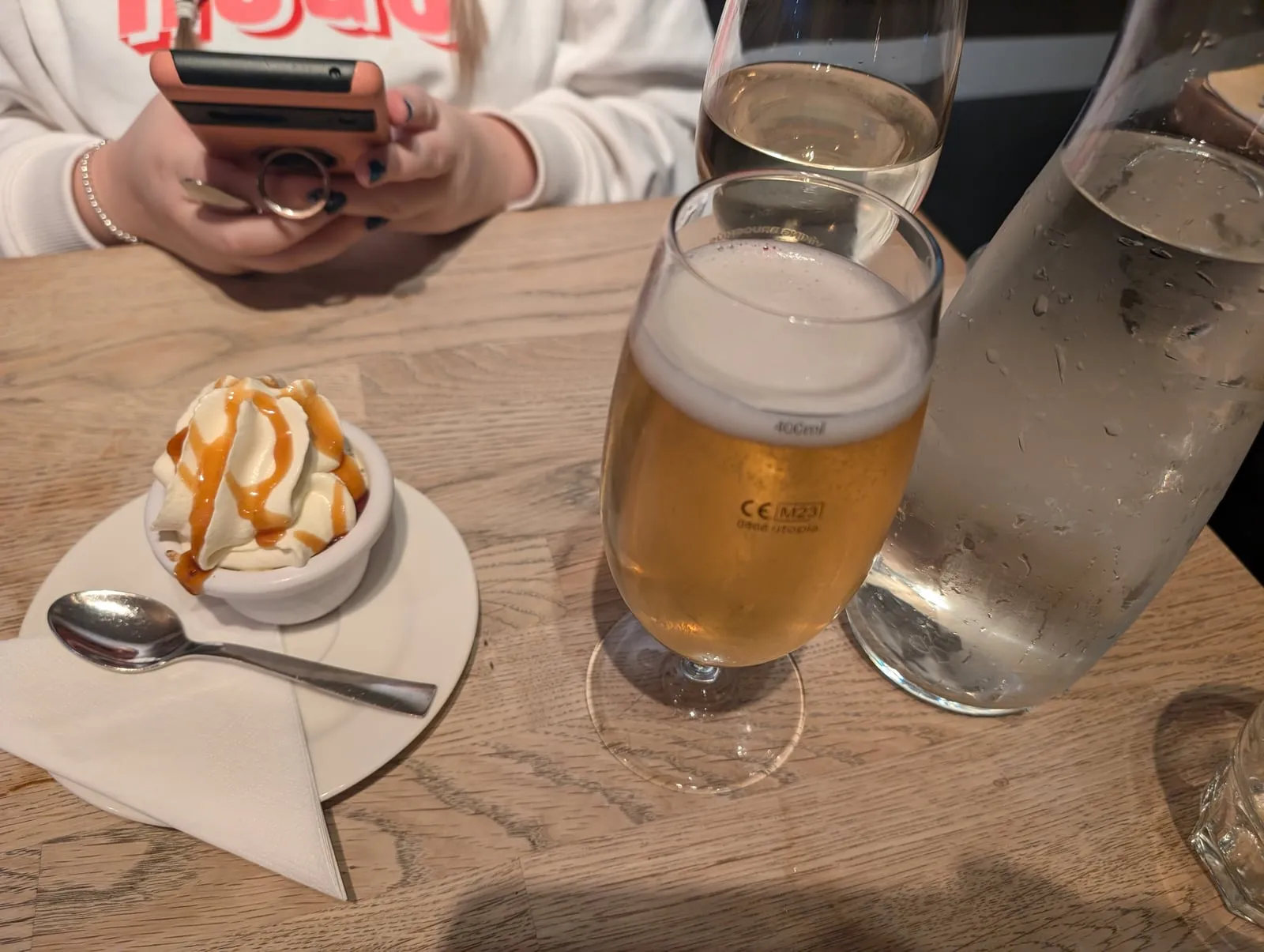
- Café Loki, by Hallgrímskirkja: my partner recovered, and we had the rye bread ice cream everyone recommends. We agree, it was incredible: a nice café, a very simple dish, and an interesting experience. It was 1,400 kr (about £7.80).
The tour we followed, most likely Wake Up Reykjavík’s, is 18,900 kr a head today. Doing our five stops yourself, sharing plates as we did, is about 13,700 kr a head, before any other drinks. The whole walk: our self-guided Reykjavík food walk.
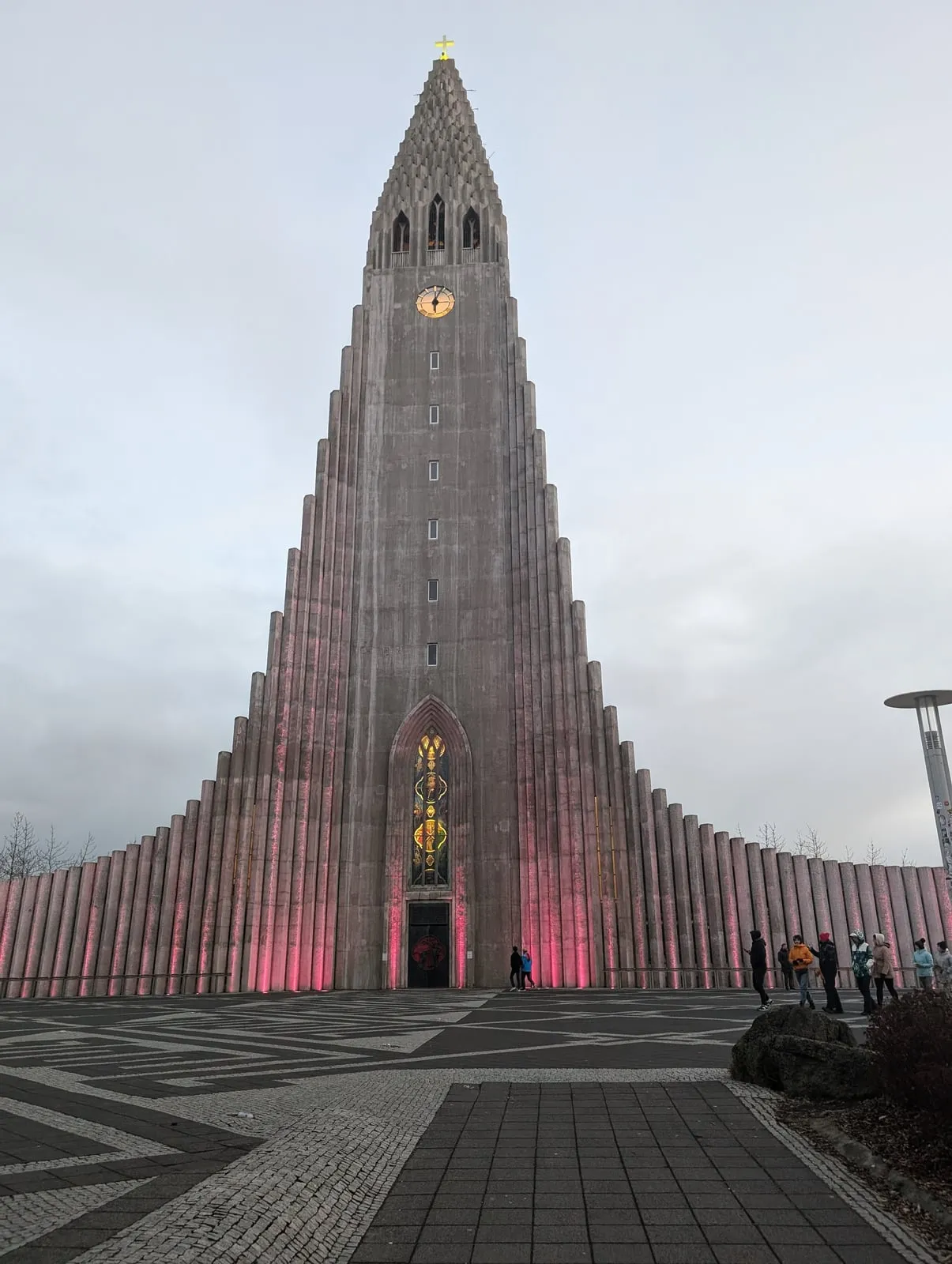
Saturday night: White Russians, Skál! and the rooftop
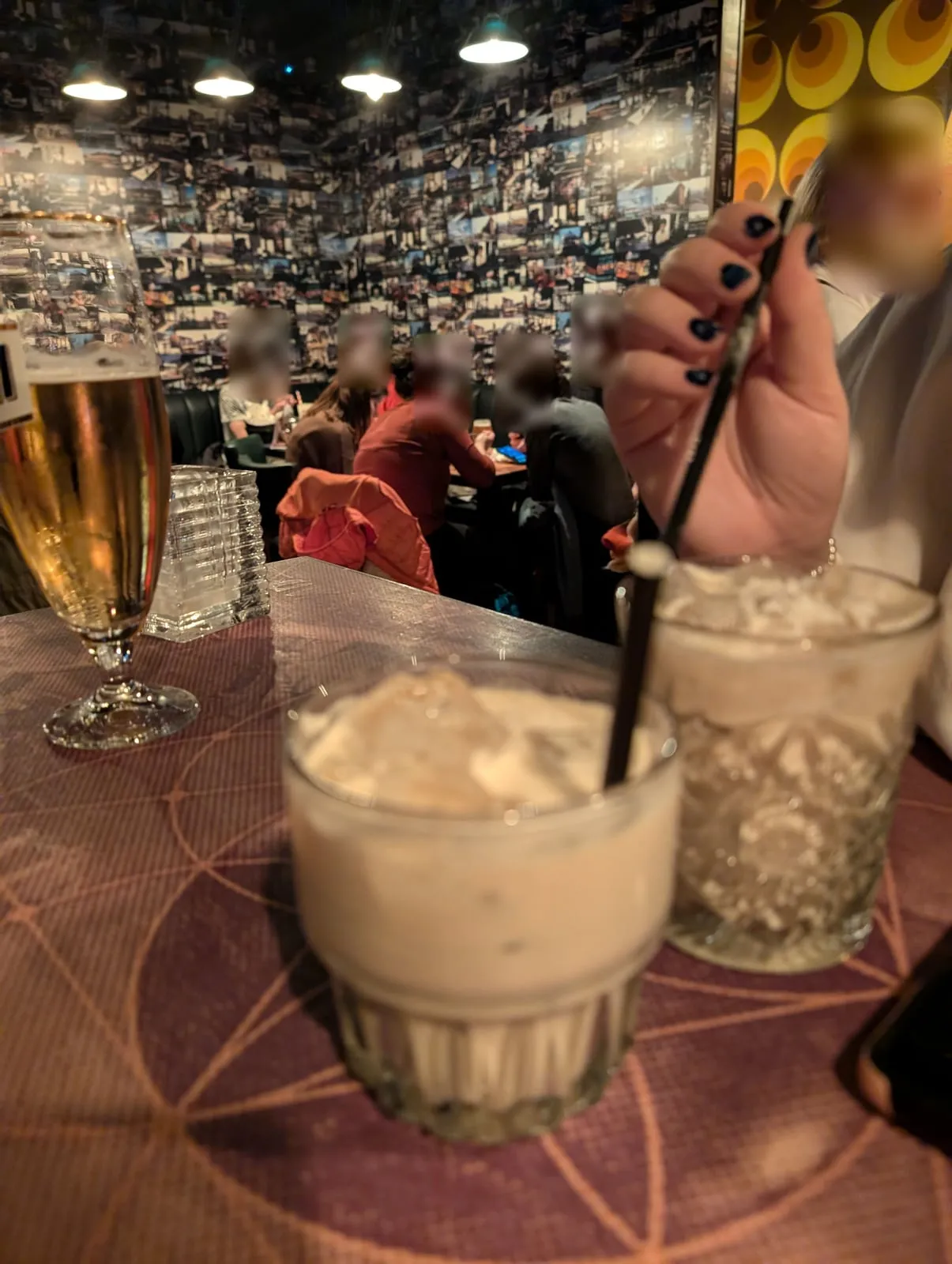
We went back to the hotel, refreshed, and started the night at the Big Lebowski Bar, where I found my love for White Russians. Absolutely amazing, with an incredible atmosphere inside: a very cool spot. A White Russian was 2,200 kr on special offer (about £12.30); most of the others were 2,800 kr.
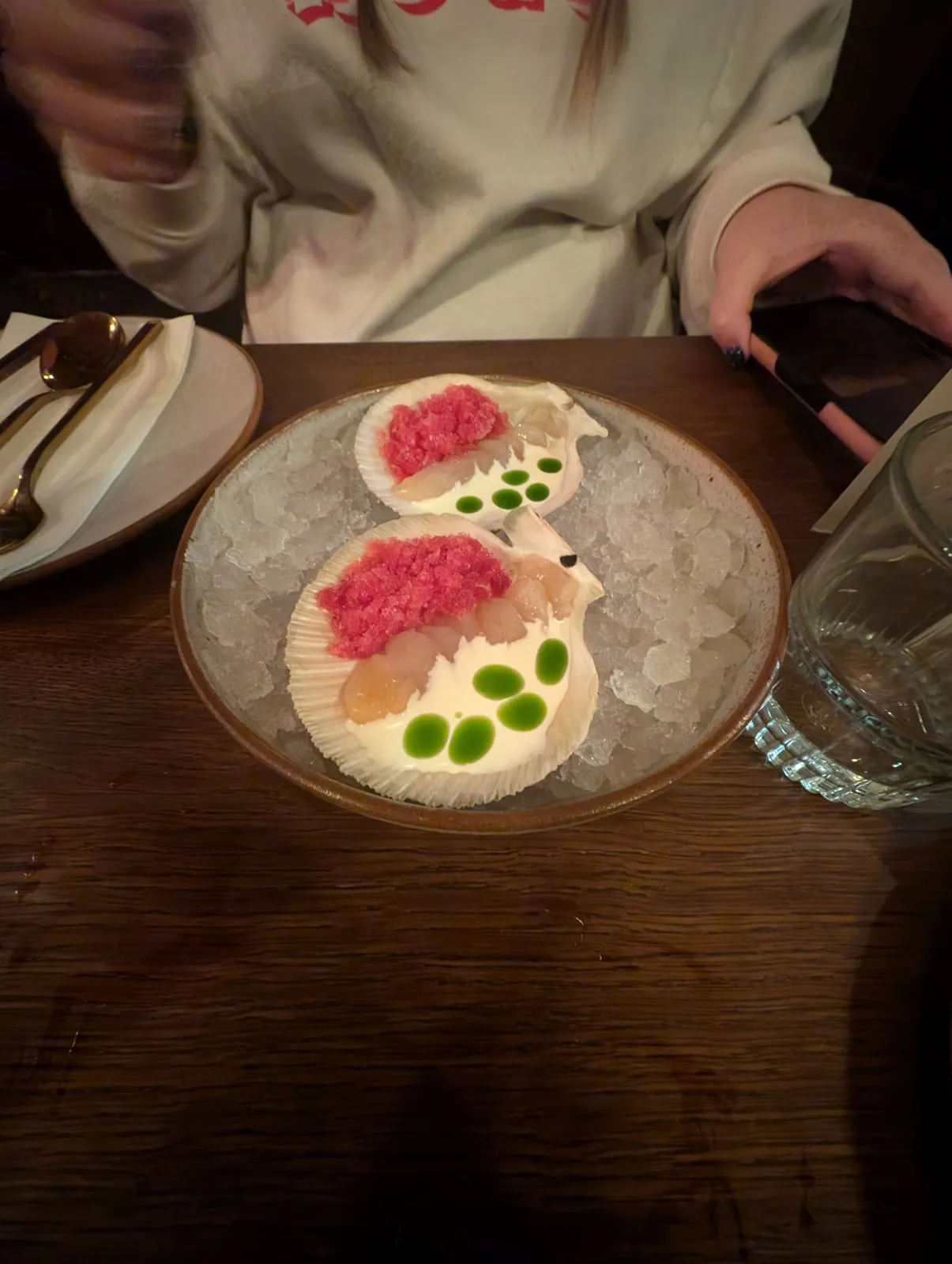
Then Skál! on Njálsgata, which was posh inside. I can’t remember it being the best meal, but perhaps we ordered the wrong thing. It was still a lovely spot. Skál! won a Michelin Bib Gourmand, the award for good food at fair prices, back in 2019, when it was a counter in the Hlemmur food hall. It moved to Njálsgata in autumn 2024, just before we went, and it isn’t in the Michelin Guide now.
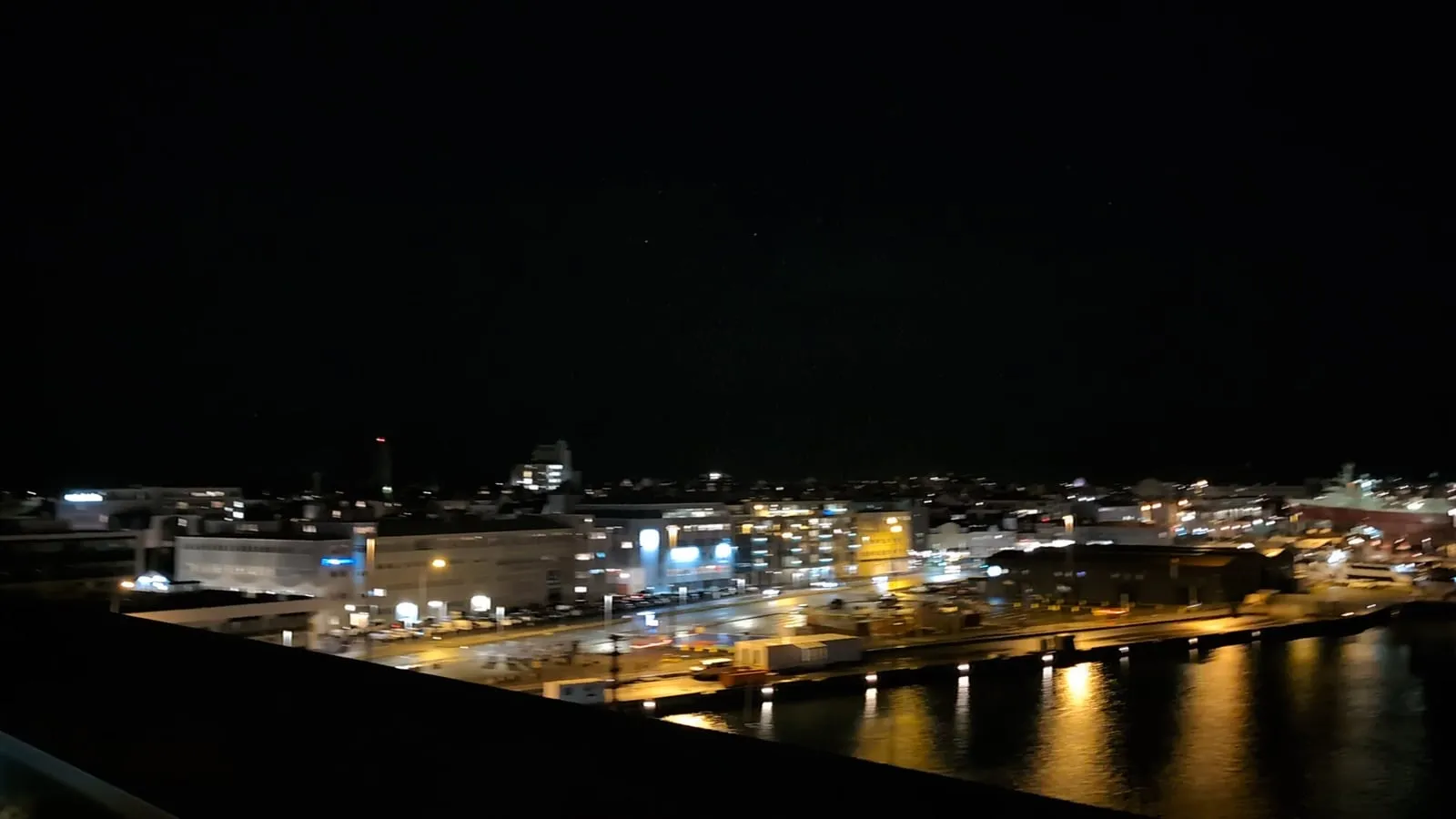
We ended the night at the EDITION’s rooftop bar, The Roof, which was lively, with a nice atmosphere and a good view over the harbour. Four drinks came to 11,900 kr (about £66). Every bar and restaurant of the trip: where we ate and drank in Reykjavík.
Day four: the famous hot dog, and another
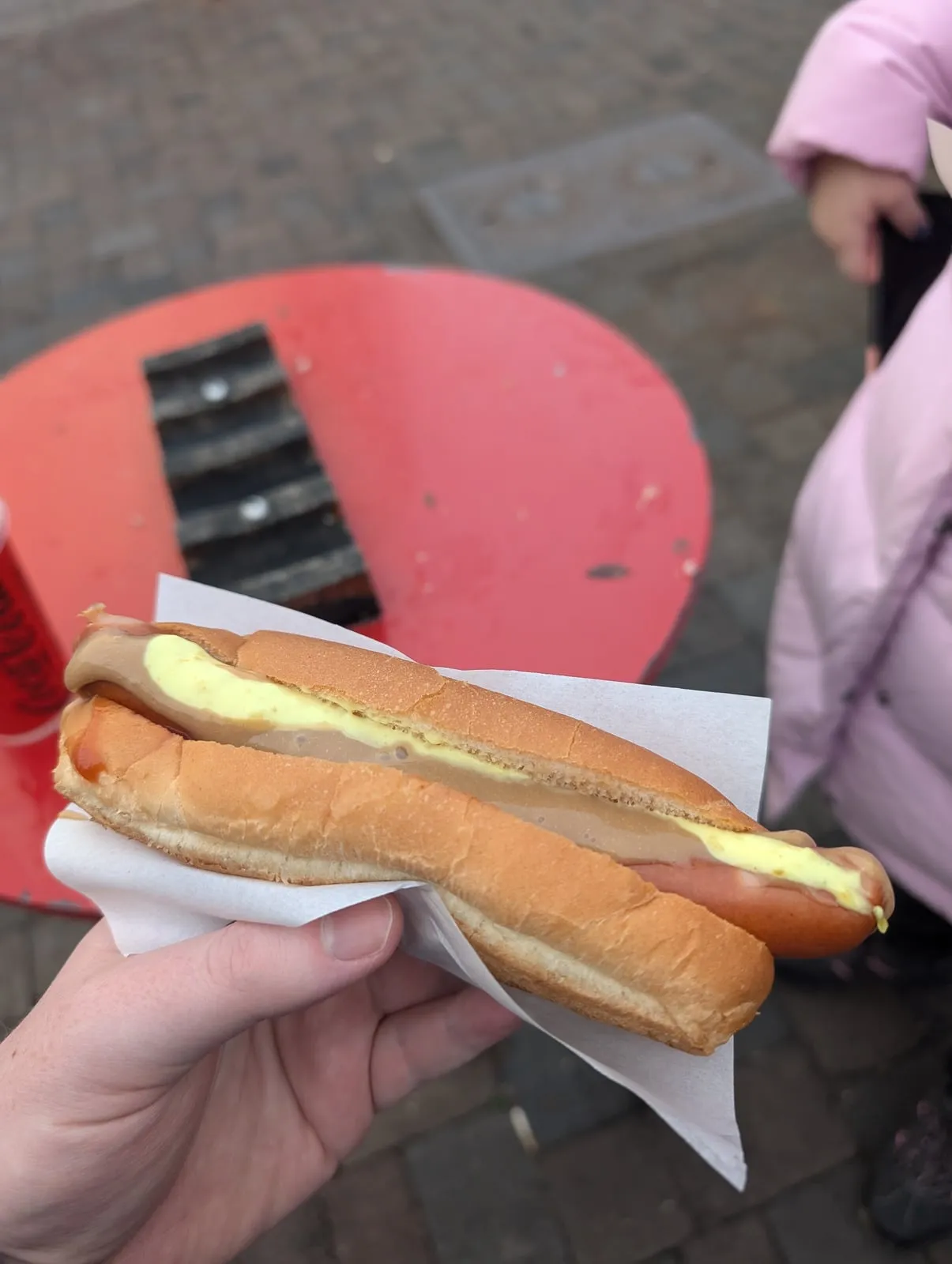
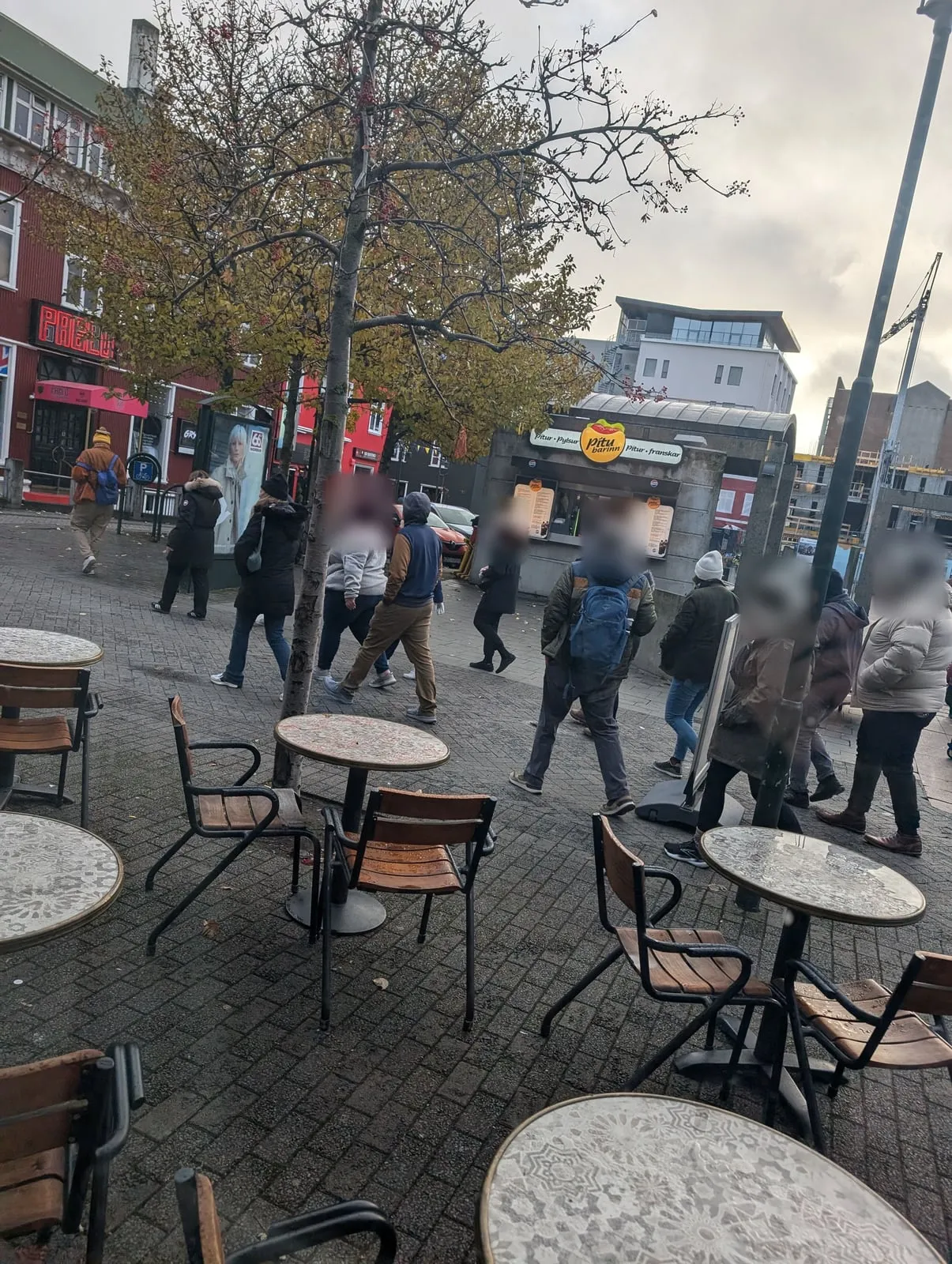
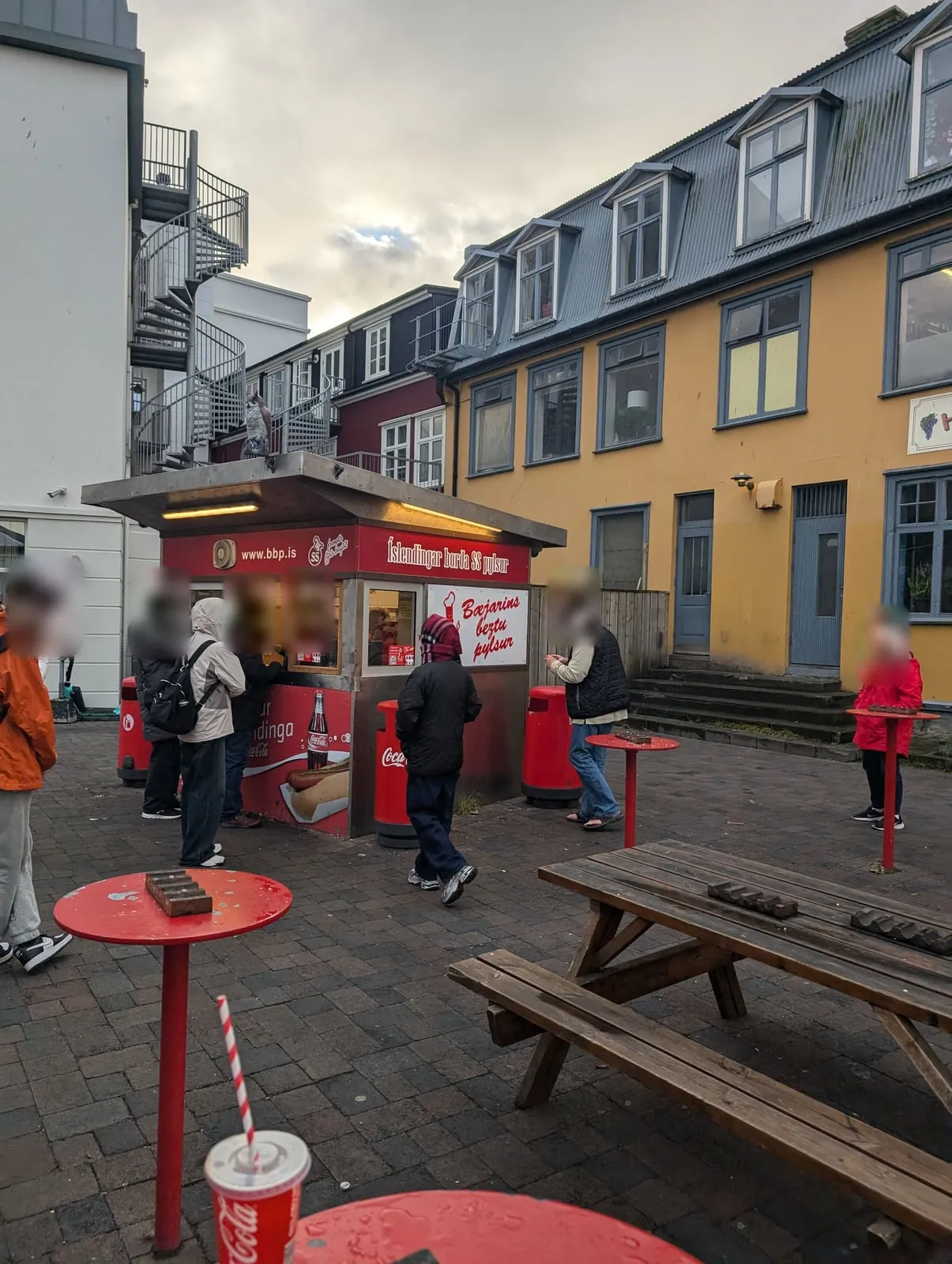
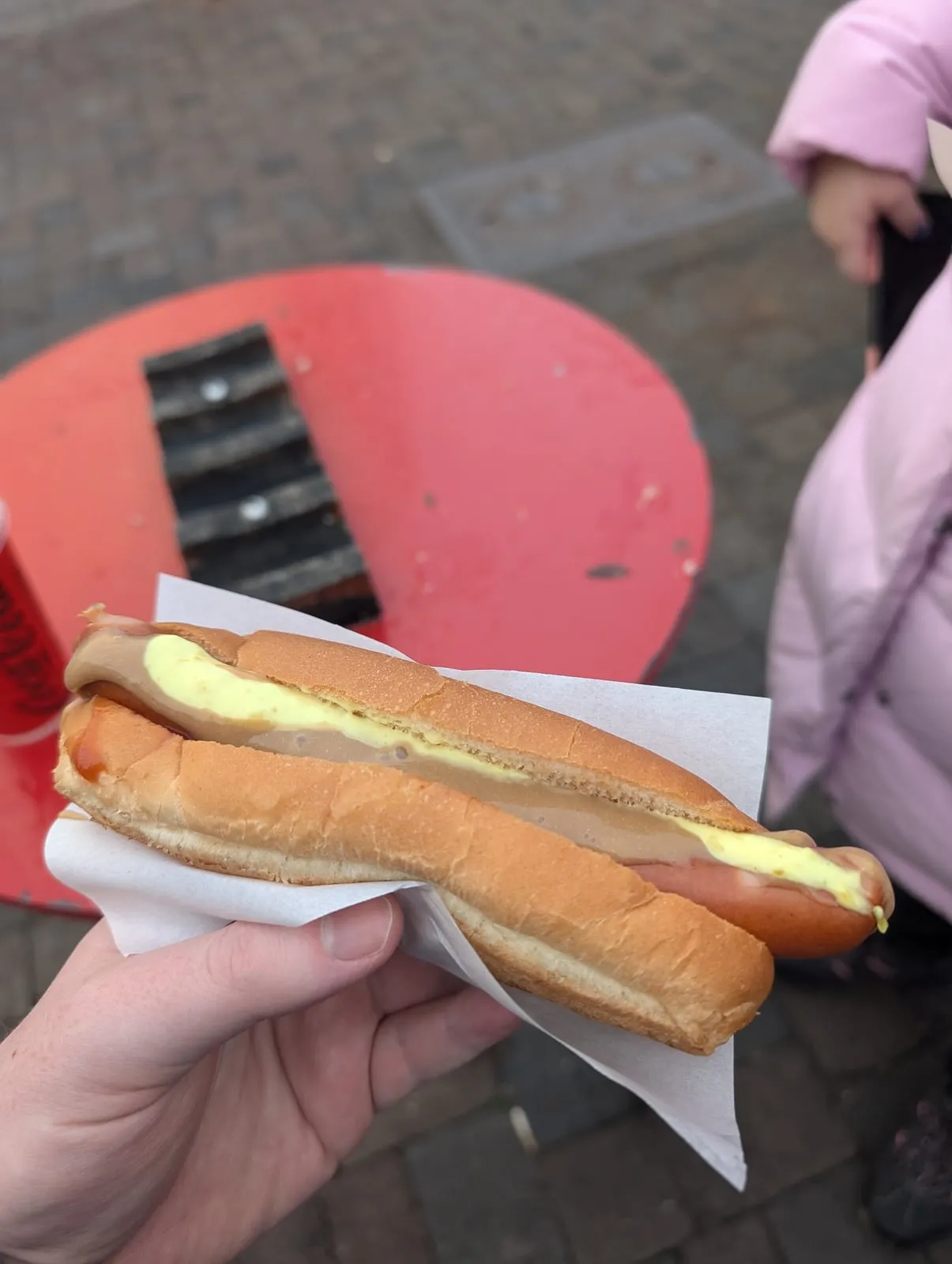
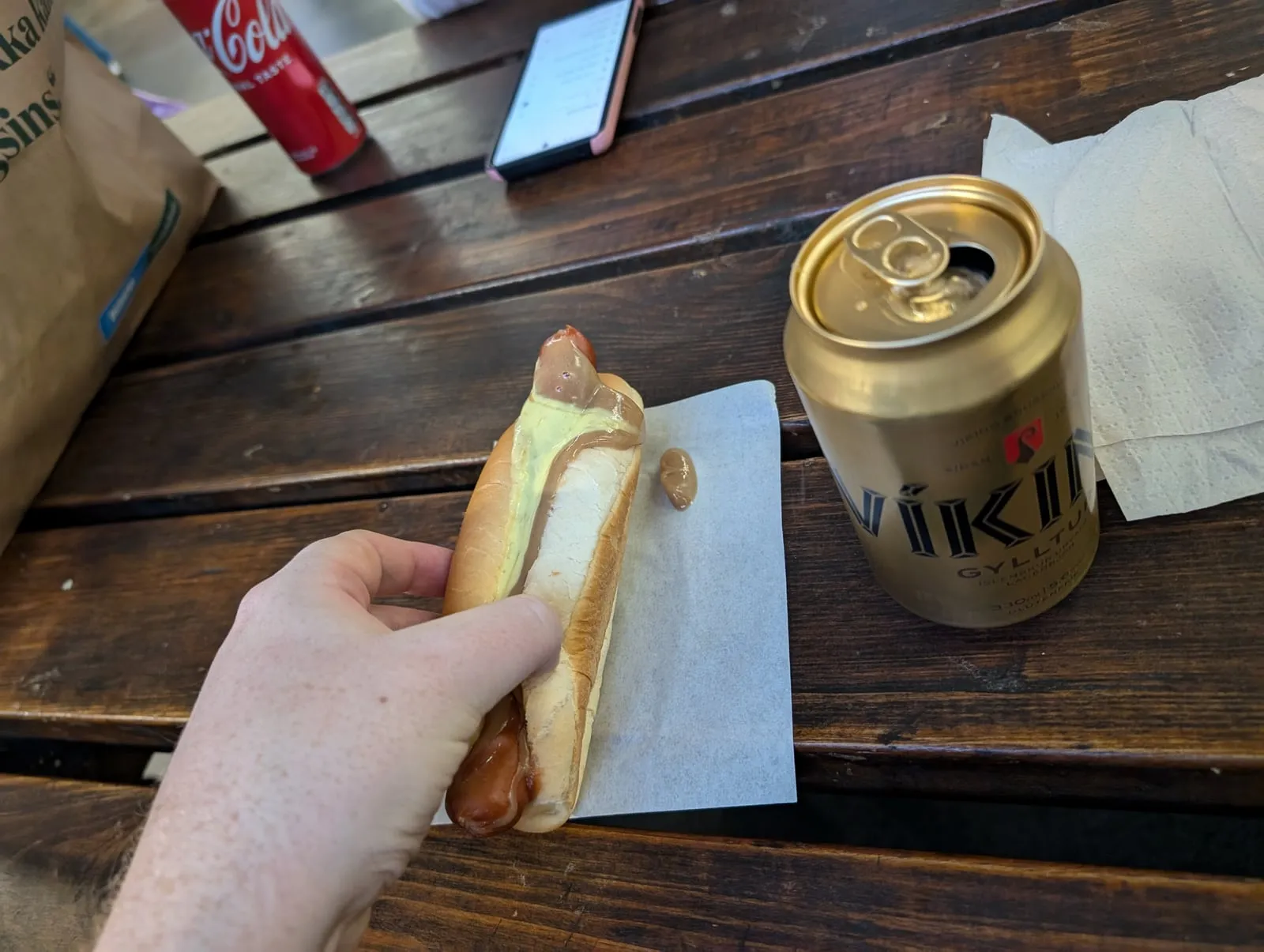
On Sunday we started with the hot dog everyone recommends, at Bæjarins Beztu Pylsur by the harbour. It’s the stand Bill Clinton made famous in 2004 by ordering one with mustard only: a hot dog like that is still called a Clinton. It was very nice and cheap. My partner thinks it’s the best hot dog she’s ever had, and I think it’s decent too. The sausage is mostly lamb, and one with everything (ketchup, sweet mustard, remoulade, crispy and raw onions) is 920 kr now, about £5.60.
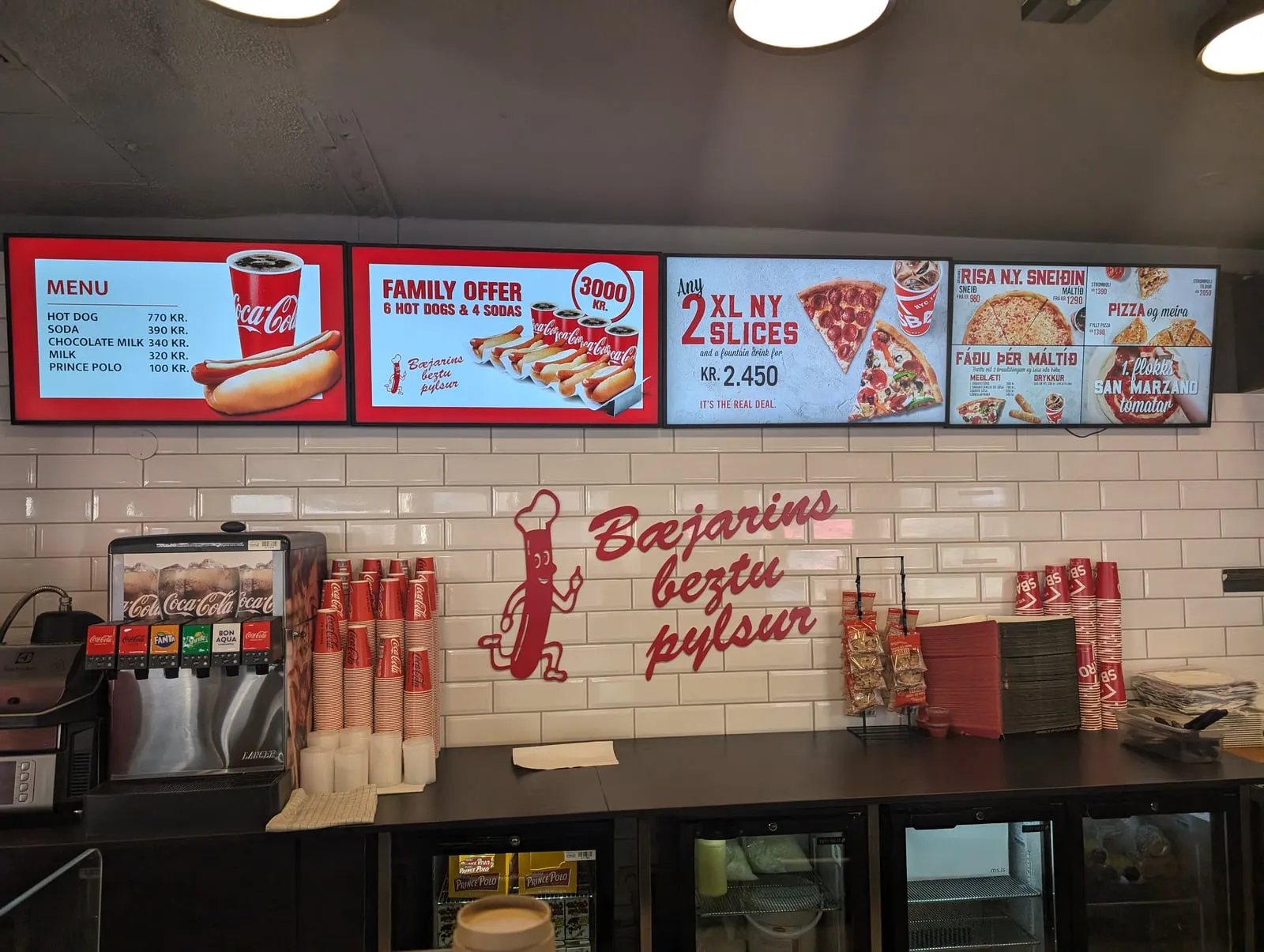
Then we drove out to drop the car off, found a petrol station and had another hot dog! Pizza too: amazing petrol station food, very good. It was the Orkan station at Fitjar in Njarðvík, which has a Bæjarins Beztu counter and a Sbarro inside. The hot dog was 770 kr (about £4.30), and two XL New York slices and a drink were 2,450 kr. We had a third hot dog at the airport on the way home. All three: Icelandic hot dogs.
Reykjanes: Gunnuhver and Brimketill
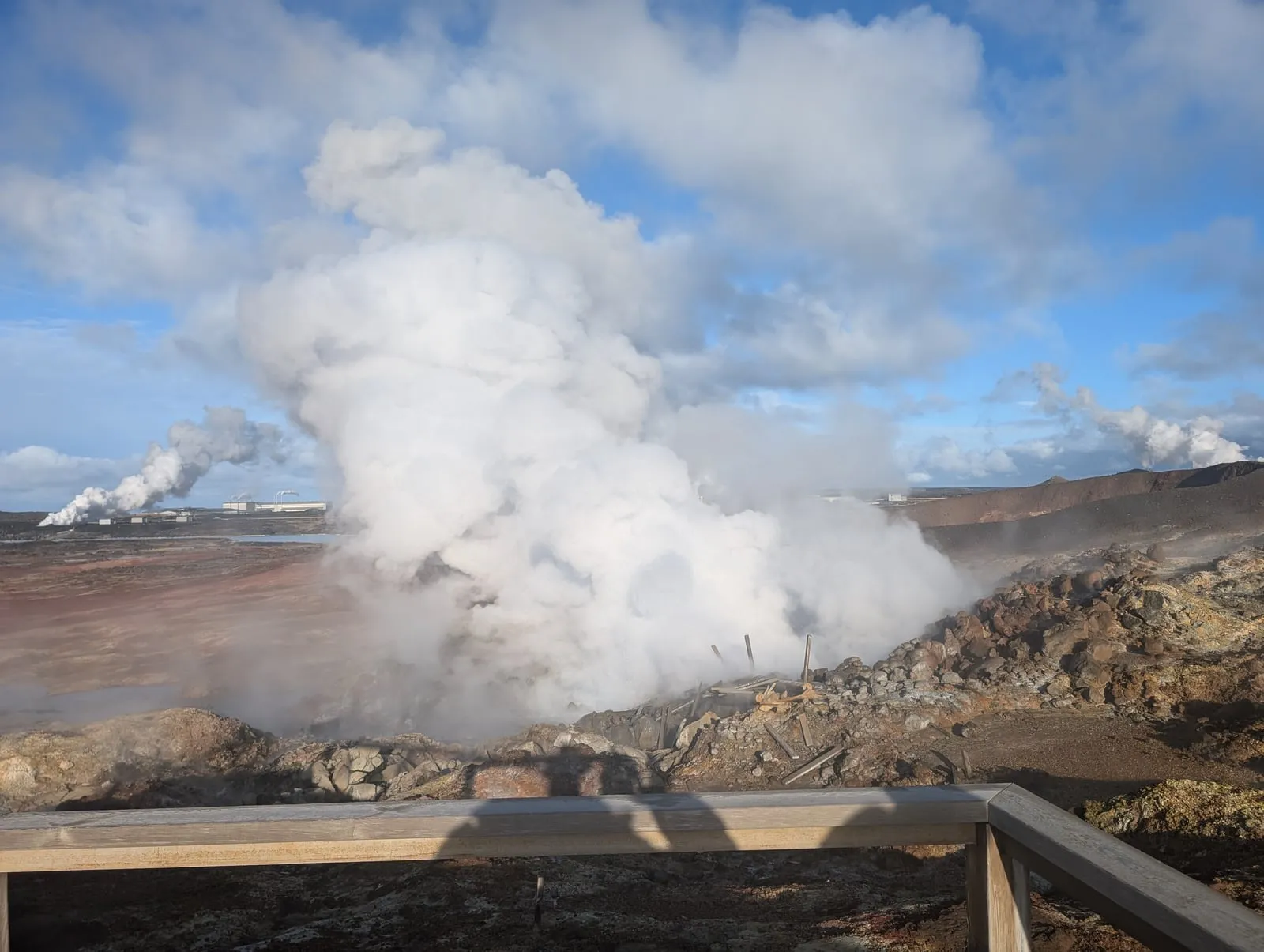
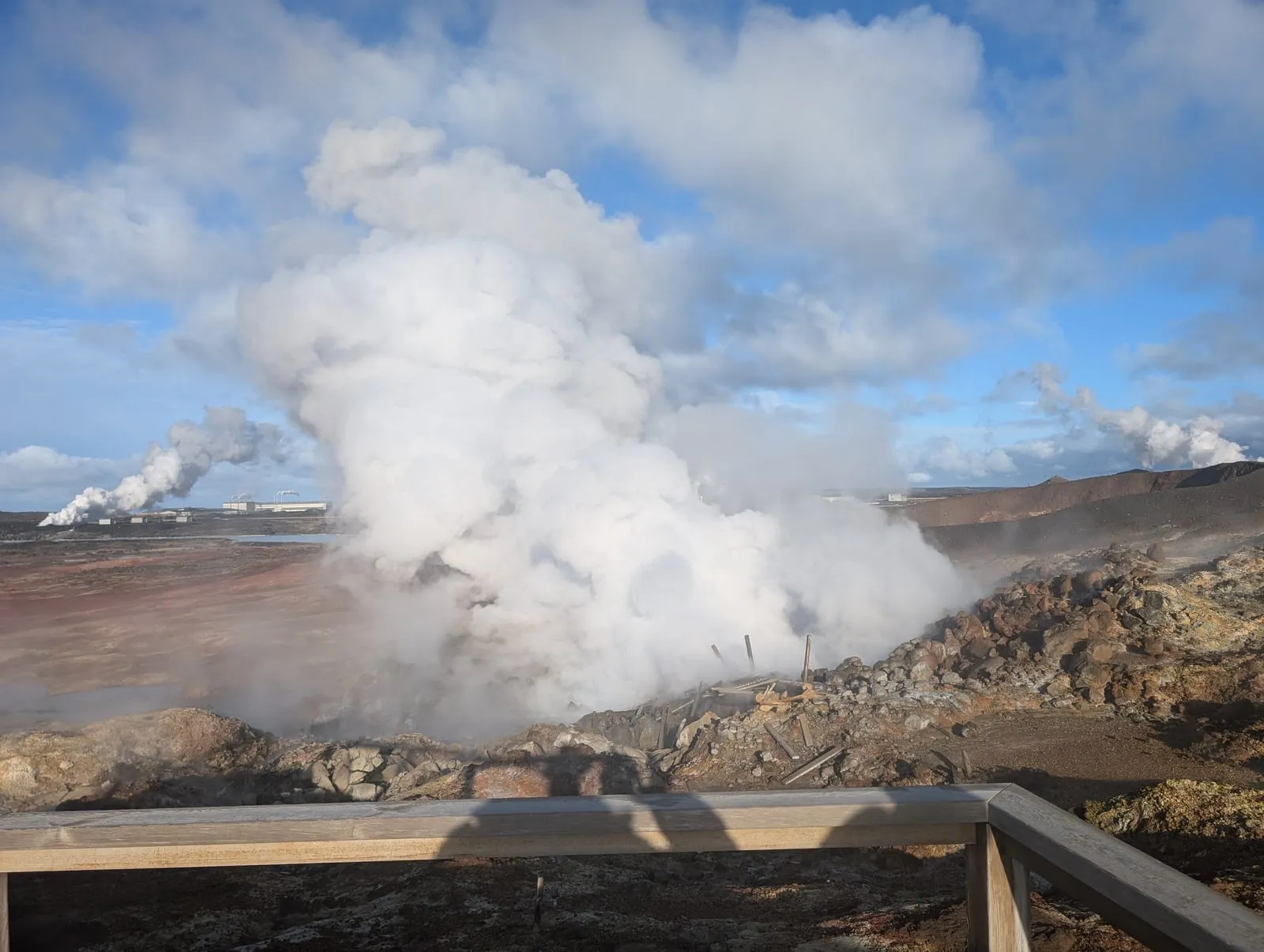
At the petrol station we took the chance to check the map for places we hadn’t seen anyone recommend. Gunnuhver hot springs was one, with almost no one there: a hot spring steaming out of the ground, and we were glad we came. Its main mud pool is the biggest in Iceland, fed by seawater, and it’s named after Gunna, a woman whose ghost, the story goes, was lured into the spring around 1700. You could walk on to the Reykjanesviti lighthouse, the site of Iceland’s first lighthouse, but we chose not to.
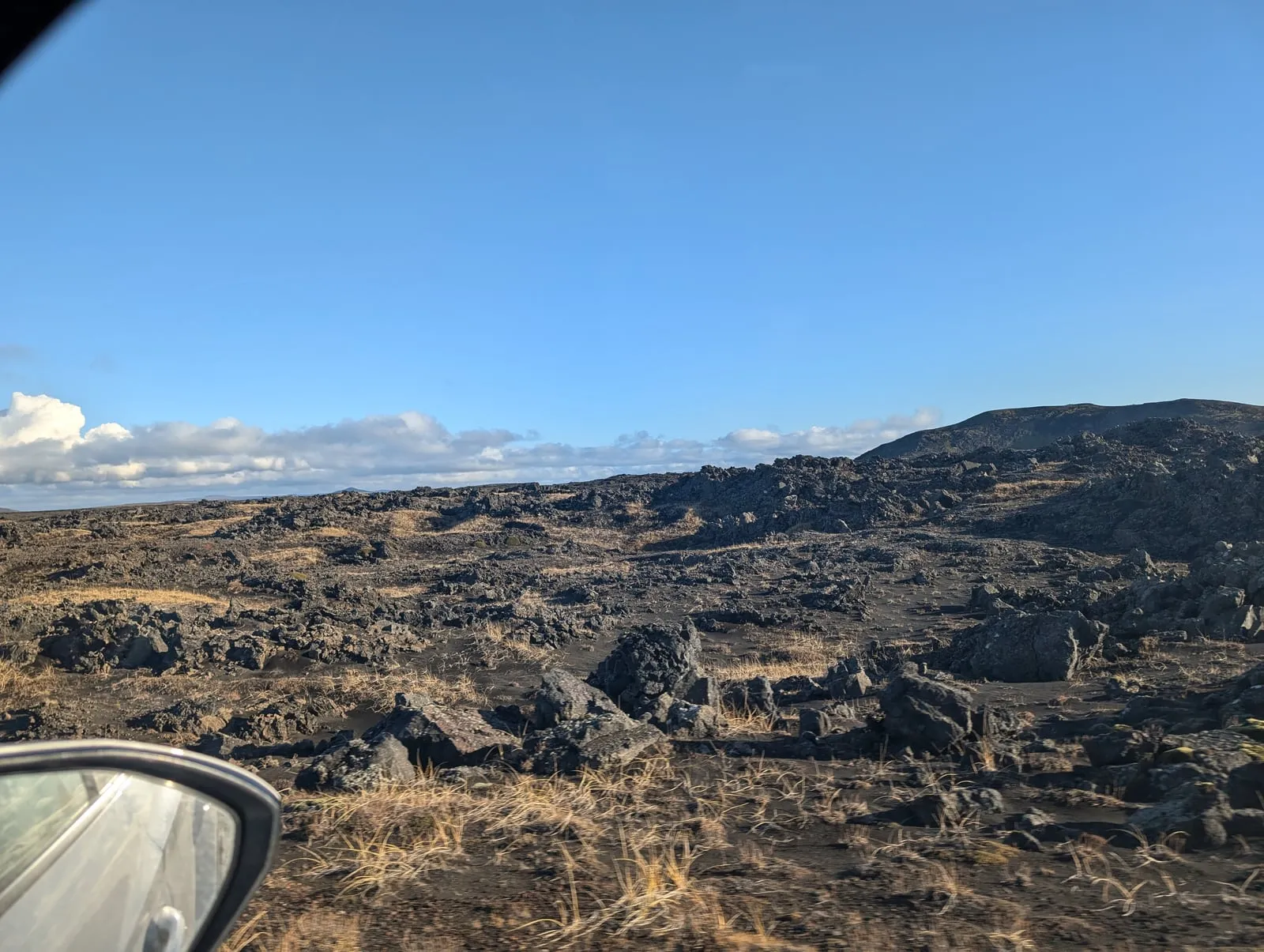
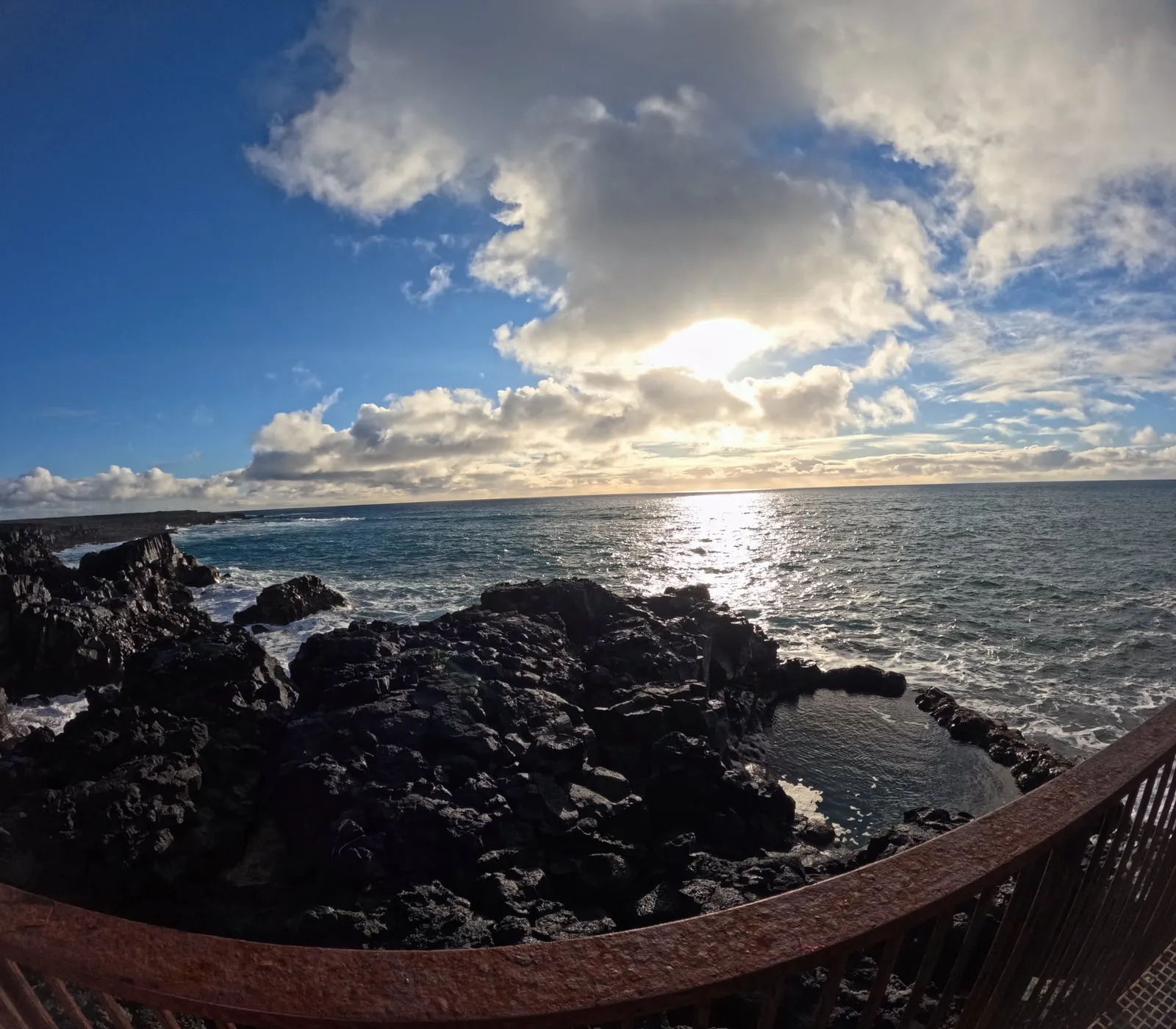
Then we drove to the Brimketill lava rock pool. The terrain was like being on Mars. I thought a volcano had changed it all recently, but this lava is about 800 years old, from the eruptions of 1210 to 1240; the new lava is about 10 km east, round Grindavík and the Blue Lagoon. The pool was worn into the lava by the waves, and it isn’t for swimming: the waves can come over the rocks without warning.
And finally, out of all the days we were there, the sun came out, and for the first time on the whole trip no one was around. The two stops in more detail: the Reykjanes peninsula.
Grindavík, the town just east of Brimketill, was still closed to visitors that day (it reopened the next morning), and we drove back round the peninsula to the Silica Hotel.
The Silica Hotel and the Blue Lagoon
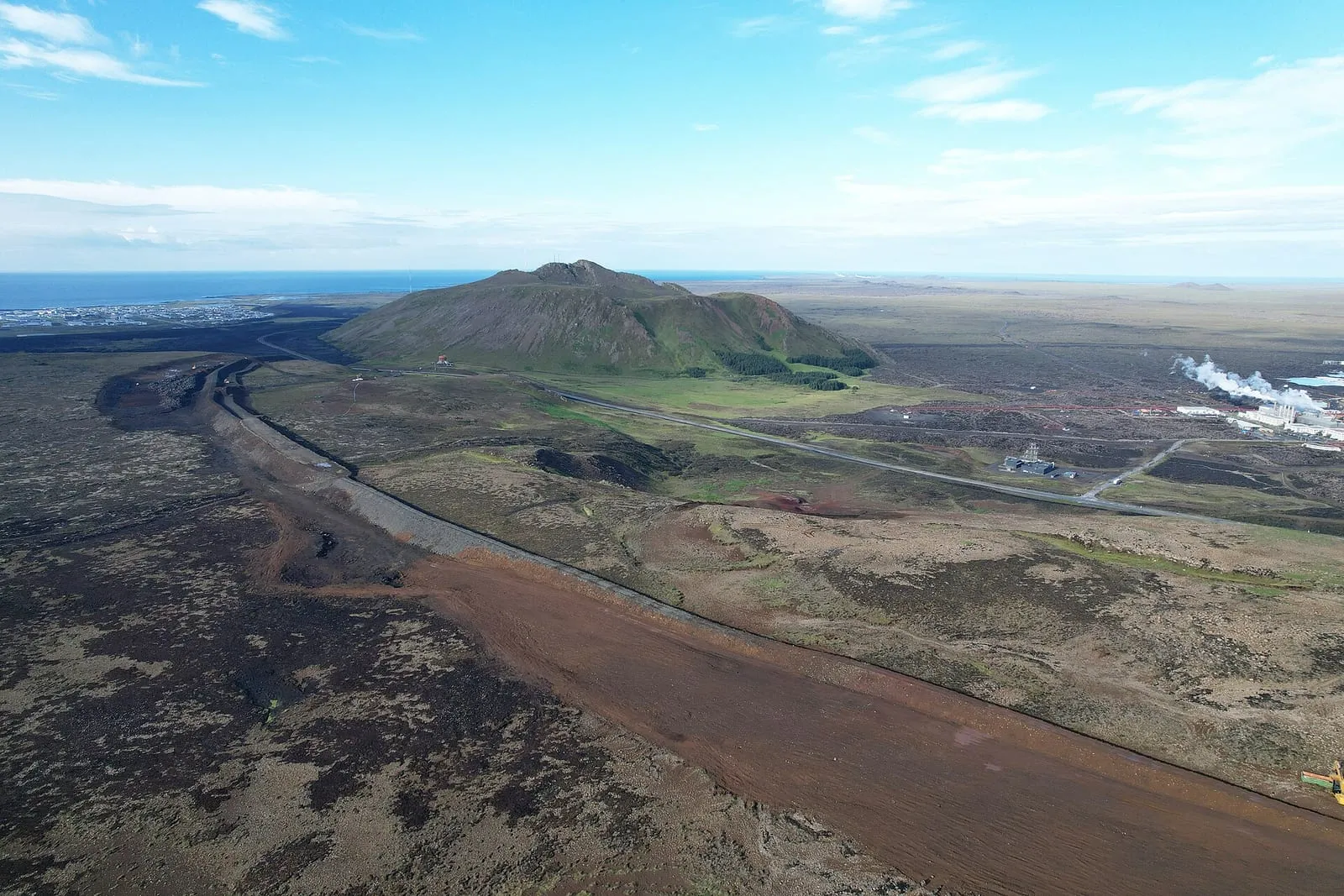
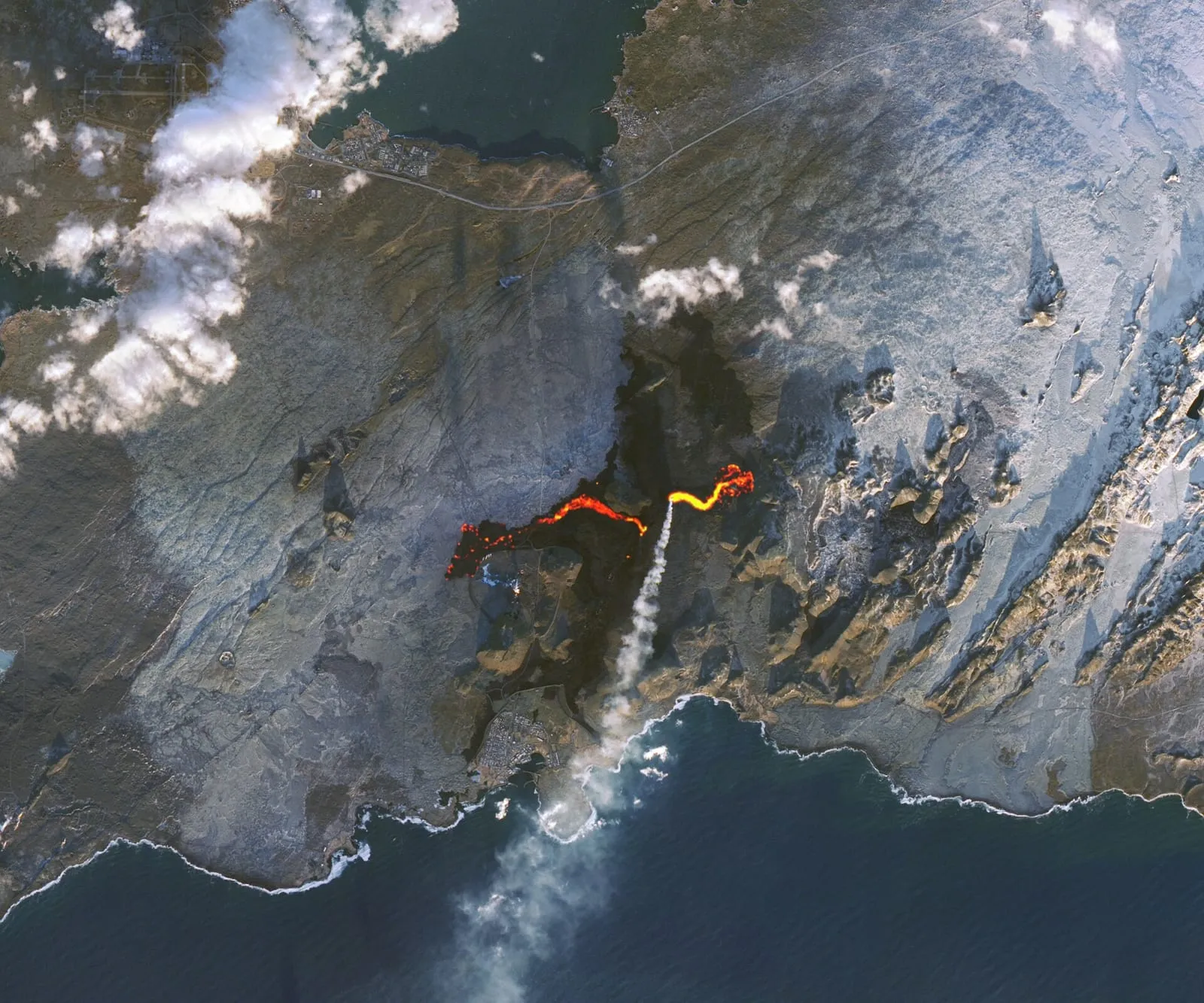
Our last night was at the Silica Hotel, which belongs to the Blue Lagoon and sits a short walk from it. Lava from six eruptions had come right up to the earth walls round the lagoon and the hotel in the months before we arrived, the last ending in early September 2024. A month after we left, on 21 November 2024, the next one buried the Blue Lagoon’s car park.
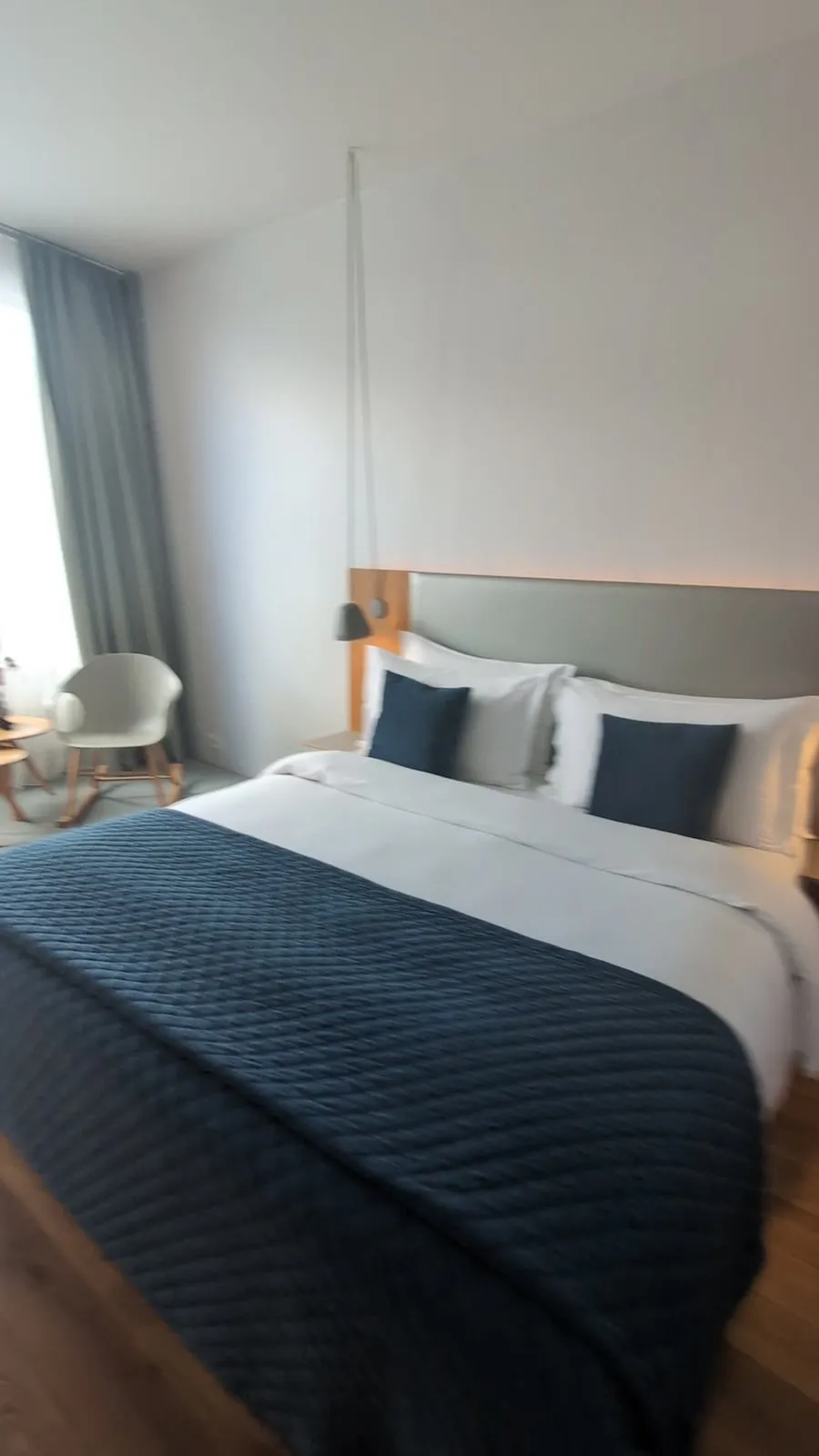
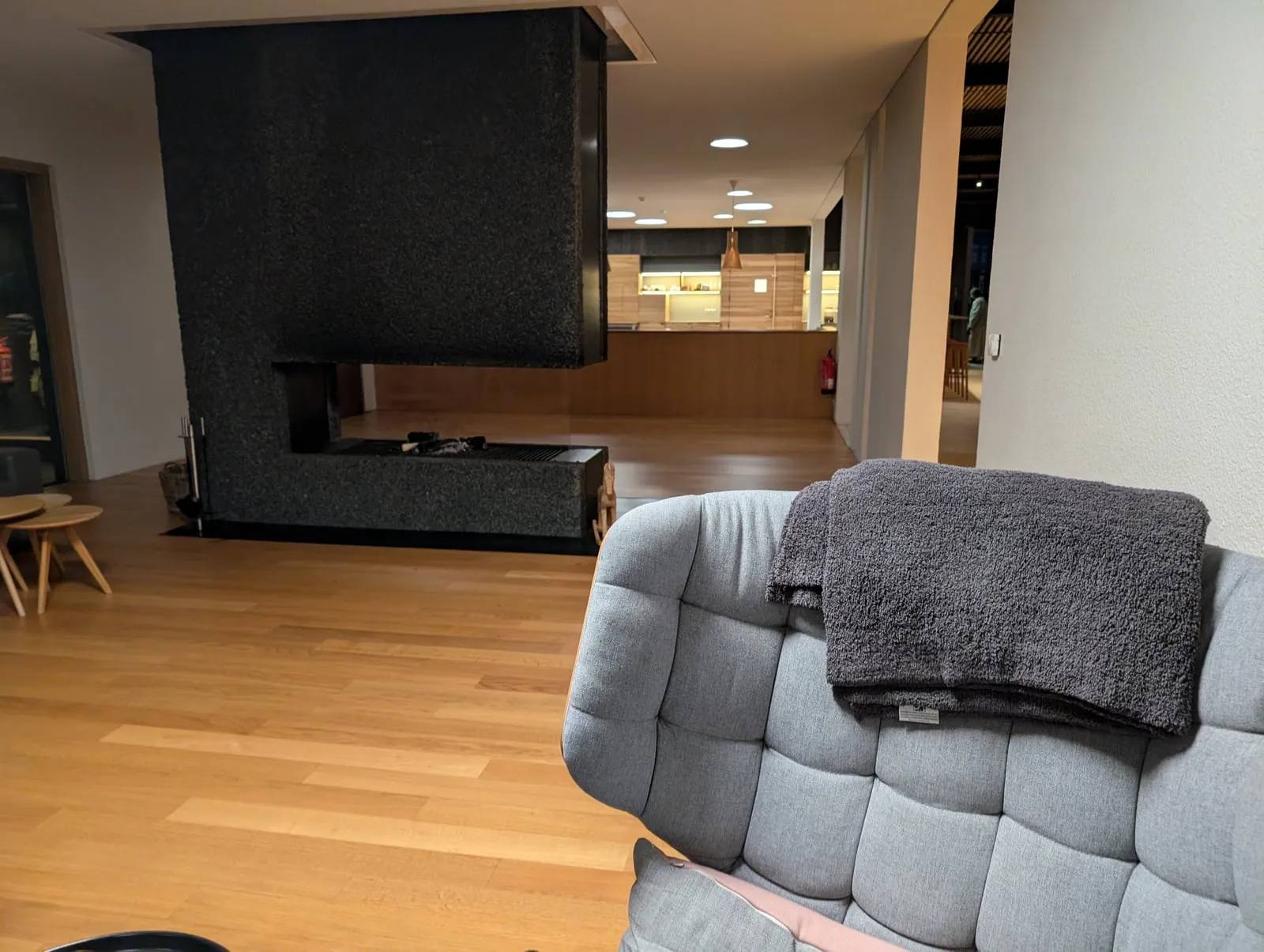
It’s an incredibly beautiful hotel, but it wasn’t a nice stay. Check-in was extremely long, with the receptionist slurring his words, even though we had a restaurant reservation in 15 minutes. The bar is extremely basic, with no vibe or comfortable furniture: like being in a dead café. The rooms have awful lighting, the dated TV was even dimmer, and the remote was sticky with broken buttons. Funnily enough, the building won a Nordic prize for its lighting in 2006. We paid ISK 108,000 (about £600) for a Silica Deluxe King, with breakfast, a welcome drink, a Premium Blue Lagoon ticket each and a table at Lava included.
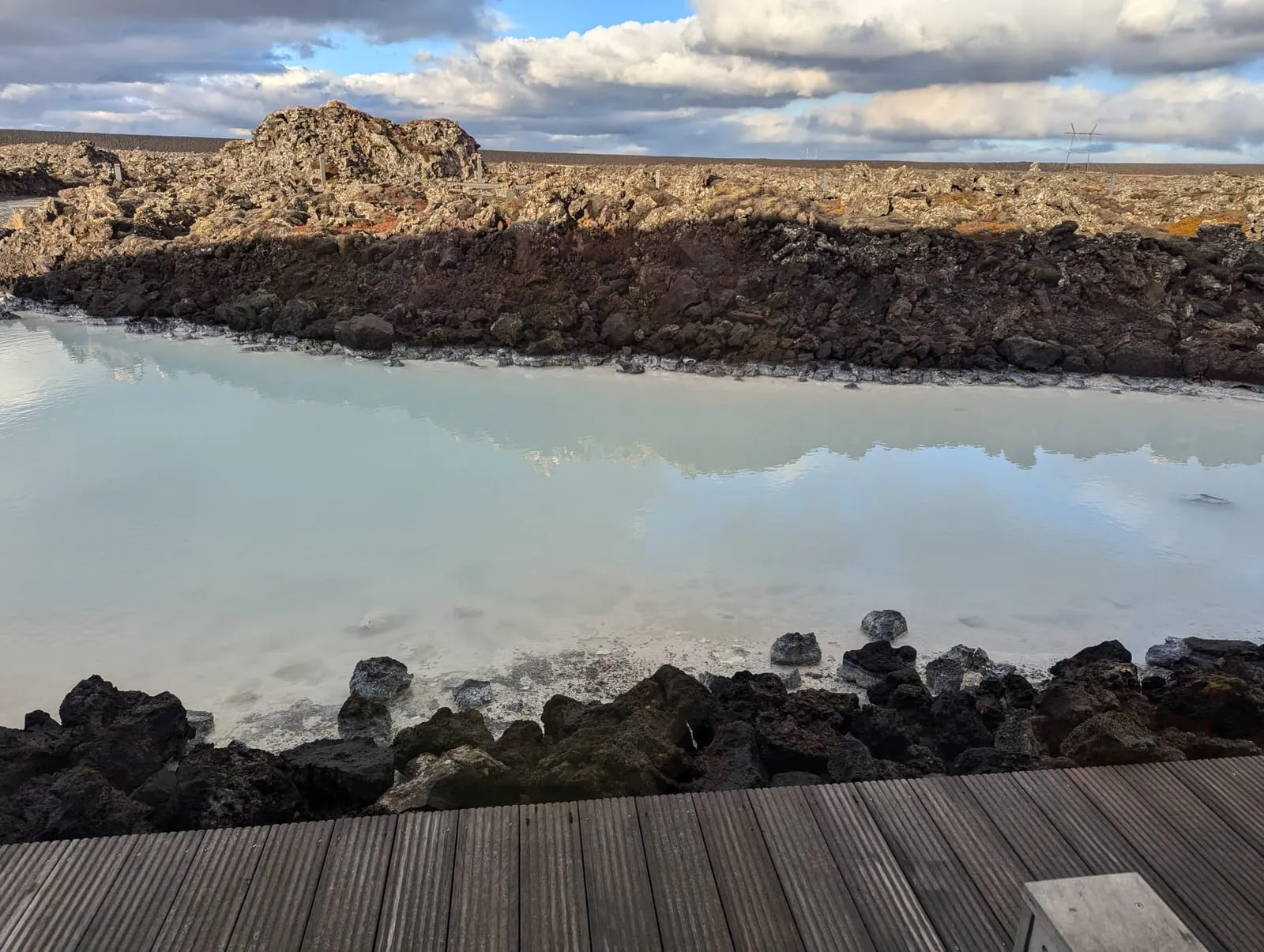
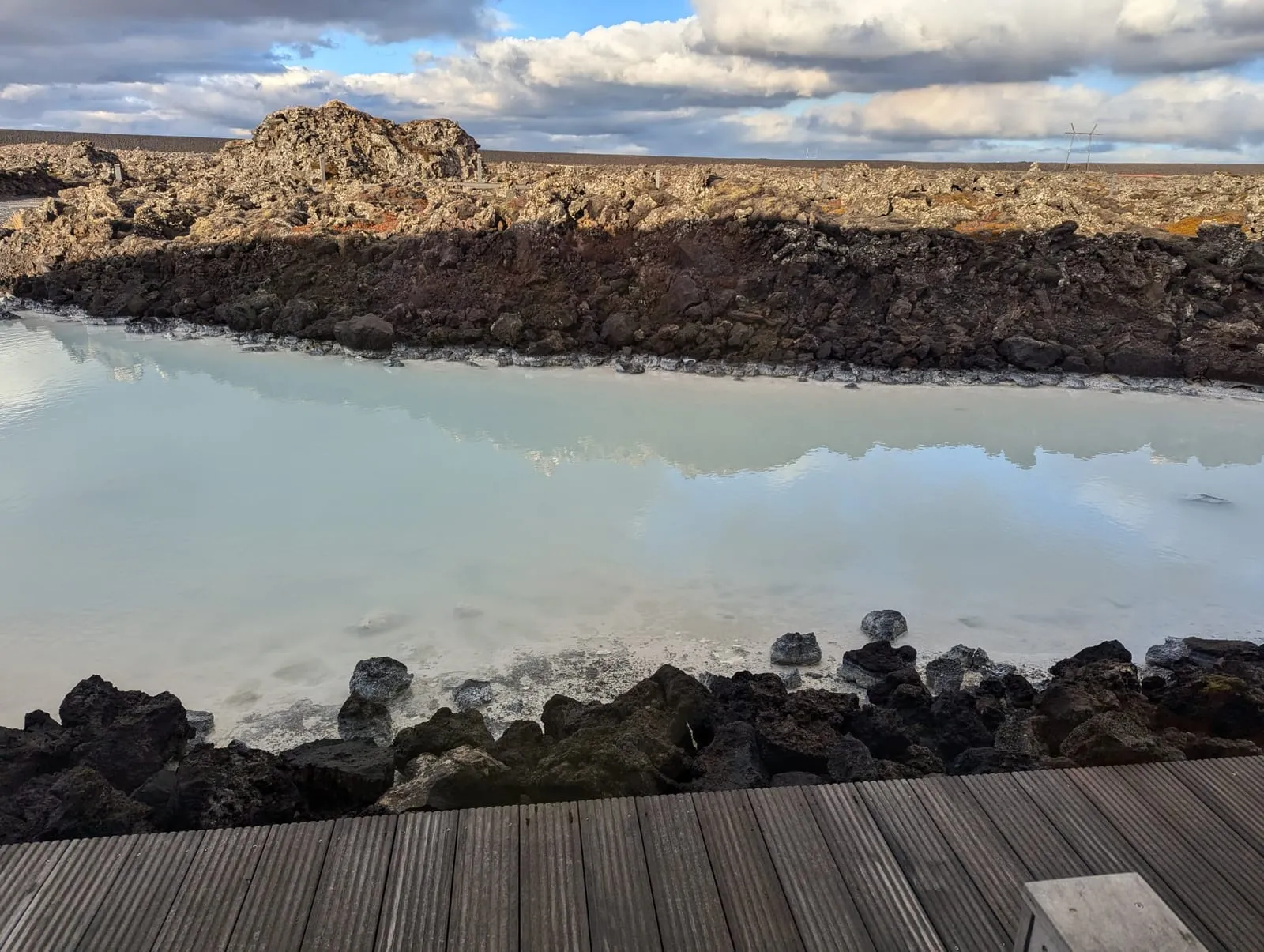
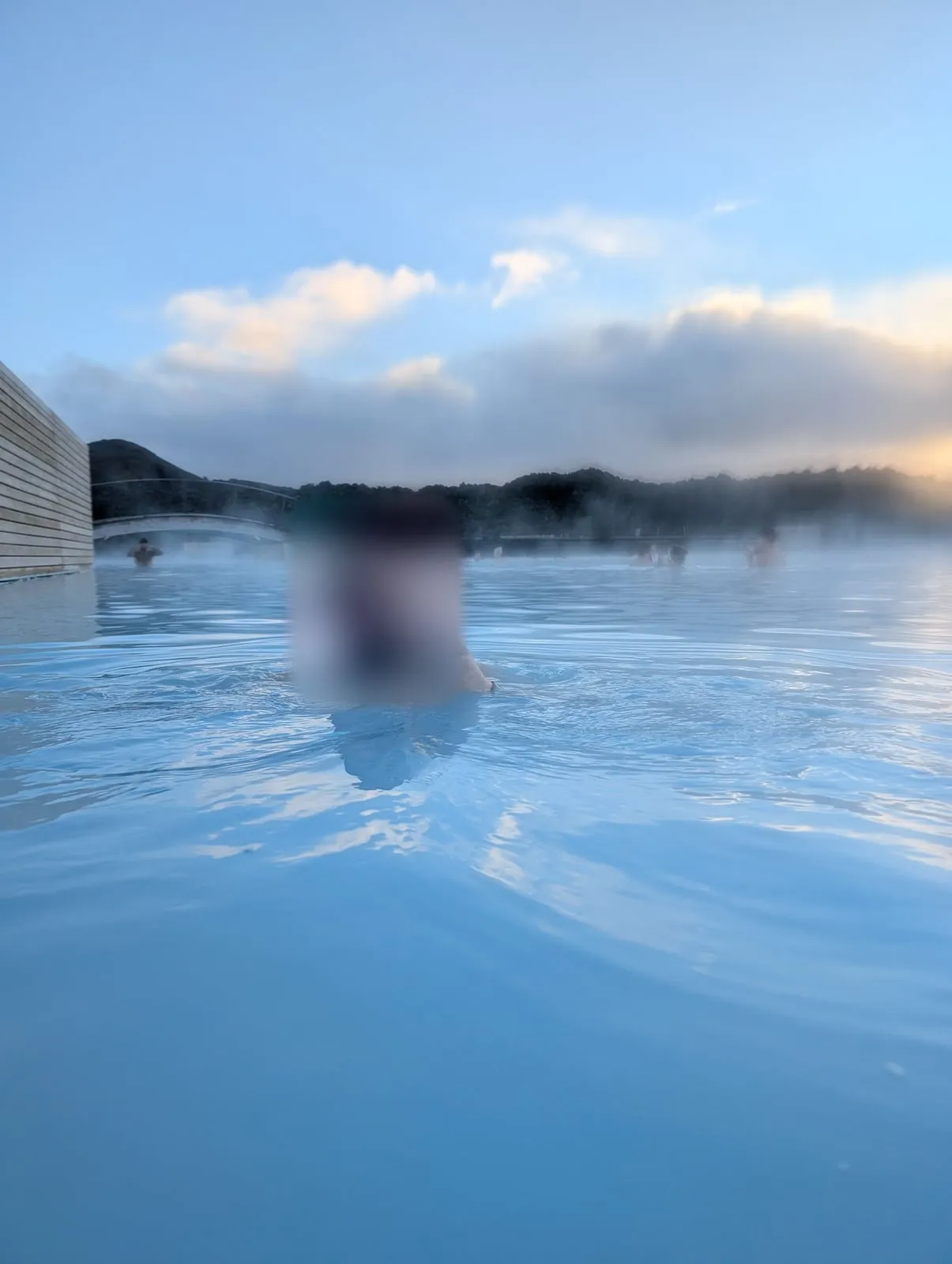
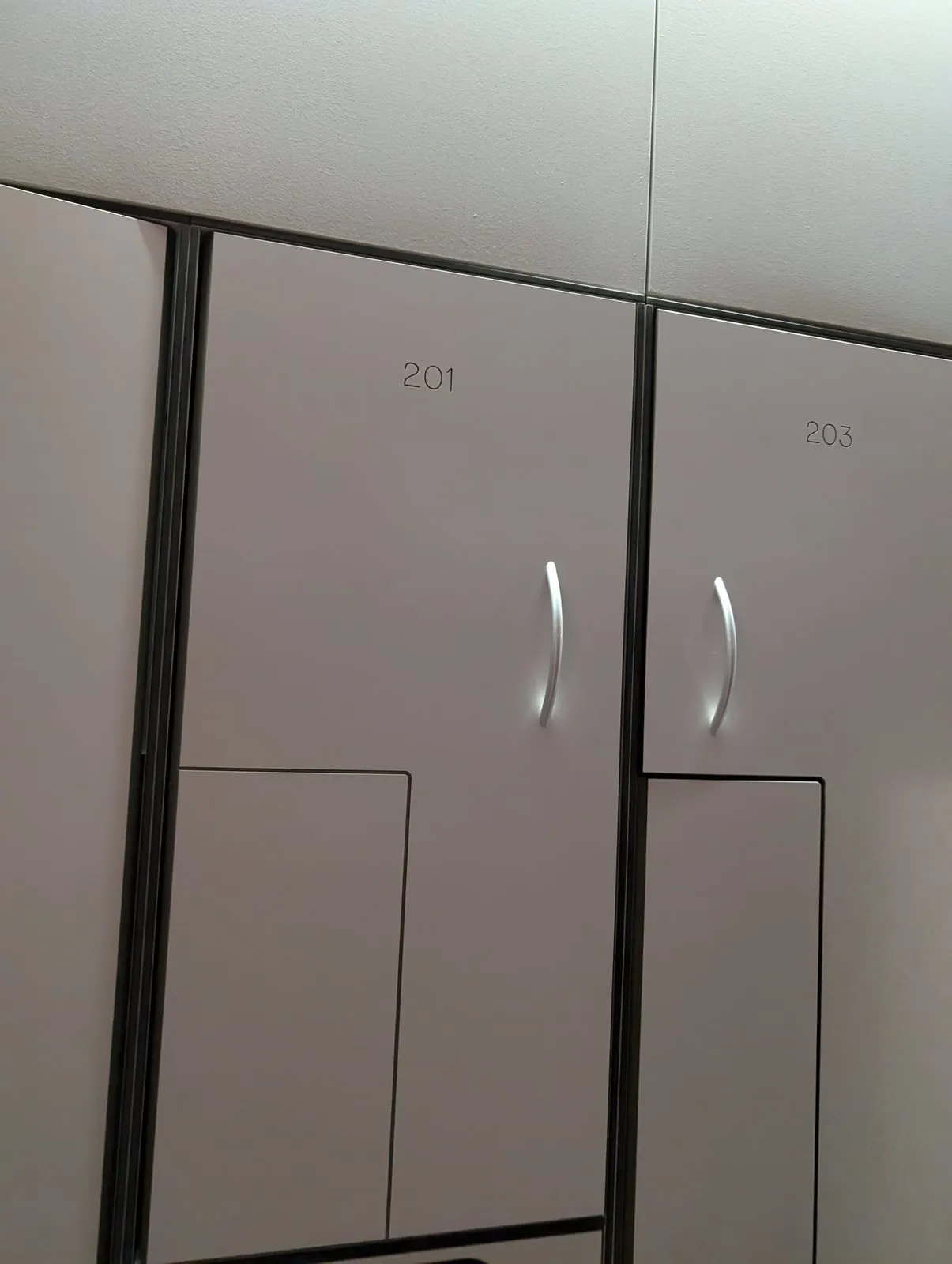
The Blue Lagoon is very close, and the hotel does a shuttle taxi for you. It was very busy, with a queue to get in and pay first. The changing rooms are split by gender and you meet your partner on the other side. I almost got lost in the lockers, so memorise where yours is. They sell waterproof phone pouches, and you can buy drinks in the water. It doesn’t smell as bad as people say. A cool place and a great experience, and we’d like to try other lagoons in future. For long hair, the Blue Lagoon’s own advice is conditioner before you go in, left in, and hair tied up, as the silica leaves it stiff.
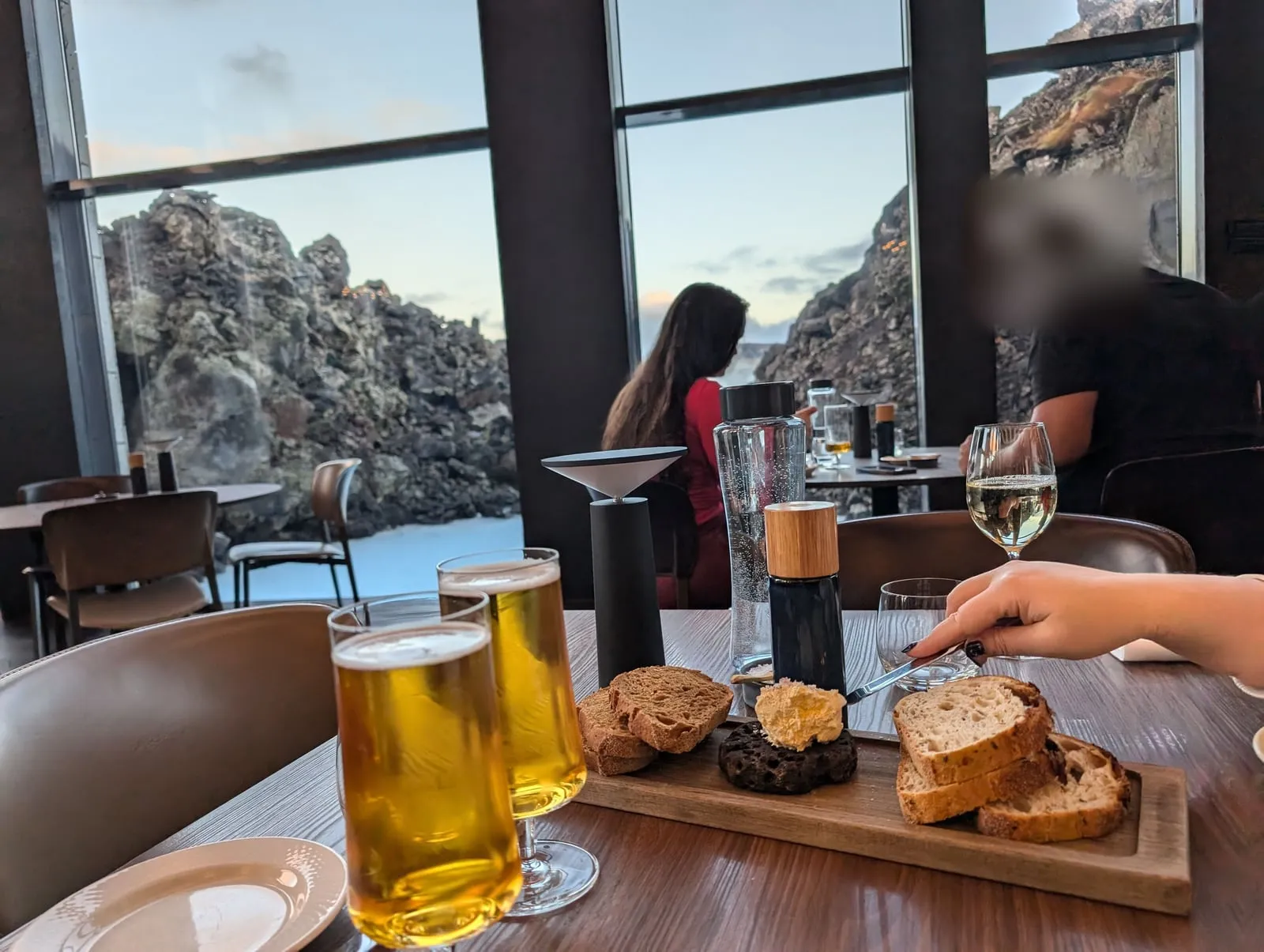
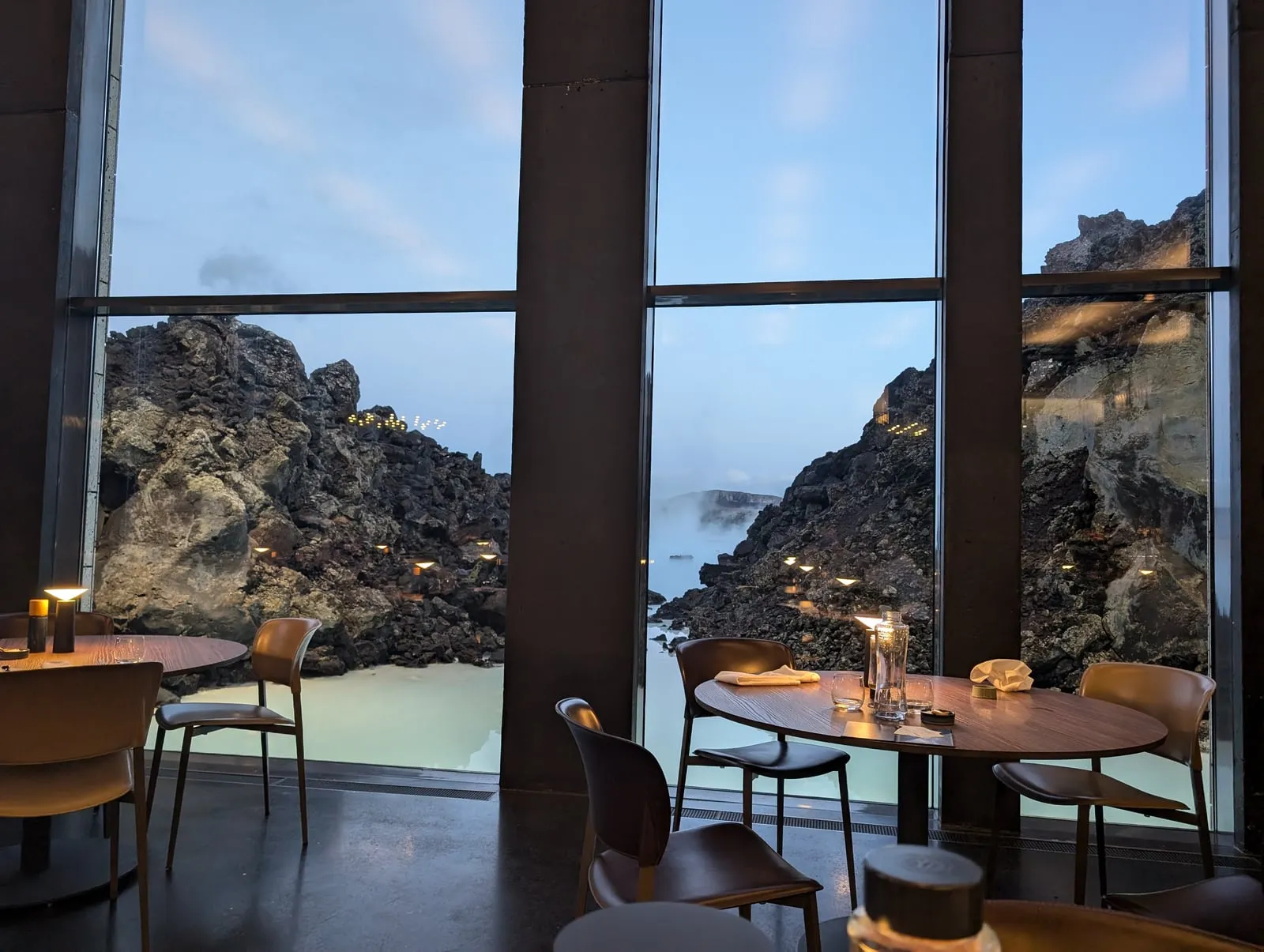
Lava, the restaurant, is amazing. We thought it would be a tourist trap, but it isn’t. We had the best bread of our entire lives, and everything else was really nice too. It’s an absolutely stunning location, built into an 800-year-old lava cliff over the lagoon, one of the nicest we’ve ever been to, and a must visit.
Then the shuttle back. We were told to ask the Blue Lagoon to arrange it, which we did, and they called the Silica. We were left waiting outside in the freezing cold, and when we eventually phoned the Silica, they told us they had forgotten to arrange it: another 15 minutes in the cold. Back at the hotel it was very quiet, and hard to get served a drink, with only one other person in the bar. We didn’t have time to swim in the hotel’s own lagoon, and overall we’d have gone back to the capital for a good night out instead.
The two reviews: the Silica Hotel review, and the Blue Lagoon review with Lava. Blue Lagoon tickets now start at ISK 12,990 for Comfort (about £79) and ISK 15,990 for Premium (about £98), and there has been no eruption since August 2025, though the Met Office still has the area on alert (checked 15 November 2026).
Day five: home
On Monday morning we had one last look at the Silica’s lagoon and went to the airport, about 25 minutes away, for another hot dog in the departure hall, after security, before the 10.45am flight home to Birmingham.
Where we stayed
- Hótel Reykjavík Saga, Thursday: a Standard Double, €318 (about £265) on Booking.com, paid at the hotel. Very nice and quiet, with super friendly staff.
- Hotel Rangá, Friday: a Standard room, €408.24 (£343.60) through Expedia, paid at the hotel, with dinner and drinks on top. The best stay of the trip.
- The Reykjavik EDITION, Saturday: a Superior King, ISK 110,616 (about £615), prepaid and non-refundable on Booking.com. Nice, modern and on the harbour, but they refused to check us in on debit cards.
- The Silica Hotel, Sunday: a Silica Deluxe King, ISK 108,000 (about £600), booked direct, with the Blue Lagoon included. Beautiful, but we’d swap it for a last night in Reykjavík.
What the same rooms cost now: the Saga about ISK 44,000 (£269) on a weekday in October 2027; Rangá €448 (£374) with breakfast from October 2027; the EDITION ISK 110,800 (£678) on a Saturday in November 2026; the Silica from ISK 116,000 (£710). Hotels add ISK 800 a room a night in tax since January 2025 (checked 15 November 2026).
Where we ate and drank
The food was very good all trip. The highlights, each with its own review:
- Hotel Rangá’s restaurant: fine dining, and one of the most memorable meals of the trip.
- Sjávargrillið’s langoustine tacos: one of the best things I’ve ever eaten (the food walk).
- Café Loki’s rye bread ice cream: incredible.
- Lava at the Blue Lagoon: the best bread of our lives (the Blue Lagoon review).
- The Big Lebowski Bar: where I found my love for White Russians (where we ate and drank in Reykjavík).
- Hot dogs: the famous stand, a petrol station and the airport (Icelandic hot dogs).
- Less good: Messinn wasn’t our kind of food, Skál! wasn’t the best meal (perhaps we ordered wrong), and the shark ruined my partner’s day.
Eating out is dear, but the shops aren’t as bad as people say: a litre of milk is 238 kr (£1.46) at Krónan and ten hot dogs about 1,139 kr. Wine, spirits and beer stronger than 2.25% only come from Vínbúðin, the state shop, which shuts on Sundays.
What it cost
We have the bookings and a few bills, so here is what we actually paid in October 2024, in pounds at the rate then. Flights, the car and the four hotels came to about £2,590 for the two of us, and about £2,880 with dinner and drinks at Rangá.
Our big costs for two, October 2024
4 days · 2 people
- Stays£1,823.60 63%
- Getting around£762.20 27%
- Food and drink£290 10%
| What | Kind | Cost |
|---|---|---|
| Jet2 flights, Birmingham to Keflavík and back, with seats | Getting around | £417.20 |
| Blue Car Rental, three days (ISK 61,896) | Getting around | £345 |
| Hótel Reykjavík Saga, one night (€318) | Stays | £265 |
| Hotel Rangá, one night (€408.24) | Stays | £343.60 |
| The Reykjavik EDITION, one night (ISK 110,616) | Stays | £615 |
| Silica Hotel, one night with the Blue Lagoon (ISK 108,000) | Stays | £600 |
| Dinner and drinks at Hotel Rangá (about €345) | Food and drink | £290 |
| Total | £2,875.80 | |
What we paid in October 2024, in pounds at the time. Not counted: fuel, parking, and the meals and drinks we kept no bills for.
Food and drink, from our bills and menus (October 2024, pounds at the rate then):
- A sandwich at the 10-11: 1,229 kr (about £7). Its hot dog: 770 kr (about £4.30).
- Beer at the Vínbúðin in Hella: 349 kr for a 330 ml Víking Lite (about £2), 619 kr for a 500 ml can of 7% Víking Sterkr (about £3.45).
- Two tacos at Tres Locos: 3,490 or 3,590 kr (about £20).
- At Hotel Rangá: a 400 ml Rangá Lager €10.67 (about £9), a Nordic Bramble €21.27 (about £18); starters 2,890 to 4,190 ISK, mains 4,990 to 8,990 ISK.
- Fjallkonan: two beers, a glass of wine and two small plates, 11,750 kr (about £66).
- Messinn’s fish pans: 4,440 to 4,990 kr (about £25 to £28).
- Café Loki: the rye bread ice cream 1,400 kr (about £7.80); the shark and Brennivín tasting 2,500 kr.
- The Big Lebowski Bar: a White Russian 2,200 kr on special offer (about £12.30); most others 2,800 kr.
- The EDITION’s rooftop: four drinks, 11,900 kr (about £66).
- The Orkan at Fitjar: a hot dog 770 kr (about £4.30); two XL pizza slices and a drink 2,450 kr (about £13.70).
Since our trip the króna has got about 10% stronger against the pound (£1 bought about 179 kr in October 2024 and about 163 now), so the same prices cost more in pounds. Parking at the big sights costs ISK 750 to 1,080 a visit, and hire cars pay a road charge per kilometre (Blue Car Rental adds ISK 1,550 a day). A half-litre of draught beer in a Reykjavík bar is 1,700 to 1,900 kr (£10.40 to £11.60), or about 770 to 1,150 kr in happy hour (checked 15 November 2026).
Getting there and around
- From the UK: Jet2 flies to Keflavík in winter from Birmingham, Belfast, Bristol, East Midlands, Edinburgh, Glasgow, Leeds Bradford, Liverpool, London Stansted, Manchester and Newcastle. Icelandair flies from Gatwick, Heathrow, Manchester, Edinburgh and Glasgow, British Airways from Heathrow, easyJet from Edinburgh, Luton and Manchester (with more in season), and TUI from Gatwick and Manchester in season. It’s about three hours from London.
- Our flights: Jet2 LS1375 from Birmingham at 3.50pm, home on LS1376 at 10.45am, £417.20 return for two with seats and 10 kg of hand luggage each, booked 17 days before.
- From the US: Icelandair flies all year from Baltimore, Boston, Chicago, Denver, Minneapolis, New York JFK, Newark, Orlando, Raleigh-Durham, Seattle and Washington Dulles, with more routes in summer; Delta, United and Alaska Airlines fly in season. PLAY stopped flying in September 2025.
- Entry: a UK passport must be under 10 years old when you arrive and valid for three months after you leave, and you get 90 days in any 180 in the Schengen area. The EU’s Entry/Exit System has taken fingerprints and a photo at Keflavík since October 2025. ETIAS isn’t running yet: expected in 2027, at €20, so check before you go. US passports need no visa for 90 days.
- Without a car: the Flybus to Reykjavík is ISK 3,999 one way (about £24.50), about 45 minutes; the public bus 55 is ISK 2,400.
- Driving: on the right, with headlights on all the time. The limit is 90 km/h on paved roads and 50 in towns, the drink-drive limit is a quarter of England’s, and you pull right off the road to stop. Watch for single-lane bridges and sheep. Check umferdin.is and safetravel.is before you set off; the emergency number is 112.
- The windscreen camera: we stuck an action camera to the windscreen for the drives. It charges while you drive. Highly recommended.
- Time, money and plugs: Iceland is on GMT all year, the money is the króna, cards work almost everywhere, tipping isn’t expected, and plugs are the two round pins of mainland Europe, so bring an adapter.
Debit cards, credit cards and the hire car
We travel with travel debit cards for the exchange rate, not a credit card, which is common. They worked almost everywhere, and picking up the car was very smooth. But the EDITION refused to check us in without a credit card, even though we’d paid in full and offered a hold on the debit card.
Hotels’ small print often says “credit card at check-in”. The EDITION’s booking said it, and so do the Saga’s and the Silica’s listings, which didn’t stop us. Yet Marriott, whose brand the EDITION is, says in its own terms that the hold goes on “your debit or credit card”, and the hotel takes debit cards for everything else. Hire firms vary. Blue Car Rental’s booking told us to bring “a valid credit card and driver license”. Hertz Iceland takes a physical Visa or Mastercard debit card, but not Google Pay or Apple Pay. Lotus takes debit cards with a deposit of up to ISK 150,000 (about £918), and Go and Saga want a credit card unless you buy their top cover. Unmanned petrol pumps may want a card with a PIN.
Our advice: take one physical credit card, even if you’ve paid for everything and never use it.
What to wear in October
A scarf and a hat are a must. Our Gore-Tex shoes were a must have for the entire trip: they kept us completely dry wading into Gljúfrabúi, without wellies. Add warm layers, a waterproof, gloves, and swimwear for the lagoon. Visit Iceland’s own October list says much the same, minus the scarf.
Best time to go
We went in mid-October. The average in Reykjavík is 7.6°C by day and 2.7°C at night, with rain on about 13 days, and the wind makes it feel colder: we’d never felt cold like it. Our October was a cold one too. The days are short. The sun rose at about 8.30am and set just before 6pm, about nine and a half hours of light, shrinking by six or seven minutes a day. That’s why we skipped Kerið and didn’t drive after dark.
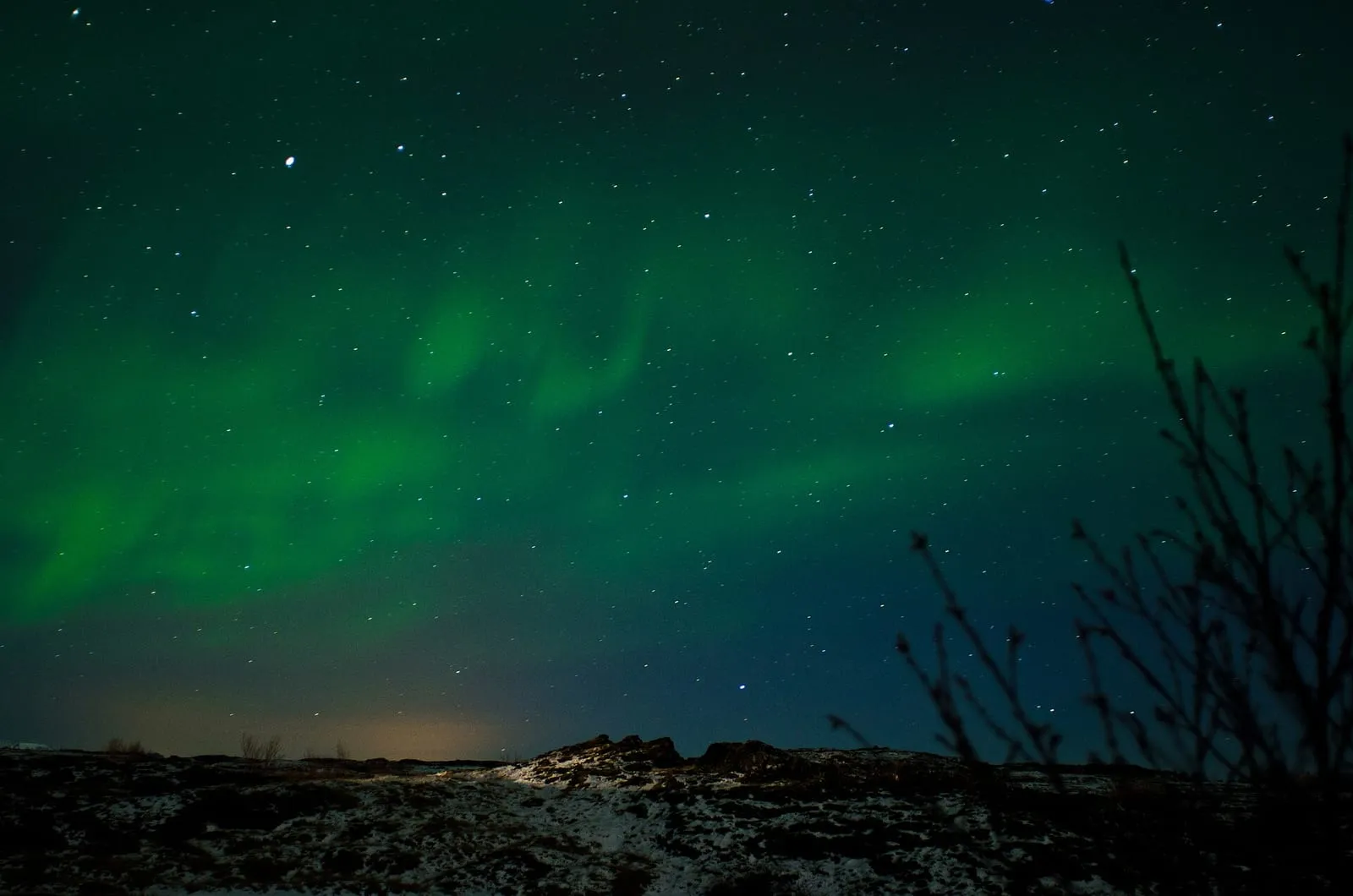
October is in the northern lights season, which runs from September to April, but you need a dark, clear sky and they’re never guaranteed. Hire cars cost less than in summer (August is the dearest month, January to March the cheapest), and the Golden Circle is still busy. Studded winter tyres aren’t allowed until November unless the conditions need them, and most highland F-roads are closed by October, so stick to the paved roads as we did.
Is 4 days in Iceland enough?
Yes, for what we did. In four days with a hire car we did the Golden Circle, the south coast as far as Skógafoss, an afternoon and a night in Reykjavík, and the Reykjanes peninsula with the Blue Lagoon, with a night at Hotel Rangá in the middle. The October daylight is what limited us.
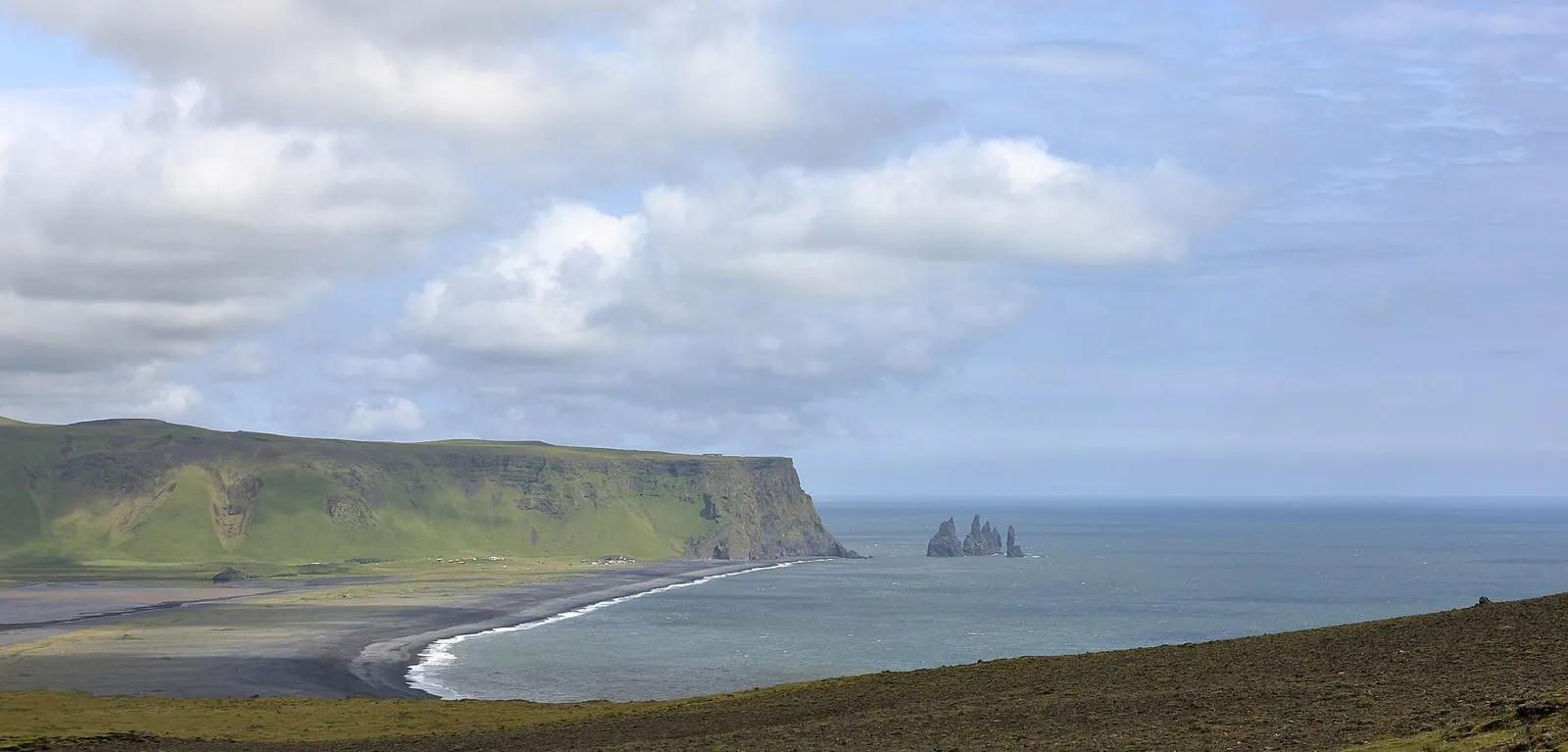
But we seriously regret not going the whole coastline. Next time we’ll do the full tour, all the way round the island, which takes about two weeks, and stay at Rangá on the way. Our day-by-day plan, with the drives and what we’d change: 4 days in Iceland: our itinerary.
Our tips
- Hire a car, and don’t just do the Golden Circle. The south coast was much better.
- Take a credit card, even if you’ve paid for everything in advance.
- Pack a scarf, a hat and waterproof shoes. Our Gore-Tex shoes did the job of wellies.
- Stick an action camera on the windscreen. It charges while you drive.
- Plan the driving round the daylight: about nine and a half hours in mid-October.
- Stay at Hotel Rangá, and book dinner there.
- Stop at Urriðafoss on the way back to Reykjavík. We had it almost to ourselves.
- Walk on from Seljalandsfoss to Gljúfrabúi, in waterproof shoes.
- At the Blue Lagoon, memorise where your locker is.
- Spend the last night in Reykjavík rather than out at the Silica.
- Try the shark if you dare, but be careful: it ruined my partner’s day.
Iceland trip FAQ
Is Iceland worth visiting in October? Yes. It was cold, windy and dark by 6pm, but we had empty roads, Urriðafoss and Brimketill almost to ourselves, and sunshine on our last full day. Five stars from us.
What is Iceland like in October? Cold and short on daylight. Reykjavík averages 7.6°C by day and 2.7°C at night, the sun sets before 6pm by mid-month, and it rains on about 13 days. October 2024 was colder than usual.
Can you see the northern lights in Iceland in October? Yes, October is in the season, which runs from September to April, but you need a dark, clear sky and they’re never guaranteed. Hotel Rangá will ring your room if they appear.
Do you need a 4x4 in Iceland in October? Not for our route. The Golden Circle, the south coast to Skógafoss and Reykjanes are all paved, and Blue Car Rental told us any mid-size SUV would be perfect, just not the smallest cars at that time of year. Most highland F-roads are closed by October anyway.
Is it safe to drive in Iceland in October? We found it very safe, with open roads and barely anyone on them. Plan round the daylight, check umferdin.is and safetravel.is for closures and wind, and pull right off the road to stop.
Is Iceland left or right hand drive? Iceland drives on the right, like the rest of Europe. Headlights stay on all the time, and the top speed limit is 90 km/h (56 mph).
How much is a trip to Iceland from the UK? Ours cost about £2,590 for two for flights from Birmingham, a three-day hire car and four hotel nights in October 2024, before fuel, food and drink, and about £2,880 with dinner at Rangá.
Is Iceland expensive compared to the UK? Eating and drinking out is: a half-litre of beer in a Reykjavík bar is about £10.40 to £11.60 now. The supermarkets aren’t as bad as people say, with a litre of milk about £1.46 at Krónan.
How much is a pint in Iceland in pounds? About £10.40 to £11.60 for half a litre of draught in a Reykjavík bar (1,700 to 1,900 kr), or about £4.70 to £7 in happy hour; in US dollars, about $13.75 to $15.40 at full price (checked 15 November 2026).
Can I use my debit card in Iceland? Yes, almost everywhere, and phone wallets work in most places too. But hotels and hire firms may want a credit card for the deposit: the Reykjavik EDITION refused to check us in without one.
Do you need a credit card to hire a car in Iceland? Most firms prefer one. Some take a physical debit card, Hertz Iceland among them, and others only with a big deposit or their top cover, so check the terms before you book.
Do you tip in Iceland? No, it isn’t expected. Service and VAT are already in the prices.
Can you drink the tap water in Iceland? Yes, it’s safe. The hot tap can smell of sulphur, as it comes from geothermal sources.
Is 4 days in Iceland enough? Yes, for the Golden Circle, the south coast to Skógafoss, a night in Reykjavík and the Reykjanes peninsula with a hire car. For the whole island, give it two weeks.
More from this trip
Each part of our Iceland trip in October 2024 has its own review:
- 4 days in Iceland: our itinerary: day by day, with the times and the drives.
- The Golden Circle by car: Þingvellir, Geysir and Gullfoss, and why we skipped Kerið.
- Hotel Rangá review: the best stay of the trip.
- The south coast waterfalls: Skógafoss, Seljalandsfoss, Gljúfrabúi and Urriðafoss.
- The Reykjavik EDITION review: paid in full, refused on a debit card.
- Our self-guided Reykjavík food walk: five stops, the shark and the langoustine tacos.
- Where we ate and drank in Reykjavík: Tres Locos, Jungle, the Lebowski Bar, Skál! and the rooftop.
- Icelandic hot dogs: the famous stand, a petrol station and the airport.
- The Reykjanes peninsula: Gunnuhver and the Brimketill lava pool.
- The Silica Hotel review: beautiful, quiet, and the shuttle they forgot.
- The Blue Lagoon review: the queue, the lockers and dinner at Lava.
Photo credits
Our photos and video stills are our own, from October 2024, with faces blurred. Stock photos, resized, each under its own licence:
- Kerið crater lake: Alexander Grebenkov, CC BY 3.0, Wikimedia Commons.
- Shark drying near Bjarnarhöfn: Chris 73 / Wikimedia Commons, CC BY-SA 3.0, Wikimedia Commons.
- The earth wall near Svartsengi: Steinninn (Eysteinn Guðni Guðnason), CC BY 4.0, Wikimedia Commons.
- New lava beside the Blue Lagoon, 24 November 2024: NASA Earth Observatory (Michala Garrison, Landsat data from the USGS), public domain, Wikimedia Commons.
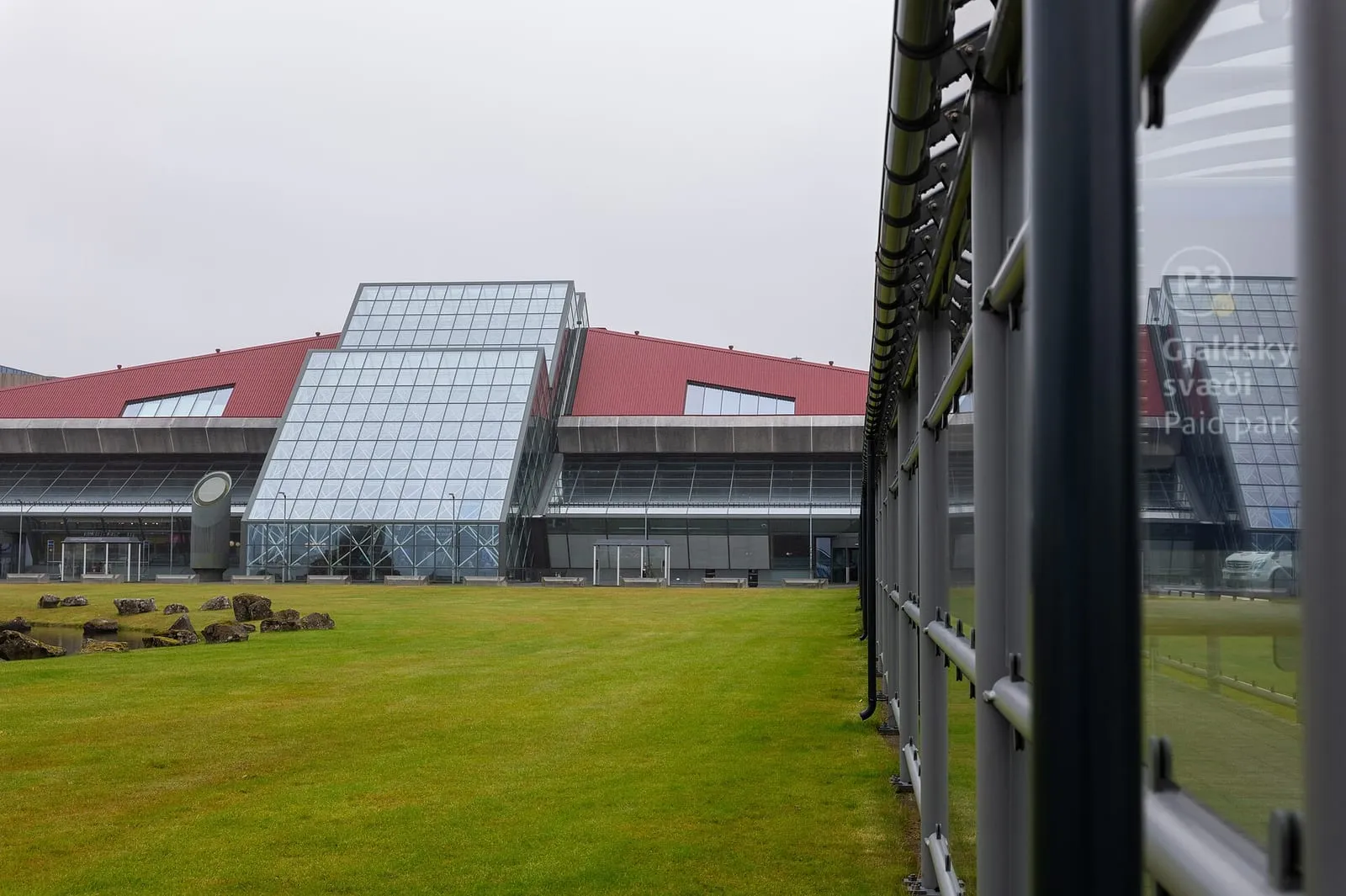
- Keflavík airport: © European Union, 2026, photo Vikingur Oli Magnusson (European Commission Audiovisual Service), CC BY 4.0, Wikimedia Commons.
- The northern lights over Þingvellir: Carl Young, CC BY-SA 4.0, Wikimedia Commons.
- Reynisfjara: Martin Falbisoner, CC BY-SA 4.0, Wikimedia Commons.